What Working Capital Has to Do With the Cold Chain
Working capital is the cash a company has locked in day-to-day operations, and for a pharmaceutical company a large share of it sits in inventory. Finished biologics and specialty medicines are high in value, so every extra week of stock on hand is a significant amount of cash standing still.
How much stock a company has to hold depends on how confident it is in supply. The less predictable the supply, the more buffer it keeps to protect service levels. Cold chain reliability feeds straight into that calculation, because a lane that fails or delays shipments is a lane the planners have to cover with extra stock.
Why an Unreliable Cold Chain Ties Up Cash
Unreliability shows up as cash in several places at once.
- Safety stock. Planners size safety stock to the variability of supply. A lane with excursions and delays has high variability, so it carries a larger buffer to keep the shelf full while a failed batch is remade and reshipped.
- In-transit and quarantine stock. Product sitting in transit, or held in quarantine pending a temperature review, is capital that has left the warehouse and has yet to become a sale.
- Replacement inventory. When a shipment fails, the replacement batch is extra inventory the company funds on top of the stock it already planned.
- Longer cash-to-cash cycles. Each delay and each investigation stretches the time between paying for materials and being paid for product, which raises the working capital the business needs to run.
The common thread is uncertainty. Every unit of buffer is insurance against a shipment that might fail, and the premium is paid in cash that could be doing something else.

How Reliability Releases Working Capital
A reliable cold chain lowers the variability the buffer is sized to cover, which lets the buffer come down.
- Smaller safety stock. When a lane delivers in spec consistently, planners can hold less stock against it while keeping the same service level, because the risk the buffer protects against has fallen.
- Less stock stuck in review. Fewer excursions mean fewer batches held in quarantine while a disposition decision is made, so less capital sits frozen.
- Fewer emergency builds. A low failure rate means fewer replacement batches funded at short notice, which smooths production and lowers peak inventory.
- Shorter cash cycles. Predictable transit times tighten the gap between outlay and revenue, lowering the working capital the business has to carry.
The gain is a permanent reduction in tied-up cash, and it holds even in the quarters when nothing fails, because the buffer itself is smaller.
The Hidden Line: Inventory Carrying Cost
Holding stock costs more than the cash locked in it. Inventory carrying cost, commonly estimated at around 20% to 30% of inventory value per year, includes the cost of capital, cold storage and energy, insurance, obsolescence, and shrinkage. For temperature-controlled pharmaceuticals, the storage and energy portion is high because the buffer itself has to be kept refrigerated.
So a larger safety stock charges a company twice: once in the cash it ties up, and again every year in the cost of keeping it cold. Reducing the buffer lowers both, which is why reliability shows up on the finance line as well as the logistics one.
Putting It in the Total Cost of Ownership Picture
Working capital is one of the cost groups in a full total cost of ownership calculation, and it is the one most often left out. (For the full method, see How Do You Calculate the Total Cost of Ownership of Cold Chain Shipping?) A shipping method that costs more per trip but delivers more predictably can lower the safety stock a lane requires, and the capital released can outweigh the higher transport line. A method chosen on transport price alone misses that saving entirely, because it never appears on a freight invoice.
How SkyCell and Validaide Improve Reliability
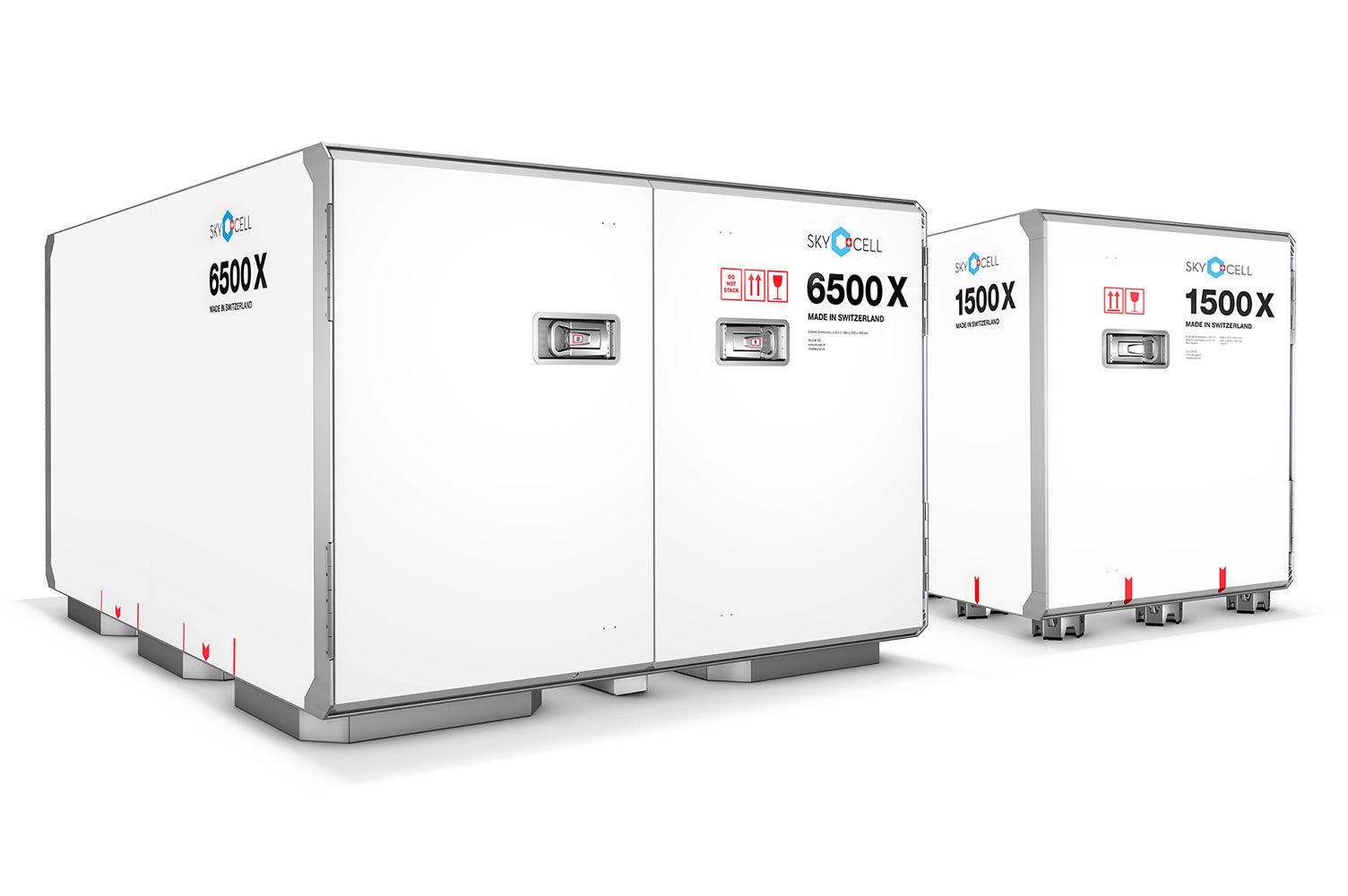
SkyCell improves the predictability that working capital is sized to, which is what lets a buffer come down. The specifications below are drawn from SkyCell's published data.
- A consistent, low failure rate. The 1500X has an independently assessed temperature excursion rate below 0.05%, and the containers are designed for zero product loss, which lowers the supply variability planners buffer against.
- Long runtime that absorbs delays. Holding temperature without external power for 270 hours at +20°C on the 1500X and 300 hours on the 6500X means a delayed shipment stays in spec, so delays stop turning into failures that need replacement stock.
- Predictable transit through visibility. SkyCell's loggers and containers capture temperature and location, and real-time visibility lets teams act on a developing issue early, which keeps transit times and outcomes more predictable.
- Lane-level predictability through Validaide. Validaide standardizes lane risk assessment across more than 70,000 lanes and SkyCell monitors shipments across 250+ airports, so planners can size buffers to a lane's measured risk.
The working-capital saving depends on how much buffer a company holds today and how predictable its lanes become.
What This Means for Pharmaceutical Companies
Reliability is usually argued as a quality benefit, and it is one. It is also a finance benefit, because the buffer stock a company holds is a direct function of how much it trusts its supply. A cold chain that delivers in spec, on time, releases cash that would otherwise sit frozen as insurance against failure.
For a finance team, that reframes a more reliable shipping method as a way to return working capital, measured on the balance sheet as well as the freight line.
Summary
- A reliable cold chain frees up working capital by letting a company hold less safety stock, because the buffer is sized to the variability of supply.
- Unreliability ties up cash in safety stock, in-transit and quarantine inventory, replacement batches, and longer cash-to-cash cycles.
- Reliability releases that cash permanently, because the buffer itself is smaller, and it holds even in quarters when nothing fails.
- Holding stock also carries an annual inventory carrying cost, commonly estimated at around 20% to 30% of inventory value, which is high for refrigerated product, so a smaller buffer saves twice.
- Working capital is a cost group in a full total cost of ownership calculation and is the one most often omitted.
- SkyCell improves the reliability a buffer is sized to with an excursion rate below 0.05% on the 1500X, long runtime (1500X 270 hours, 6500X 300 hours at +20°C), real-time visibility, and Validaide lane data across more than 70,000 lanes and 250+ airports. Pricing is agreed per client.
Sources
- Inventory carrying cost commonly estimated at around 20% to 30% of inventory value per year — a widely used supply-chain rule of thumb (e.g., APICS/ASCM and standard inventory-management references).
- SkyCell product data (skycell.ch): 1500X (270 hours) and 6500X (300 hours) runtime at +20°C, 1500X temperature excursion rate below 0.05%, Validaide lane coverage (more than 70,000 lanes), 250+ monitored airports.