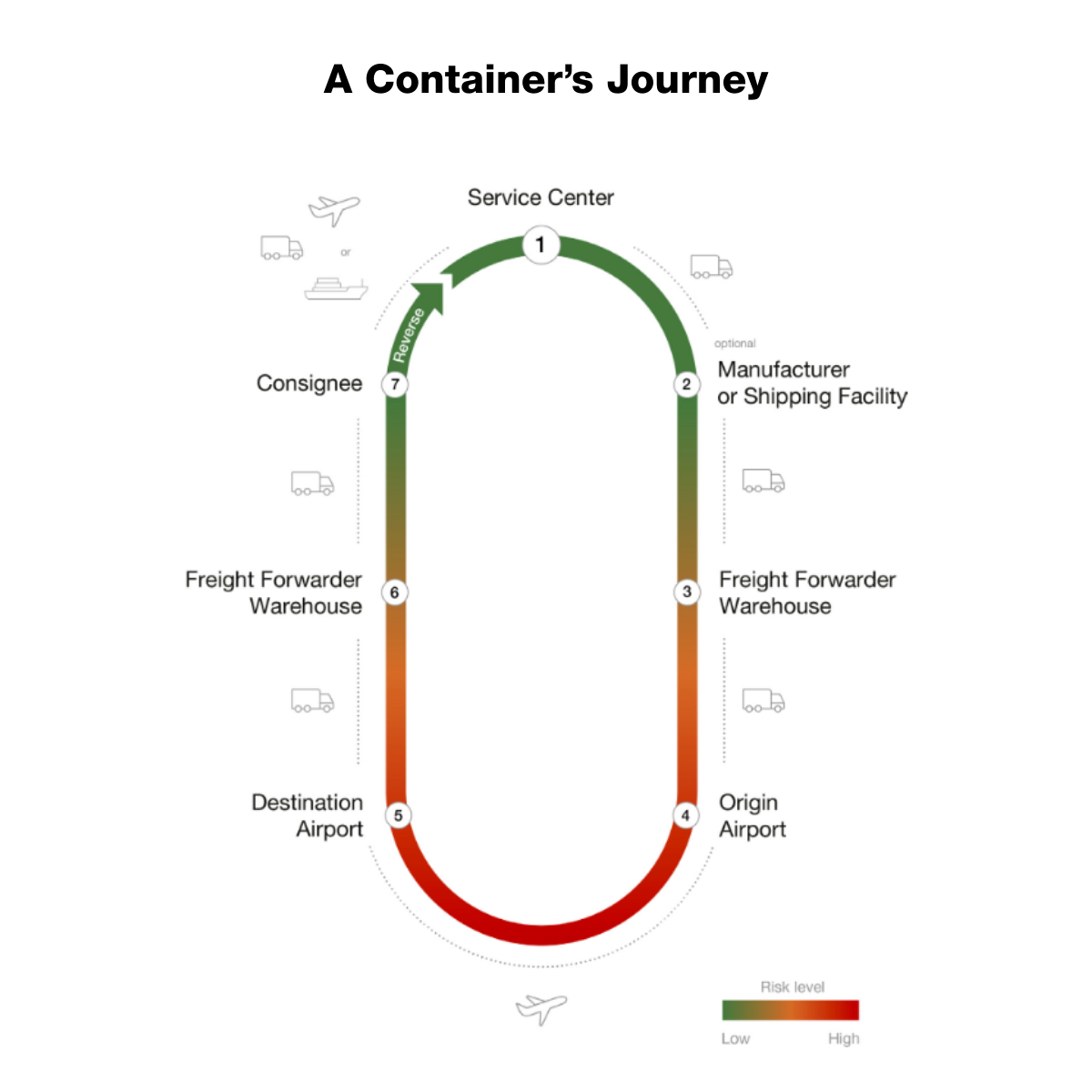
Why Door-To-Door Pharma Logistics Is So Challenging
Global pharmaceutical shipments rarely move through a single controlled environment. Instead, shipments pass through:
- Warehouses
- Trucks
- Airport cargo terminals
- Customs checkpoints
- Airlines
- Ground handlers
- Distribution centers
- Consignee delivery operations
Every transition creates operational risk. These handovers may involve:
- Delays
- Temperature exposure
- Infrastructure gaps
- Handling variability
- Congested airport operations
For biologics and specialty medicines, even short periods of disruption can increase excursion risk significantly.
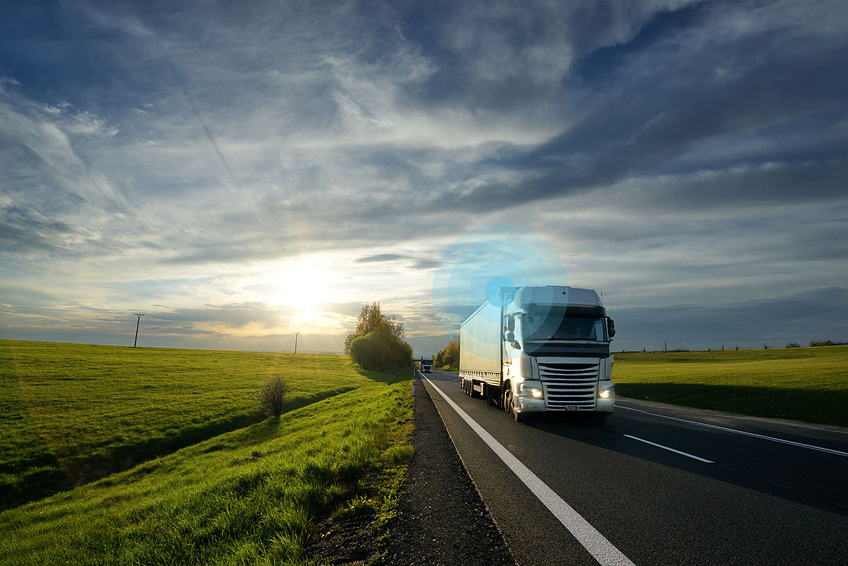
Why Most Excursion Risk Happens Between Transport Segments
Many pharmaceutical cold chain systems perform well during stable transport conditions. However, real-world excursions most commonly occur during:
- Airport dwell
- Customs inspections
- Delayed transfers
- Waiting for refrigerated infrastructure
- Consignee delivery
These periods consume thermal margin and expose shipments to operational uncertainty. This is why pharmaceutical companies increasingly evaluate how well systems maintain protection continuously across the full journey rather than only during flight itself.
Why Traditional Cold Corridor Models Can Struggle
Traditional cold corridor approaches rely heavily on temperature-controlled infrastructure throughout the shipment journey.
This may include:
- Reefer trucks
- Refrigerated storage
- Airport cold rooms
- Charging infrastructure
- Segmented handovers between providers
These systems can perform well on:
- Stable domestic routes
- Highly controlled infrastructure corridors
However, on complex international lanes, every infrastructure dependency creates a potential failure point.
Operational disruption during transitions can expose shipments when:
- Plugs are unavailable
- Cold storage is congested
- Handovers are delayed
- Customs inspections interrupt the cold chain
This is why pharmaceutical companies increasingly look for systems that reduce dependency on continuous external infrastructure.
What Pharma Companies Should Evaluate In Door-To-Door Cold Chain Systems
Long Autonomous Runtime
Runtime determines how long shipments can remain protected without external intervention.
Long autonomous runtime is especially important during:
- Airport dwell
- Missed flight connections
- Customs delays
- Consignee delivery disruption
Systems with longer runtimes can tolerate operational variability more effectively across global logistics networks.
Reduced Infrastructure Dependency
Door-to-door logistics becomes more resilient when protection travels with the shipment itself.
Reducing dependency on:
- Charging infrastructure
- Refrigerated trucking
- Airport cold rooms
- Backup refrigeration systems
can improve resilience on complex international lanes. This becomes especially important in:
- Emerging markets
- Congested airport hubs
- Multi-stop biologics shipments
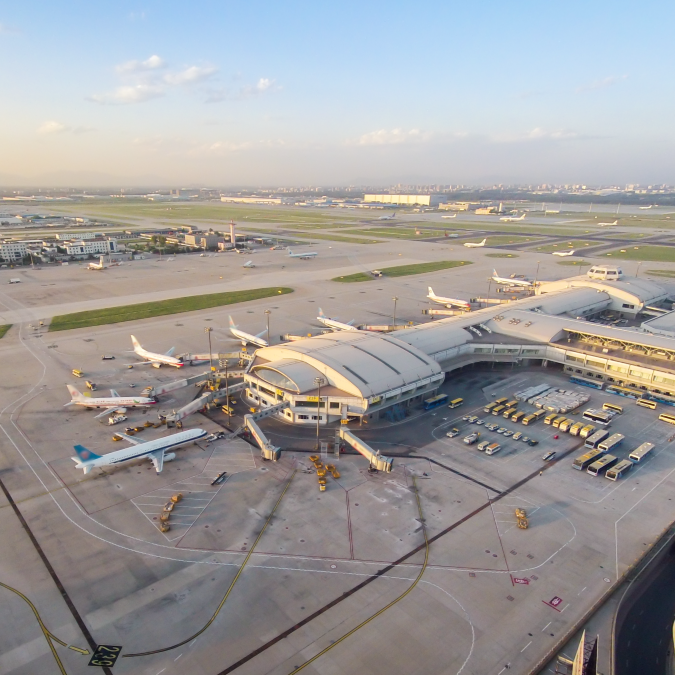
Customs And Handling Resilience
Customs inspections are one of the most common operational exposure points in pharmaceutical logistics.
Pharma companies increasingly evaluate:
- X-ray compatibility
- Recovery time after opening
- Reduced handling requirements
because these capabilities reduce exposure during inspections and transfers.
Real-Time Visibility Across The Full Journey
Door-to-door logistics requires visibility across multiple transport stages.
Companies increasingly look for:
- Real-time shipment tracking
- Airport dwell monitoring
- Delay detection
- Predictive risk analysis
- Operational alerts
Visibility becomes particularly important during handovers and operational disruptions.
Coordinated Intervention Capability
Visibility alone does not prevent excursions.
The strongest systems also support:
- Airline coordination
- Ground handler communication
- Shipment retrieval
- Rerouting decisions
- Escalation workflows
This reduces the time between risk detection and corrective action across the shipment journey.
How Different Door-To-Door Cold Chain Approaches Compare
Different pharmaceutical cold chain systems approach door-to-door logistics differently.
| Container Approach |
Example Providers |
Main Strength |
Main Operational Consideration |
| Active Containers |
Envirotainer RAP/e2, CSafe RKN |
Precise powered temperature control during transport |
Dependence on charging infrastructure and refrigerated support systems |
| Passive Containers |
va-Q-tec passive solutions, Sonoco ThermoSafe |
Simpler handling with lower infrastructure requirements |
Limited runtime with manual interventions needed during delays |
| Cold Corridor Models |
Traditional passive + reefer infrastructure combinations |
Effective across stable refrigerated corridors |
Multiple infrastructure handovers increase operational complexity. Only suitable on supported lanes. |
| Hybrid Containers |
SkyCell 1500X, SkyCell 6500X |
Supports door-to-door with long autonomous runtime with reduced infrastructure dependency |
Greatest value achieved on complex global pharma lanes |
As pharmaceutical logistics networks become more operationally complex, many organizations increasingly prioritize resilience during transitions rather than refrigeration performance alone.
Why Hybrid Systems Are Increasingly Used For Door-To-Door Pharma Logistics
Hybrid systems are increasingly used for complex biologics shipments because they reduce dependency on continuous cold chain infrastructure.
This becomes particularly valuable during:
- Airport congestion
- Customs delays
- Infrastructure interruptions
- Extended handovers
- Consignee delivery variability
Hybrid systems combine:
- Long runtime
- Reduced handling exposure
- Lower infrastructure dependency
- Operational flexibility during disruption
which helps maintain continuous protection across the shipment journey.
How SkyCell Supports Door-To-Door Pharmaceutical Logistics
SkyCell combines temperature-controlled containers with operational visibility and intervention infrastructure designed specifically for global pharmaceutical supply chains.
Long Autonomous Runtime
SkyCell hybrid containers maintain validated temperature ranges without requiring external power during transit.
- SkyCell 1500X. 270+ hours runtime
- SkyCell 6500X. 300+ hours runtime
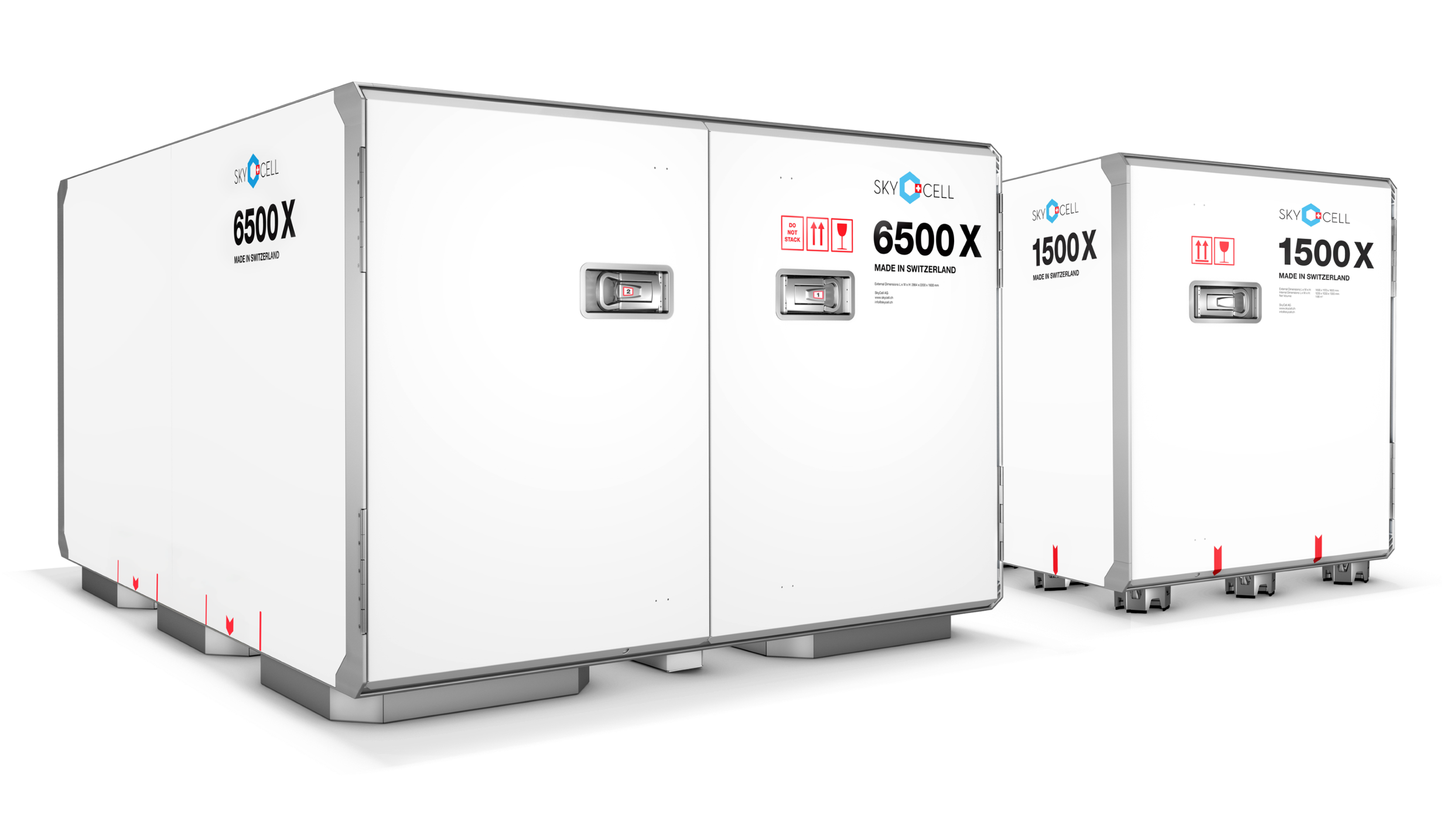
This extended runtime allows shipments to tolerate:
- Airport dwell
- Customs delays
- Missed connections
without depending on plug infrastructure during transport.
Reduced Exposure During Customs And Handling
The SkyCell 1500X is designed for:
- X-ray compatibility
- Reduced handling requirements
- Rapid thermal recovery after opening
Following a 10-minute opening, the container restabilizes in less than 18 minutes in high ambient conditions.
These capabilities help reduce operational exposure during inspections and handovers.
Visibility Infrastructure Across Global Pharma Networks
SkyCell’s operational visibility network spans:
- 250+ IoT-monitored airports
- 20+ airline partnerships
The network tracks:
This helps logistics teams identify:
- Airport dwell risk
- Delayed handovers
- Shipment misplacement
- Exposure during operational disruption
across the global shipment journey.
Lane Intelligence And Operational Coordination Through Validaide
Validaide supports:
- Lane risk analysis
- Predictive operational insights
- Supplier performance visibility
- Supply chain orchestration
- SOP-aligned intervention recommendations
The platform includes:
- 60,000+ digitized lanes
- 1,900+ connected logistics suppliers
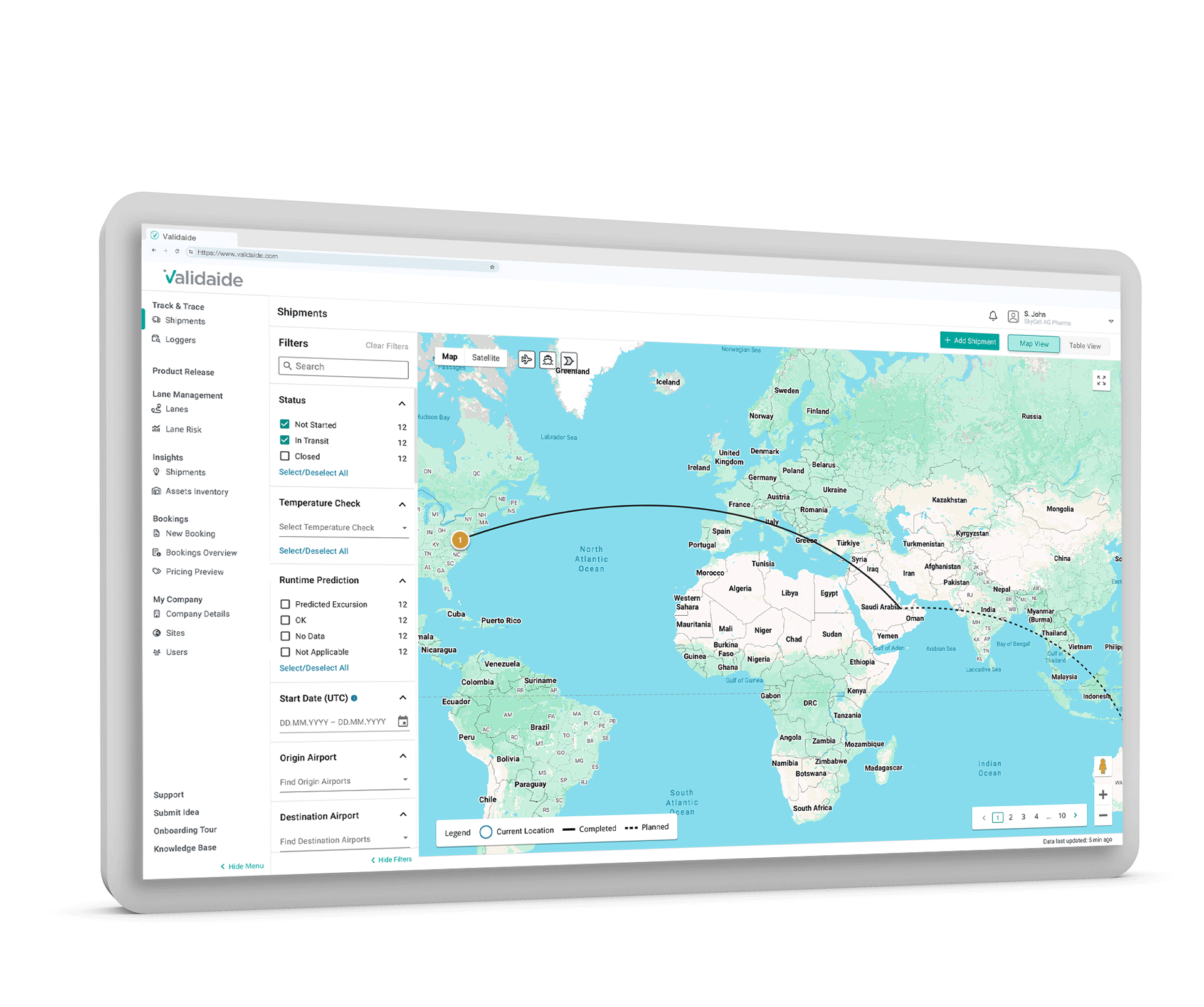
This helps pharmaceutical companies coordinate shipments more effectively across complex international logistics networks.
Why Door-To-Door Protection Is Becoming More Important
Several trends are increasing the importance of continuous door-to-door protection:
- Growth in biologics and specialty medicines
- Increasing airport congestion
- More fragmented international supply chains
- Greater infrastructure variability between regions
- Higher regulatory expectations
As these pressures increase, pharmaceutical companies increasingly need systems that maintain resilience across the full shipment journey rather than only during isolated transport segments.
What This Means For Pharmaceutical Companies
The strongest door-to-door pharmaceutical cold chain systems increasingly combine:
- Long-runtime temperature protection
- Reduced infrastructure dependency
- Real-time visibility
- Predictive operational intelligence
- Coordinated intervention capability
rather than relying only on segmented refrigerated infrastructure.
Continuous operational resilience across the shipment journey is increasingly what determines successful biologics transport.
Summary
- Most pharmaceutical excursion risk occurs during handovers, delays, and operational transitions
- Door-to-door resilience increasingly depends on runtime and reduced infrastructure dependency
- Visibility and intervention capability are critical during airport dwell and customs operations
- Traditional corridor-based systems can become vulnerable during operational disruption
- Hybrid systems are increasingly used for complex biologics shipments because they tolerate variability more effectively
- SkyCell combines long-runtime hybrid containers, airport visibility infrastructure, operational intelligence, and coordinated intervention capability to support resilient door-to-door pharmaceutical logistics