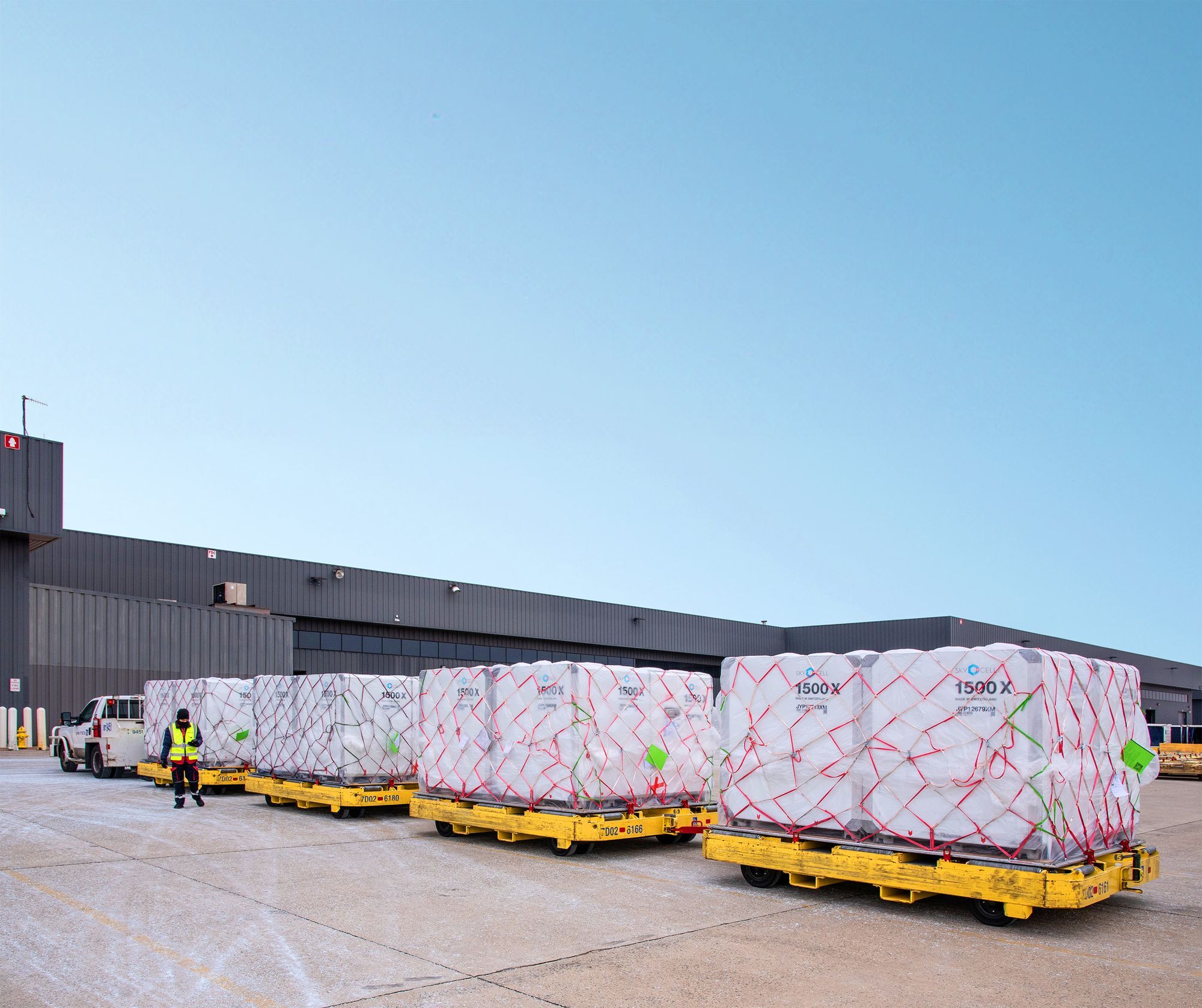
Summary
- Shipment consolidation combines multiple consignments into larger, more efficient pharmaceutical shipments.
- Consolidation reduces handling, simplifies operations, and improves transportation efficiency.
- Larger shipments do not necessarily increase risk when supported by strong network design and continuous temperature protection.
- Effective consolidation requires planning around products, shipping lanes, and distribution strategies.
- SkyCell's 6500X enables commercial-scale shipment consolidation through multi-pallet capacity, 300+ hours of runtime, multimodal compatibility, and real-time visibility with Validaide.
Why Shipment Consolidation Matters
As pharmaceutical companies expand globally and commercial production volumes increase, logistics networks become more complex.
Instead of managing dozens of individual shipments moving independently across the world, many organizations are redesigning their supply chains around larger, consolidated shipments that improve efficiency while maintaining product integrity.
Done well, consolidation is more than a cost-saving exercise. It can reduce operational complexity, improve supply chain resilience, and create greater flexibility throughout the distribution network.
What Is Shipment Consolidation?
Shipment consolidation is the process of combining multiple pharmaceutical shipments into a single, larger shipment before transportation.
For example, instead of shipping four separate pallet shipments to the same region, a manufacturer may consolidate them into one multi-pallet shipment before international transport and distribute them locally upon arrival.
Consolidation can occur:
- At the manufacturing site
- At a regional distribution center
- At a logistics hub
- Before international export
The objective is to reduce unnecessary transportation and handling while maintaining continuous temperature protection.

Why Pharmaceutical Companies Are Consolidating Shipments
Several industry trends are driving greater adoption of consolidated shipping strategies.
Growing Commercial Volumes
As biologics, specialty medicines, and global product launches continue to grow, manufacturers are transporting larger quantities of product than ever before.
Managing each shipment independently becomes increasingly resource-intensive.
More Complex Supply Chains
Global pharmaceutical distribution often involves:
- Multiple manufacturing sites
- International airports
- Ocean freight terminals
- Regional warehouses
- Local distribution partners
Consolidation helps simplify these complex logistics flows.
Pressure To Improve Efficiency
Organizations are also looking for ways to:
- Optimize freight utilization
- Reduce operating costs
- Lower carbon emissions
- Improve supply chain resilience
Shipment consolidation supports each of these objectives when implemented strategically.
The Benefits Of Shipment Consolidation
Fewer Handling Events
Every time a shipment is loaded, unloaded, repacked, or transferred, there is an opportunity for delays, damage, or temperature excursions.
Consolidating products into larger shipments reduces the total number of handling events throughout the supply chain.
This helps improve consistency while reducing operational risk.
Better Transportation Efficiency
Larger consolidated shipments can improve transport utilization across air, road, and ocean freight.
Rather than moving partially filled shipments independently, organizations can maximize available transport capacity and reduce unnecessary freight movements.
Simplified Operations
Managing one consolidated shipment is often simpler than coordinating several smaller shipments moving along similar routes.
Benefits may include:
- Fewer shipping documents
- Simplified planning
- Easier shipment tracking
- Reduced coordination across logistics partners
As shipment volumes increase, these operational efficiencies become increasingly valuable.
Improved Sustainability
Consolidation can also support sustainability initiatives by reducing unnecessary transportation and improving equipment utilization.
When fewer shipments are required to move the same volume of product, organizations may reduce emissions associated with freight while improving overall logistics efficiency.
Consolidation Should Not Increase Risk
One of the biggest misconceptions about shipment consolidation is that larger shipments automatically create greater risk.
In reality, risk is often determined less by shipment size than by how the supply chain is designed.
A well-designed consolidated shipment can reduce risk by:
- Minimizing handling
- Maintaining continuous temperature protection
- Improving shipment visibility
- Simplifying logistics operations
- Reducing unnecessary transfers
The goal is not simply to move more product—it is to move more product with greater consistency and control.
Designing Supply Chains Around Consolidation
Successful consolidation requires more than selecting a larger shipping container.
Organizations should consider:
Product Characteristics
Products with similar temperature requirements, destinations, and delivery schedules are often well suited for consolidation.
Shipping Lanes
Reliable consolidation depends on understanding lane performance, transit times, customs requirements, and infrastructure availability.
Distribution Strategy
Companies should determine where products should be:
- Consolidated
- Transported
- Distributed
- Delivered
Rather than treating every shipment independently, many organizations now optimize their supply chains at the network level.
How SkyCell Supports Shipment Consolidation
SkyCell's 6500X was developed to help pharmaceutical companies consolidate large-volume shipments without sacrificing temperature protection or operational flexibility.
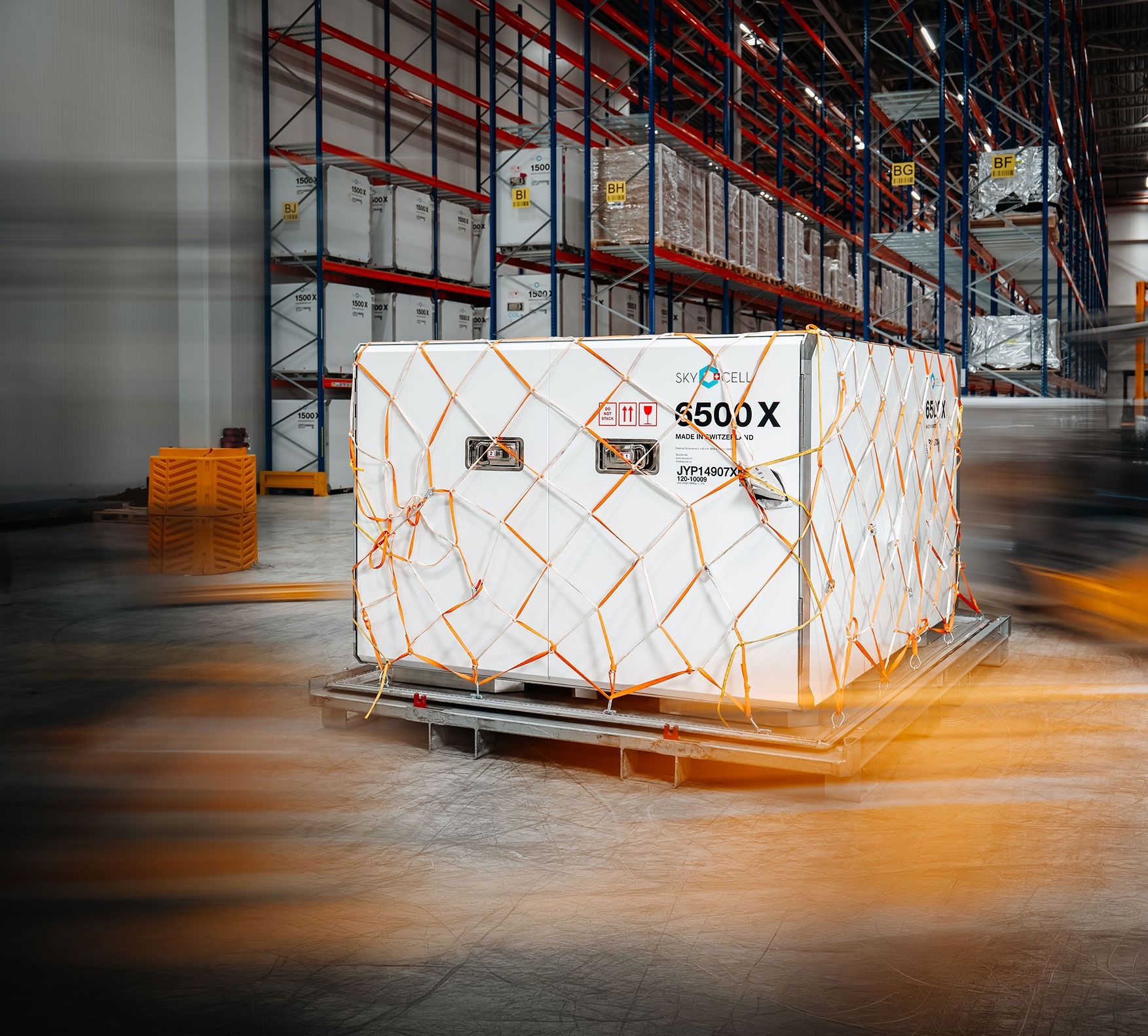
Its multi-pallet design enables organizations to transport larger commercial shipments within a single hybrid container while maintaining continuous protection across air, road, and ocean transport.
Key capabilities include:
- More than 300 hours of independent runtime
- Multi-pallet capacity for commercial-scale distribution
- Door-to-door temperature protection
- Real-time shipment visibility through Validaide
- Compatibility with standard sea freight containers
By reducing the need for repacking and unnecessary handling during transportation, the 6500X allows pharmaceutical companies to consolidate shipments while maintaining product integrity and operational flexibility.
Combined with Validaide's lane intelligence and shipment visibility, organizations can make more informed decisions about how and where to consolidate shipments while maintaining confidence across global distribution networks.
Looking Beyond Individual Shipments
Leading pharmaceutical companies are increasingly designing supply chains around networks rather than individual shipments.
Instead of asking:
"How should we ship this pallet?"
They are asking:
- Where should products be consolidated?
- Which transport mode best fits this lane?
- How can handling be reduced?
- How can shipments remain protected across multiple transportation modes?
- How can larger shipment volumes be managed without increasing operational complexity?
These questions are helping reshape pharmaceutical logistics for commercial-scale distribution.
What This Means For Pharmaceutical Companies
Shipment consolidation is becoming an important strategy for organizations seeking to improve efficiency while supporting global growth.
When combined with resilient packaging, intelligent network planning, and real-time visibility, consolidation can help pharmaceutical companies:
- Reduce operational complexity
- Improve freight utilization
- Lower handling risk
- Increase supply chain flexibility
- Support more efficient commercial distribution
As global pharmaceutical supply chains continue to evolve, organizations that consolidate strategically will be better positioned to scale operations while maintaining product quality and patient access.