Why Pharmaceutical Cold Chains Are So Expensive
Pharmaceutical cold chains are designed around one central challenge:
A temperature excursion can be extremely costly.
Potential consequences include:
- Product loss
- Regulatory investigations
- Delayed patient access
- Batch replacement costs
- Additional transportation expenses
- Reputational damage
Because the cost of failure is so high, many pharmaceutical companies build significant redundancy into their supply chains.
This often includes:
- Reefer trucks
- Temperature-controlled warehouses
- Airport cold rooms
- Backup refrigeration systems
- Emergency contingency plans
- Expedited recovery processes
These measures can reduce risk, but they also increase cost, complexity, and emissions.
The Infrastructure Trap
Historically, pharmaceutical companies have often managed uncertainty by adding infrastructure.
When organizations are unsure about:
- Lane performance
- Airport reliability
- Supplier consistency
- Shipment visibility
- Intervention capability
the safest option is often to add another layer of protection. Over time, this can create what many organizations experience as an infrastructure trap:
More uncertainty leads to more infrastructure. More infrastructure leads to:
- Higher costs
- Greater operational complexity
- More handovers
- Increased emissions
Yet the underlying uncertainty often remains unchanged.
The Real Question Is Not How To Reduce Cost
The real question is:
How can pharmaceutical companies reduce uncertainty?
When uncertainty is reduced, infrastructure decisions become easier. Organizations gain confidence to:
- Simplify logistics processes
- Optimize transport routes
- Reduce contingency requirements
- Improve resource utilization
without compromising product integrity.
What Drives Cold Chain Costs?
Many organizations focus primarily on packaging costs when evaluating cold chain expenses.
In reality, packaging is only one component of the total cost.
Transportation Costs
These may include:
- Air freight
- Temperature-controlled trucking
- Expedited shipments
- Re-routing during disruption
Transportation often represents one of the largest components of pharmaceutical logistics spend.

Storage Costs
Cold storage infrastructure can be expensive to operate and maintain.
This includes:
- Refrigerated warehouses
- Airport cold rooms
- Temporary storage during delays
- Backup facilities
Operational Complexity
Every handover introduces additional coordination requirements. Complex supply chains often require:
- More monitoring
- More communication
- More intervention
- More administrative oversight
These hidden operational costs can accumulate significantly over time.
Product Loss And Excursions
The most expensive cold chain failures are often the least visible.
A single excursion can trigger:
- Product quarantine
- Quality investigations
- Product replacement
- Distribution delays
Reducing excursion risk can have a significant impact on total supply chain cost.
Why Visibility Changes The Economics Of Cold Chain Logistics
Historically, many pharmaceutical supply chains operated with limited visibility between shipment milestones. This made it difficult to answer questions such as:
- Where is the shipment?
- Is it delayed?
- Is intervention required?
- How much thermal margin remains?
When organizations lack visibility, they often compensate with additional infrastructure. Real-time visibility changes this equation. It allows teams to:
- Detect problems earlier
- Respond faster
- Reduce unnecessary contingency measures
- Improve operational decision-making
As a result, risk can often be managed more efficiently.
Why Lane Risk Intelligence Matters
Not all pharmaceutical shipping lanes are equally risky. Some routes are:
- Highly predictable
- Operationally stable
- Well understood
Others may involve:
- Frequent delays
- Multiple handovers
- Infrastructure variability
- Regulatory complexity
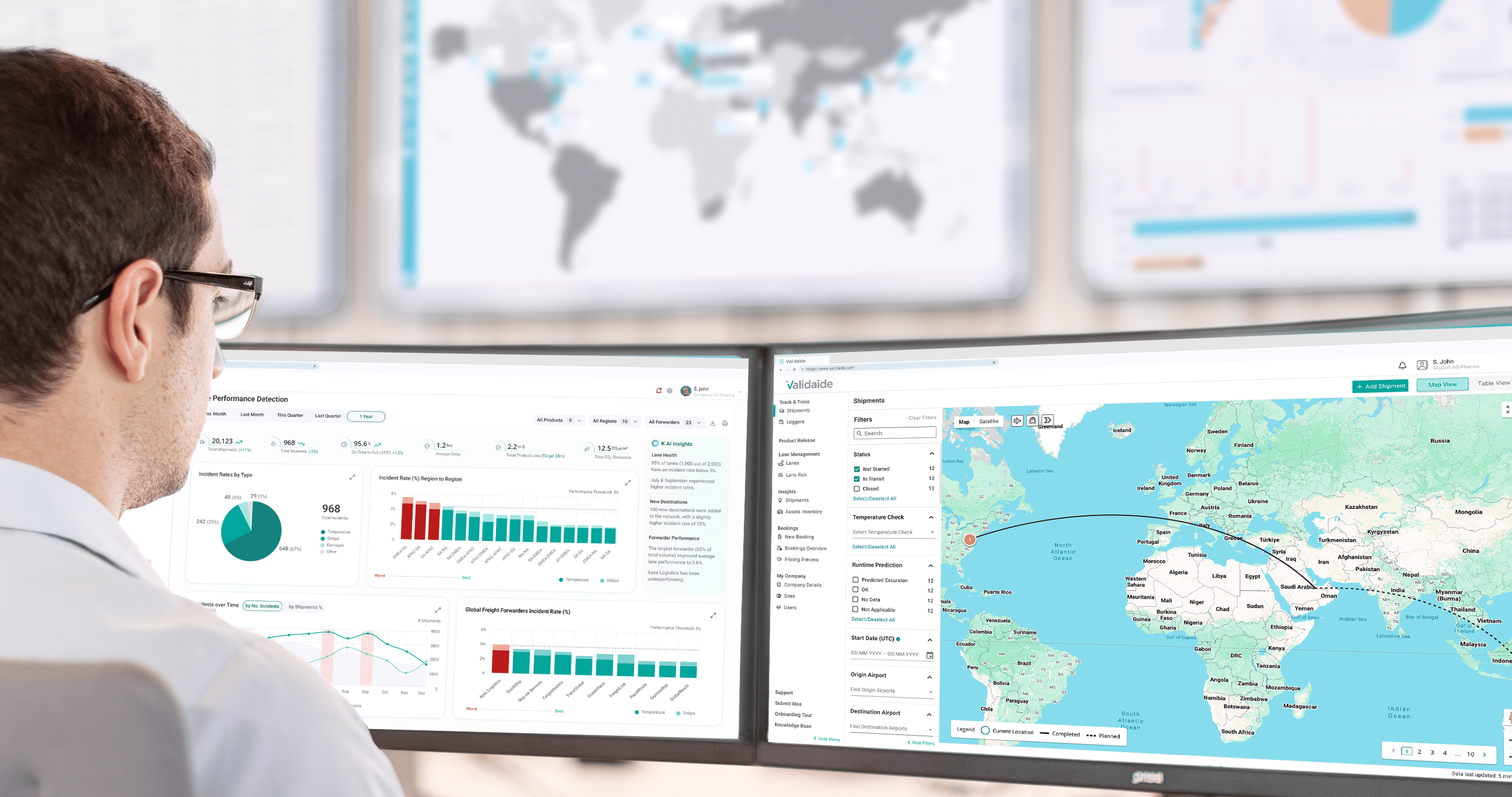
Treating every lane the same often results in over-engineering. Lane risk intelligence allows pharmaceutical companies to understand:
- Which routes are structurally higher risk
- Which logistics partners perform consistently
- Where additional protection is necessary
- Where infrastructure can be optimized
This enables more targeted decision-making.
Why Resilient Packaging Can Reduce Total Supply Chain Costs
Packaging is often viewed as a cost center.
However, resilient packaging can influence much larger cost categories throughout the supply chain.
Long-runtime temperature-controlled solutions may help reduce dependency on:
- Reefer trucks
- Airport cold rooms
- Backup refrigeration systems
- Emergency interventions
particularly on well-understood lanes. The result may be:
- Fewer infrastructure requirements
- Lower operational complexity
- Reduced risk of product loss
- Improved supply chain efficiency
This is why many organizations increasingly evaluate total logistics cost rather than packaging cost alone.
Cost Efficiency And Cold Chain Agility
Reducing cost is not simply about spending less. It is also about improving agility.
An agile pharmaceutical cold chain can:
- Adapt to disruption quickly
- Re-route shipments effectively
- Coordinate interventions rapidly
- Operate with greater confidence
Agility reduces the need for excessive contingency planning because organizations can respond to problems before they escalate.
In many cases, agility and cost efficiency are closely linked.
How SkyCell Approaches Cost Efficiency
SkyCell reduces uncertainty across pharmaceutical supply chains by combining:
- Long-runtime hybrid containers
- Real-time visibility
- Lane risk intelligence through Validaide
- Coordinated intervention capability
Together, these capabilities help pharmaceutical companies understand risk more accurately and make more informed infrastructure decisions.
Rather than relying solely on additional refrigeration and contingency measures, organizations can use data and operational intelligence to optimize how protection is deployed across their supply chains.
Why This Matters As Pharmaceutical Logistics Evolves
The pharmaceutical industry is changing.
Organizations are managing:
- More biologics
- More specialty medicines
- More global distribution networks
- Greater sustainability expectations
At the same time, cost pressures continue to increase.
The traditional approach of continuously adding infrastructure becomes increasingly difficult to scale. This is why many pharmaceutical companies are shifting their focus from infrastructure expansion toward better visibility, intelligence, and operational resilience.
What This Means For Pharmaceutical Companies
The most cost-efficient pharmaceutical cold chains are not necessarily those with the most infrastructure. They are often the ones with the best understanding of risk.
Organizations that combine:
- Visibility
- Lane intelligence
- Resilient packaging
- Intervention capability
can often deploy infrastructure more selectively while maintaining product integrity.
This creates opportunities to reduce cost, improve sustainability, and build more agile supply chains without increasing risk.
Summary
- Pharmaceutical cold chains are expensive because the cost of failure is high
- Many organizations compensate for uncertainty by adding infrastructure
- Visibility and lane intelligence help reduce uncertainty
- Not all shipping lanes require the same level of protection
- Resilient packaging can influence costs far beyond the container itself
- Cold chain agility and cost efficiency are closely connected
- SkyCell combines visibility, lane intelligence, resilient packaging, and intervention capability to help organizations optimize cold chain operations