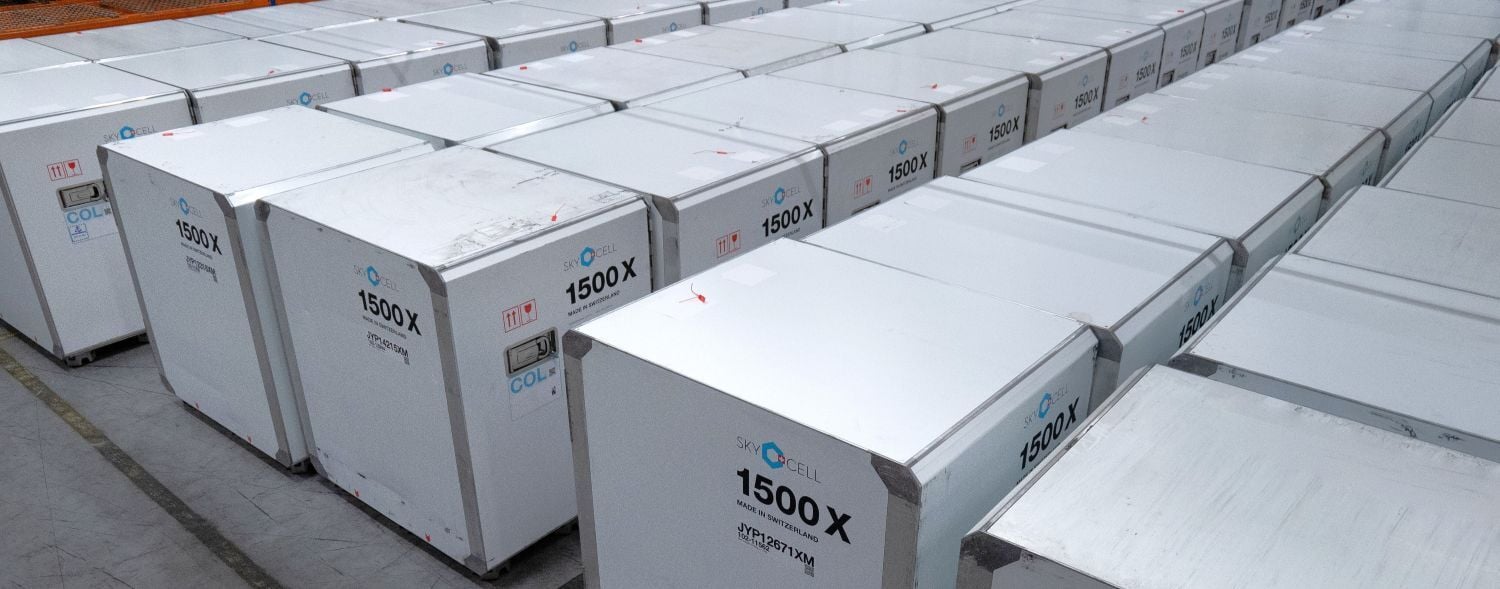
Why Scaling Pharmaceutical Distribution Is Challenging
Scaling a pharmaceutical supply chain is not simply a matter of moving more product.
As shipment volumes increase, organizations often face:
- More logistics partners
- More handling events
- Longer transport distances
- Greater inventory value
- Increased operational complexity
Without careful planning, these factors can increase the likelihood of:
- Temperature excursions
- Shipment delays
- Product damage
- Inconsistent handling
- Higher operating costs
The challenge is to increase capacity without introducing unnecessary complexity.
Why Bigger Shipments Can Increase Risk
Large pharmaceutical shipments often carry significantly greater financial and operational exposure than smaller consignments.
A single shipment may represent:
- Multiple markets
- Thousands of patient treatments
- Significant commercial value
- Critical launch inventory
At the same time, larger shipments frequently involve:
- Additional loading and unloading
- Multiple transport modes
- Longer transit times
- Regional distribution after arrival
Every additional handover creates another opportunity for delay or disruption.
Scaling successfully therefore requires reducing operational exposure, not simply increasing transport capacity.

Four Strategies For Scaling Without Scaling Risk
While every pharmaceutical network is different, high-performing supply chains typically share four common strategies.
Consolidate Shipments Strategically
Consolidation is about more than moving larger volumes. When designed effectively, it can help organizations:
- Simplify logistics flows
- Reduce the number of individual shipments
- Improve transport efficiency
- Standardize handling processes
Rather than managing multiple smaller consignments independently, organizations can move larger volumes through a more structured distribution network.
Reduce Handling And Repacking
Every handling event introduces risk.
Loading, unloading, repacking, and transferring products between containers all increase the opportunity for:
- Temperature exposure
- Product damage
- Operational inconsistency
- Shipment delays
Reducing unnecessary handling helps improve consistency while simplifying operations.
Build Flexibility Into The Network
Modern pharmaceutical supply chains need to respond to changing conditions.
Delays, weather events, geopolitical disruption, and capacity constraints all require organizations to adapt.
Networks that support multiple transport modes and flexible routing are often better positioned to maintain continuity when circumstances change.
Rather than designing a network around a single transport option, many companies now seek solutions that allow products to move by air, road, or ocean without changing packaging or compromising product protection.
Improve Visibility And Decision-Making
Scaling successfully also requires better information.
Real-time visibility helps supply chain teams:
- Monitor shipment status
- Identify delays early
- Coordinate responses
- Reduce uncertainty
Combined with lane-specific planning and operational intelligence, visibility allows organizations to make more confident decisions as shipment volumes grow.
Why Network Design Matters More Than Ever
As pharmaceutical distribution becomes increasingly global, competitive advantage is shifting from individual logistics activities to overall network design.
Questions organizations are increasingly asking include:
- Where should products be consolidated?
- Which transport mode is most appropriate?
- Where should regional distribution occur?
- How can handling be reduced?
- How can resilience be improved without adding unnecessary infrastructure?
The answers to these questions often have a greater impact on performance than any single packaging decision.
How SkyCell Supports Commercial-Scale Distribution
SkyCell's 6500X was developed to help pharmaceutical companies scale commercial distribution while maintaining product protection and operational flexibility.
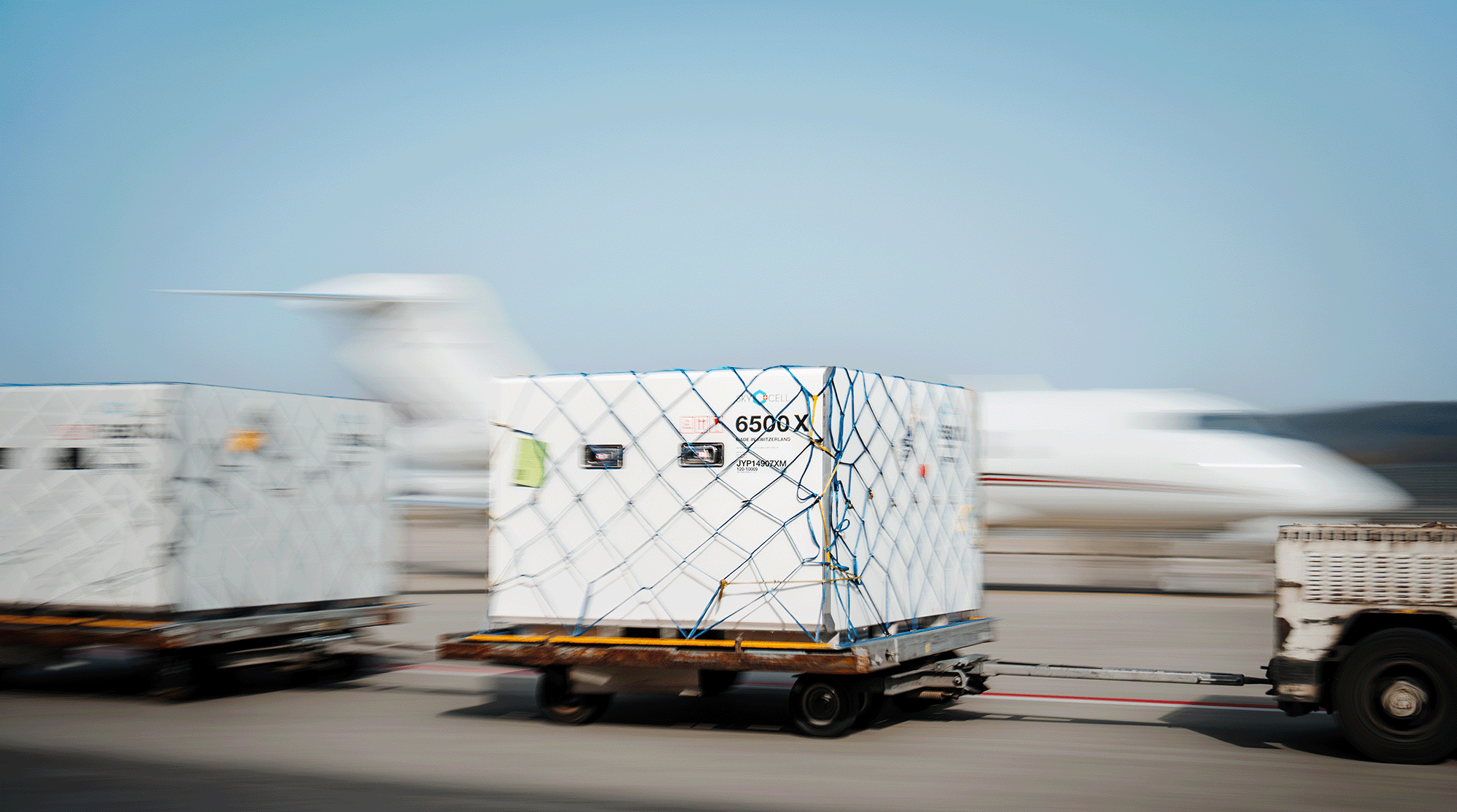
The hybrid, multi-pallet container provides:
- More than 300 hours of independent runtime
- Door-to-door protection across air, road, and ocean transport
- Real-time monitoring through Validaide
- Compatibility with standard sea freight containers
- A reusable, non-dangerous goods (non-DG) design
Beyond its technical performance, the 6500X supports a different approach to supply chain design.
Its multi-pallet format enables efficient shipment consolidation while reducing the need for repacking and unnecessary handling. Products can remain protected in the same container as they move across different transport modes, helping organizations simplify operations and maintain continuous temperature protection throughout the journey.
This allows pharmaceutical companies to design networks around business needs rather than packaging limitations, supporting commercial growth without proportionally increasing operational risk.
Why Commercial Supply Chains Are Evolving
Several trends are changing how pharmaceutical companies approach large-volume distribution:
- Growth in biologics and specialty medicines
- Expansion into emerging markets
- Increasing sustainability expectations
- Greater focus on supply chain resilience
- Rising logistics costs
These pressures are encouraging organizations to rethink traditional distribution models and build networks that are more flexible, efficient, and scalable.
What This Means For Pharmaceutical Companies
Scaling pharmaceutical shipments successfully is not simply about increasing transport capacity.
It requires designing supply chains that reduce complexity as they grow.
By combining:
- Strategic shipment consolidation
- Reduced handling
- Flexible multimodal transport
- Real-time visibility
- Long-duration product protection
pharmaceutical companies can increase shipment volumes while maintaining product integrity, improving operational efficiency, and supporting reliable global patient access.
Summary
- Larger pharmaceutical shipments increase operational complexity and financial exposure.
- Scaling successfully requires reducing unnecessary handling, improving visibility, and designing more resilient distribution networks.
- Shipment consolidation and multimodal flexibility can improve efficiency without compromising product protection.
- Network design is becoming a key differentiator for commercial pharmaceutical logistics.
- SkyCell's 6500X supports commercial-scale distribution through multi-pallet consolidation, 300+ hours of runtime, multimodal compatibility, and real-time visibility through Validaide.