Why Biologics and High-Risk Lanes Are a Risky Combination
Biologics often have narrow stability margins and limited ability to recover from temperature deviations. High-risk international lanes often include:
- Hot or humid climates
- Long transit times and unpredictable dwell
- Congested airports and multiple transfers
- Customs delays and inspections
- Variable infrastructure such as limited plug access or cold storage availability
When these conditions overlap, risk becomes compounding rather than additive.
Where Shipments Fail on High-Risk International Biologics Lanes
Most failures happen during transitions, not during steady-state movement.
Stage 1: Origin Staging and Handover
Common risks
- Late handover reducing thermal margin
- Incorrect staging conditions
- Waiting for acceptance or build-up
What matters most is preserving thermal margin early, because delays later in the journey are harder to recover from.
Stage 2: Airport Dwell and Customs
Common risks
- Hot tarmac exposure and warehouse congestion
- Plug scarcity for powered systems
- Manual inspections requiring door opening
- Misplacement inside cargo facilities
Airports are consistently the highest-risk nodes in international air freight for temperature-sensitive products.
Stage 3: Transit Hubs and Missed Connections
Common risks
- Compounded dwell time across multiple hubs
- Rerouting that introduces unexpected exposure
- Reduced visibility across partners
This is where “average-case planning” breaks down.
Stage 4: Arrival, Release, and Final Leg
Common risks
- Customs holds and documentation friction
- Transfer into new vehicles or systems
- Reduced monitoring just before delivery
For biologics, “interruptions in the last legs can be as damaging as earlier delays.

A Practical Framework: SkyCell’s Integrated Layers of Protection
Many cold chains rely on heavy infrastructure because risk is not well understood, and intervention is slow. SkyCell’s approach is designed to reduce uncertainty at its source by combining four reinforcing capabilities.
Layer 1: Physical Protection
High-risk international lanes require protection that survives delays without relying on local infrastructure.
SkyCell’s hybrid containers are engineered to maintain validated temperature ranges for 270+ hours without external power or batteries in transit. They are also designed as reusable systems with embedded IoT sensors monitoring temperature, location, and handling conditions continuously.
This long runtime reduces dependency on cold chain infrastructure even on high risk international biologics lanes (reefer trucks, redundancies, plug access, etc).
Layer 2: Lane Risk Intelligence
High-risk lanes are not all risky for the same reasons. Lane risk intelligence helps teams understand structural risk before shipping.
Through Validaide, lane robustness and performance can be assessed using real-world operational data, with 60,000+ lanes digitized and a new lane assessed every 30 minutes. This supports lane planning decisions such as:
- Which route is structurally lower risk
- Where added oversight is needed
- Where contingency plans should be in place
This makes lane planning more objective and reduces reliance on static assumptions.
Layer 3: Real-Time Visibility Across Global Hubs
Visibility matters most where risk is highest.
SkyCell’s visibility network spans 250+ IoT-monitored airports, 50+ service stations, and Validaide's logistics ecosystem including 1,900+ connected suppliers and 20+ airline partnerships. The airport network is designed to locate containers even in congested cargo environments.
At airports, location uncertainty can create days of delay. SkyCell’s gateway network supports container location accuracy down to approximately 3 meters, both indoors and outdoors, enabling faster recovery when shipments are delayed or misplaced.
Layer 4. Coordinated Intervention Capability
Visibility without action is just information. Intervention closes the loop.
When a deviation is detected, SkyCell’s network allows coordination across airlines, ground handlers, freight forwarders, and pharma teams to retrieve or re-route shipments. Validaide supports this with SOP-aligned recommendations that clarify what action to take and who should take it.
This reduces the time between detection and correction from hours to minutes, which is critical for biologics.
Airport Resilience: The Biologics Stress Test
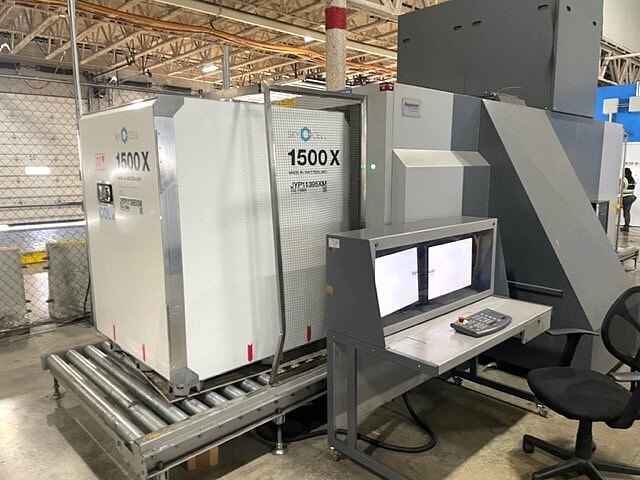
High-risk biologics lanes often fail at airports because of inspections and dwell. Over half of all excursions occur at airports according to the IATA, making them a key weak link in high-risk lanes — and a key place to test solutions.
SkyCell’s 1500X is designed to reduce airport-driven failure modes:
- X-ray compatible, reducing the need for manual customs opening
- If the door must be opened, it restabilizes rapidly. After a 10-minute opening, recovery time is less than 18 minutes
- Long runtime supports prolonged airport dwell without plug access
- Audited temperature excursion rate of less than 0.05%.
These features directly target the most common airport risk drivers.
How This Layered Approach Reduces Cost and Emissions
Many companies overbuild cold chain infrastructure because uncertainty is expensive.
When companies have confidence in:
- Container performance
- Lane risk
- Visibility
- Intervention capability
Then, they can safely reduce heavy infrastructure where it is not needed, which lowers:
- Cost of reefer trucks and cold storage
- Operational complexity
- Emissions from redundant refrigeration and inefficient logistics
This is not about taking risks. It is about understanding risk well enough to deploy infrastructure only where it is necessary.
Summary
- Biologics on high-risk lanes fail mainly during delays and handovers
- Airports and customs are the most common failure points
- Safe shipping requires layered protection, not a single control
- SkyCell’s approach combines zero product loss physical protection, lane intelligence via Validaide, real-time visibility across 250+ airports, and coordinated intervention
- X-ray compatibility and rapid recovery after opening reduce airport-driven excursion risk