What Are Active Containers?
Active pharmaceutical containers use powered refrigeration systems to maintain temperature control during transport.
These systems typically include:
- Compressor-based cooling
- Battery or electrical power systems
- Active temperature regulation during transit
Examples include:
- Envirotainer RAP/e2
- CSafe RKN
Active systems are widely used in pharmaceutical airfreight, particularly for:
- Long-haul shipments
- Stable infrastructure corridors
- High-volume air cargo operations
Because they actively regulate temperature, they can provide highly controlled transport environments during normal operations.
What Are Hybrid Containers?
A hybrid container in pharmaceutical logistics is a temperature-controlled shipping container that maintains pharmaceutical products within validated temperature ranges comparable to active systems, without requiring external power or batteries in transit.
Hybrid containers are designed to be handled like passive freight, reducing dependency on ground infrastructure and minimizing human intervention across the entire shipment journey.
Examples include:
- SkyCell 1500X
- SkyCell 6500X
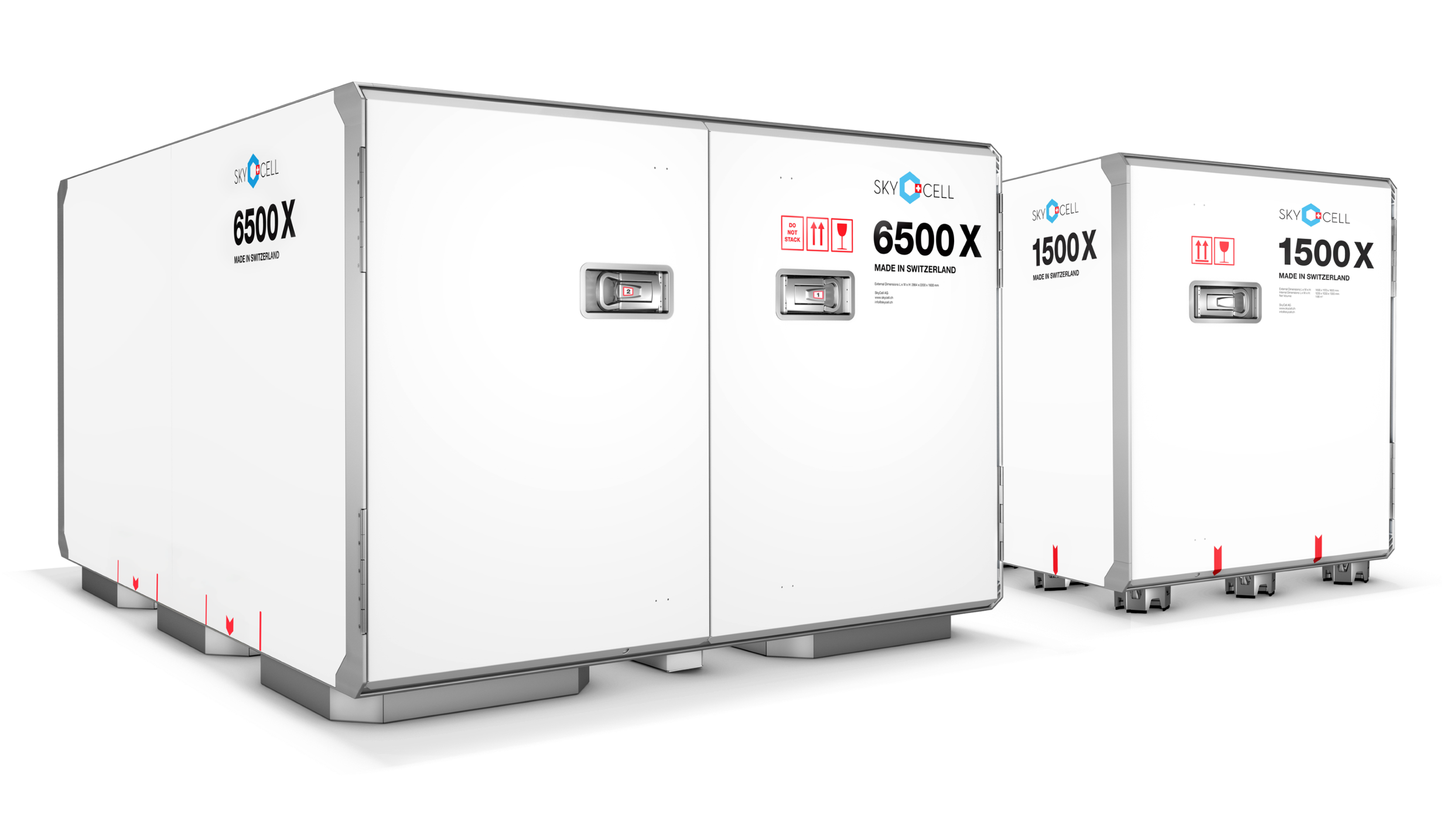
Hybrid systems combine:
- Long autonomous runtime
- Advanced insulation and thermal protection
- Reduced infrastructure dependency
- Operational resilience during disruption
This approach is increasingly used for:
- Biologics
- High-risk international lanes
- Infrastructure-variable routes
- Complex door-to-door pharmaceutical logistics
Why The Difference Matters In Global Pharma Logistics
Historically, pharmaceutical cold chain discussions focused heavily on refrigeration technology itself.
Today, the larger challenge is often operational. Most temperature excursions occur during:
- Airport dwell
- Customs inspections
- Delayed handovers
- Infrastructure interruptions
- Congested cargo operations
This means pharmaceutical companies increasingly evaluate:
- Runtime
- Infrastructure dependency
- Visibility
- Intervention capability
- Disruption tolerance
alongside temperature control performance.
How Hybrid And Active Systems Compare
| Capability Area |
Active Containers |
Hybrid Containers |
| Temperature Control Method |
Powered refrigeration system |
Autonomous thermal protection system |
| Infrastructure Dependency |
Requires charging and plug infrastructure |
No external power required during transit |
| Runtime During Delays |
Shorter runtime than hybrid which can result in dependency on charging availability and battery management |
Long autonomous runtime without plug dependency |
| Airport Dwell Resilience |
Vulnerable if runtime exceeded and charging access is delayed or unavailable |
Designed to tolerate prolonged dwell autonomously |
| Customs Handling Exposure |
May require additional handling during inspections |
X-ray compatible designs can reduce manual inspection exposure |
| Operational Complexity |
Higher infrastructure coordination requirements |
No dependency on infrastructure and easy to handle |
| Sustainability Profile |
Higher infrastructure and energy dependency |
Lower infrastructure dependency and reduced reverse logistics emissions |
| Best Fit |
Stable infrastructure-rich global corridors |
Complex, disruption-prone international pharma lanes |
As biologics logistics becomes more operationally complex, resilience during disruption is becoming increasingly important in system evaluation.
Why Airport Operations Change The Equation
Airports are one of the highest-risk environments in pharmaceutical logistics.
Shipments may experience:
- Prolonged tarmac exposure
- Congestion inside cargo terminals
- Customs delays
- Limited charging availability
- Multiple handovers between providers
According to IATA, over 50% of temperature excursions occur at airports.
This is where the operational differences between active and hybrid systems become most visible.
Systems that depend heavily on:
- Plug infrastructure
- Refrigerated storage
- Continuous powered support
may become more vulnerable when operational disruption occurs.
By contrast, systems with long autonomous runtime can continue protecting shipments without immediate infrastructure intervention.
Runtime And Operational Resilience
Runtime is one of the most important factors in cold chain resilience.
When delays exceed planned schedules, systems with insufficient autonomous protection become increasingly vulnerable.
For example:
- The SkyCell 1500X provides 270+ hours of autonomous runtime
- The SkyCell 6500X provides 300+ hours of runtime for larger-volume shipments
Because these systems do not require plugs or external power during transit, they can tolerate:
- Airport congestion
- Customs delays
- Missed flight connections
- Infrastructure interruptions
with lower operational dependency.
Active solution runtimes vary between provider and container. Envirotainer, for example offers several products with a runtime range of between 48 hours and 170 hours. This provides up to a week of independent runtime. For longer shipments or in the case of delays, active solutions may not be able to maintain temperature control without intervention.
Customs And Handling Differences
Customs inspections are a major operational exposure point in pharmaceutical airfreight.
Opening containers can:
- Expose shipments to ambient heat
- Increase handling risk
- Consume thermal margin during delays
Some hybrid systems are designed specifically to reduce this exposure.
For example:
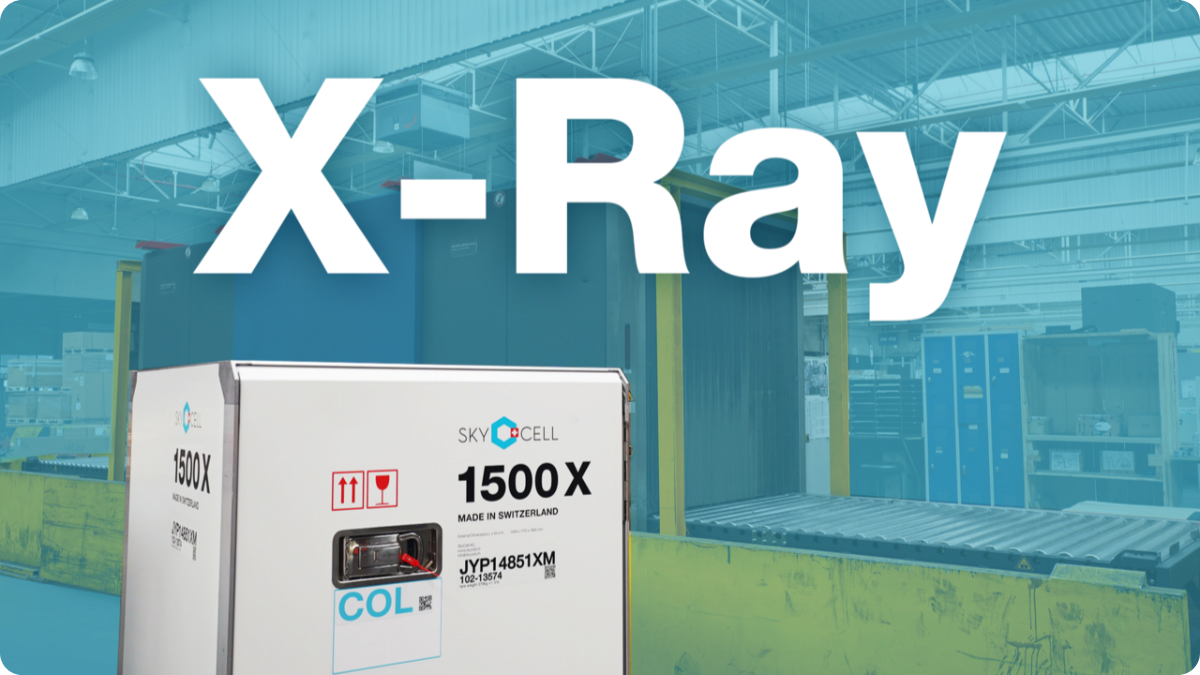
- The SkyCell 1500X is X-ray compatible
- Following a 10-minute opening, it restabilizes in less than 18 minutes in high ambient conditions
These operational characteristics become increasingly important on:
- Long-haul biologics shipments
- High-temperature lanes
- Congested airport routes
Active solutions may have container components that block the X-Ray machine from seeing clearly, requiring the container to be manually opened and inspected.
Visibility And Intervention Capability
Modern pharmaceutical logistics increasingly depends on:
- Real-time visibility
- Delay detection
- Predictive risk analysis
- Coordinated operational intervention
Container performance alone is no longer sufficient for many biologics supply chains.
Some systems now combine physical protection with:
- IoT-enabled monitoring
- Airport visibility infrastructure
- Lane intelligence
- Intervention coordination
to reduce excursion risk during operational disruption.
Both active and hybrid solutions incorporate some form of tracking however the level of intervention possible varies.
How SkyCell Combines Hybrid Protection With Operational Intelligence
SkyCell combines hybrid temperature-controlled containers with operational visibility and intervention infrastructure designed specifically for pharmaceutical logistics.
Long Autonomous Protection
SkyCell hybrid containers maintain validated temperature ranges without requiring external power during transit.
- 1500X: 270+ hours runtime
- 6500X: 300+ hours runtime
This reduces dependency on:
- Charging infrastructure
- Airport cold rooms
- Refrigerated support systems
during operational disruption.
Airport Visibility Infrastructure
SkyCell’s visibility network spans:
- 250+ IoT-monitored airports
- 20+ airline partnerships
The company tracks:
This helps identify:
- Airport dwell risk
- Delayed handovers
- Shipment misplacement
- Exposure during disruption
across major pharmaceutical airfreight hubs.
Lane Intelligence
Validaide provides:
- Lane risk analysis
- Predictive operational insights
- Supplier performance visibility
- SOP-aligned intervention recommendations
- Supply chain orchestration
The platform includes:
- 60,000+ digitized lanes
- 1,900+ connected logistics suppliers
This helps pharmaceutical companies improve operational planning and intervention capability across global supply chains.
Operational Performance
SkyCell reports an independently assessed:
- Temperature excursion rate below 0.05%
across global operations.
This reflects a broader operational approach focused on:
- Runtime resilience
- Infrastructure independence
- Visibility
- Coordinated intervention capability
rather than refrigeration performance alone.
Sustainability Differences Between Hybrid And Active Systems
Cold chain sustainability increasingly depends on infrastructure intensity.
Active systems may require:
- Charging infrastructure
- Refrigerated storage
- Energy-intensive support systems
throughout the shipment journey.
Hybrid systems can reduce:
- Infrastructure dependency
- Reefer truck reliance
- Reverse logistics emissions
- Emergency intervention requirements
SkyCell’s Net ZERO Reverse model further reduces emissions by eliminating unnecessary air freight returns for empty containers and using ocean freight repositioning instead.
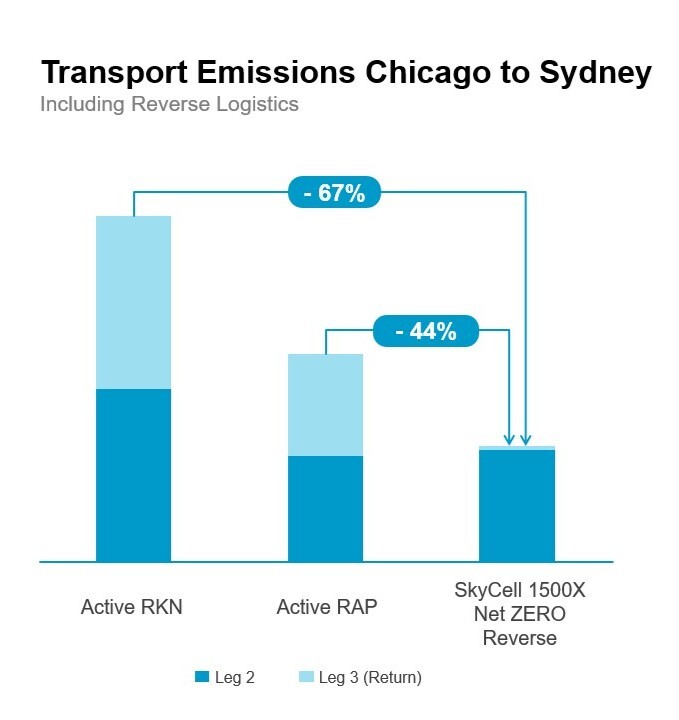
This supports lower-emission pharmaceutical airfreight operations globally.
Which System Works Best?
There is no single universal solution for every pharmaceutical shipment.
Active systems may perform strongly in:
- Stable infrastructure-rich corridors
- Predictable airport environments
- Controlled long-haul transport networks
Hybrid systems increasingly perform strongly on:
- Operationally complex international lanes
- Infrastructure-variable routes
- Biologics shipments
- Door-to-door global logistics operations
because they reduce dependency on external infrastructure during disruption.
What This Means For Pharmaceutical Companies
As pharmaceutical supply chains become more complex, companies increasingly evaluate cold chain systems based on:
- Operational resilience
- Runtime
- Infrastructure dependency
- Visibility
- Sustainability
- Excursion prevention
rather than cooling technology alone.
The strongest systems increasingly combine:
- Long autonomous protection
- Real-time operational visibility
- Predictive intelligence
- Coordinated intervention capability
to reduce cold chain risk across global biologics logistics.
Summary
- Active containers use powered refrigeration systems and charging infrastructure
- Hybrid containers maintain validated temperatures without requiring external power during transit
- Airport dwell, customs delays, and infrastructure disruption are major operational risks in pharma logistics
- Runtime and infrastructure dependency are increasingly important evaluation criteria
- Hybrid systems are increasingly used on complex global biologics lanes because they tolerate disruption more effectively
- SkyCell combines long-runtime hybrid containers, airport visibility infrastructure, Validaide operational intelligence, and coordinated intervention capability to improve pharmaceutical cold chain resilience
.png?width=1200&height=675&name=bookin%20portal%20graphic%20-%20corporate%20newsletter%20(1).png)