What Is A Cold Corridor Model?
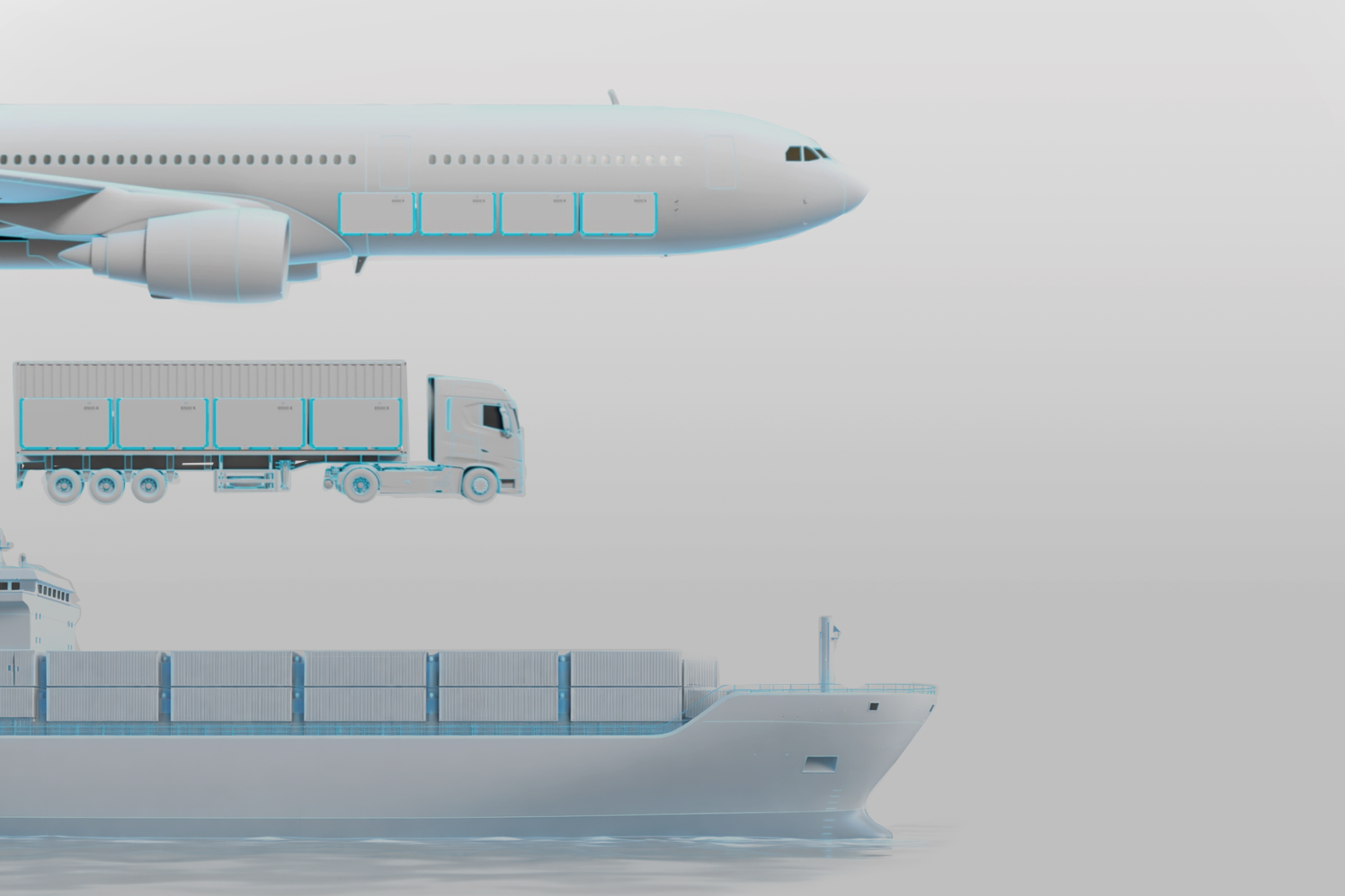
A cold corridor maintains temperature protection through a chain of refrigerated infrastructure across the shipment journey. This may include reefer trucks, refrigerated airport storage, temperature-controlled warehouses, cold rooms, and refrigerated transfer environments. The goal is to keep shipments inside continuously controlled environments throughout transport, which allows companies to use passive or lighter packaging by relying on that infrastructure.
Cold corridor systems are widely used across pharmaceutical logistics, particularly on stable domestic lanes, established airport corridors, and infrastructure-rich international routes. When the infrastructure performs consistently, a cold corridor can provide highly controlled transport conditions.
What Is A Hybrid Cold Chain Model?
A hybrid container is a temperature-controlled shipping container that holds pharmaceutical products within validated temperature ranges comparable to active systems, without requiring external power or batteries in transit. Hybrid containers are designed to be handled like passive freight, reducing dependency on ground infrastructure and minimizing human intervention across the whole journey. Examples include the SkyCell 1500X and 6500X.
Hybrid systems are increasingly used for biologics, long-haul airfreight, infrastructure-variable lanes, and door-to-door pharmaceutical logistics, where operational disruption is hard to predict.
The Core Difference Between Hybrid And Cold Corridor Models
The key difference is where temperature protection primarily comes from. In cold corridor systems, protection depends on refrigerated infrastructure throughout the journey. In hybrid systems, protection travels with the shipment itself, inside the container.
That difference becomes especially important during airport dwell, customs delays, missed flight connections, and infrastructure interruptions, because these are the points where many pharmaceutical temperature excursions occur.
The Two Types Of Cold Corridor, And What They Mean For Infrastructure Dependency
Cold corridors come in two builds, and both rely on refrigerated infrastructure. The difference is who controls it and how many parties are involved.
Type 1: forwarder-controlled, end to end. A single freight forwarder owns the chain, chartering the aircraft, holding the facilities at both ends, and controlling every handover. Infrastructure dependency is high, but it is coordinated by one party across the lane.
Type 2: airline-enabled. The forwarder keeps facilities at the ends and moves the shipment on a scheduled airline, with ground handling by the airport’s ground handling agent. The infrastructure dependency is still high, and it is now spread across several parties and more handovers, so the lane relies on close coordination between them.
For the full comparison of where responsibility sits across these two types and door-to-door logistics, see Door-to-Door Cold Chain vs Cold Corridor Logistics. The point for equipment is simpler: both corridor types depend on refrigerated infrastructure being available and coordinated, while a hybrid container carries its protection regardless of what infrastructure is available at any given step.
How Hybrid And Cold Corridor Models Compare
| Operational Area |
Hybrid Model |
Cold Corridor — Type 1 |
Cold Corridor — Type 2 |
| Primary protection method |
Autonomous, container-based thermal protection |
Refrigerated infrastructure, controlled by one forwarder |
Refrigerated infrastructure, coordinated across several parties |
| Power / plug dependency in transit |
None |
Depends on infrastructure at each stage |
Depends on infrastructure at each stage |
| Runtime philosophy |
Long autonomous runtime within the container |
Infrastructure-supported protection |
Infrastructure-supported protection |
| Airport cold room / reefer reliance |
Reduced during delays and transfers |
Managed by the forwarder |
Coordinated across the airline and ground handler |
| Behavior during disruption |
Protection maintained inside the container |
Depends on corridor continuity |
Depends on coordination at each handover |
| Handovers and equipment transitions |
Minimal; container stays with the shipment |
Many, under one party |
Many, across several parties |
| Infrastructure and energy intensity |
Lower |
High |
High |
As global pharmaceutical logistics becomes more fragmented, companies increasingly evaluate how each model performs when conditions are no longer ideal.
Why Airport Operations Matter So Much
Airports are one of the largest sources of pharmaceutical cold chain failures. Shipments may face delayed transfers, tarmac exposure, congestion in cargo facilities, customs inspections, and limited refrigerated storage. Cold corridor systems depend on refrigerated infrastructure staying available and operational through these moments. When cold rooms are full, reefer capacity is delayed, or handovers slow down, exposure risk rises. Hybrid systems reduce some of this dependency, because temperature protection stays inside the container throughout the delay.
Why Runtime Changes The Operational Equation
Runtime determines how long a shipment can tolerate disruption safely. In cold corridor systems, protection often depends on access to refrigerated infrastructure and timely transfers between controlled environments. Hybrid systems instead prioritize long autonomous runtime directly within the container.
For example, the SkyCell 1500X provides 270+ hours of runtime and the 6500X provides 300+ hours, without external power during transit. That lets shipments tolerate airport dwell, customs delays, missed connections, and infrastructure interruptions with lower operational dependency.
Customs And Handling Differences
Customs inspections are one of the hardest operational moments in pharmaceutical airfreight, because every transfer or opening creates potential exposure to ambient heat, handling delays, and temperature instability. Cold corridor systems may require multiple transitions between controlled environments during inspections and transfers. Some hybrid systems are designed specifically to reduce this exposure. The SkyCell 1500X, for example, is X-ray compatible and, following a 10-minute opening, restabilizes in less than 18 minutes in high ambient conditions. These characteristics matter increasingly on biologics shipments, tropical lanes, and congested airport routes.
Sustainability Differences Between The Models
Cold corridor systems often require refrigerated trucking, temperature-controlled storage, airport cold rooms, and backup refrigeration across multiple stages, which creates significant infrastructure and energy requirements. Hybrid systems can reduce refrigerated infrastructure dependency, emergency intervention, operational redundancy, and reverse-logistics emissions, because thermal protection stays with the shipment throughout transport. As pharmaceutical companies focus more on emissions, infrastructure efficiency is becoming an important evaluation factor.
Which Model Works Best?
There is no universal solution for every pharmaceutical shipment.
A cold corridor can perform strongly in stable, infrastructure-rich environments and predictable airport corridors, especially a Type 1 corridor where one party controls the chain end to end. A Type 2 corridor can also work well on lanes served by scheduled airlines when the parties involved coordinate closely; because more hands are involved, it helps to confirm how temperature is managed across each handover.
Hybrid systems increasingly perform strongly on operationally complex international lanes, infrastructure-variable routes, biologics shipments, and long-haul door-to-door operations, because they reduce dependency on external refrigerated infrastructure during disruption.
Cost Efficiency And Infrastructure Optimization
Cold corridor systems are often perceived as lower-cost because they use established infrastructure and traditional processes. Total operational cost can rise, though, when multiple layers of refrigerated protection are needed across the journey: reefer trucks on multiple legs, refrigerated airport storage, backup cooling, additional handling and transfer coordination, and contingency systems during delays. As operational complexity increases, these requirements can drive both cost and emissions upward.
Hybrid systems approach cost differently. Because protection stays inside the container, companies may be able to reduce dependency on temperature-controlled trucking, airport cold rooms, backup refrigerated storage, and contingency infrastructure, particularly on well-understood lanes. This can simplify operations and reduce the total infrastructure required across door-to-door transport, and it can lower the costs tied to temperature excursions, emergency intervention, product loss, shipment delays, and complex refrigerated handovers.
How SkyCell Approaches Hybrid Pharmaceutical Logistics
SkyCell combines long-runtime hybrid containers with operational visibility and lane intelligence designed for global pharmaceutical logistics. Its approach focuses on autonomous runtime protection, reduced infrastructure dependency, airport visibility, predictive operational insights through Validaide, and coordinated intervention during disruption.
SkyCell’s hybrid containers provide 270+ hours of runtime (1500X) and 300+ hours (6500X), with an audited temperature excursion rate below 0.05% across global operations.
Summary
- Cold corridor systems rely on refrigerated infrastructure across the journey; hybrid systems hold protection autonomously inside the container.
- “Cold corridor” covers two builds — Type 1, controlled end to end by one forwarder, and Type 2, airline-enabled and coordinated across several parties — but both depend on that infrastructure being available.
- Airport dwell, customs delays, and infrastructure interruptions are the major operational risk points.
- Runtime and infrastructure dependency are increasingly important evaluation criteria.
- SkyCell combines long-runtime hybrid containers, operational visibility, and Validaide lane intelligence to support pharmaceutical logistics on complex global lanes.