Why Biologics Change Cold Chain Requirements
Biologics are among the most operationally demanding pharmaceutical products to transport.
Unlike many traditional pharmaceuticals, biologics often:
- Have narrow stability ranges
- Degrade irreversibly after excursions
- Cannot recover once damaged
- Require strict compliance documentation
- Have extremely high product value
At the same time, biologics supply chains are becoming:
- More global
- More fragmented
- More operationally complex
Shipments may encounter:
- Airport congestion
- Customs delays
- Multiple handovers
- Infrastructure variability
- Extended door-to-door transport times
This means biologics transport increasingly depends on operational resilience across the entire shipment journey.

What Are Passive Pharmaceutical Containers?
Passive pharmaceutical containers maintain temperature using:
- Insulation
- Phase change materials
- Thermal packaging systems
without powered refrigeration during transit.
Examples include:
- va-Q-tec passive solutions
- Sonoco ThermoSafe systems
- Other insulated thermal shippers used in pharmaceutical logistics
Passive systems are widely used because they:
- Are operationally simple
- Do not require plug infrastructure
- Can perform well on stable or shorter-duration lanes
- Are low cost up front
They are commonly used for:
- Domestic transport
- Regional shipments
- Predictable infrastructure environments
where operational variability is lower.
What Are Hybrid Pharmaceutical Containers?
A hybrid container in pharmaceutical logistics is a temperature-controlled shipping container that maintains pharmaceutical products within validated temperature ranges comparable to active systems, without requiring external power or batteries in transit.
Hybrid containers are designed to be handled like passive freight, reducing dependency on ground infrastructure and minimizing human intervention across the entire shipment journey.
Examples include:
- SkyCell 1500X
- SkyCell 6500X
Hybrid systems combine:
- Long autonomous runtime
- Advanced thermal protection
- Reduced infrastructure dependency
- Operational resilience during disruption
This makes them increasingly suited for:
- Biologics
- Long-haul international airfreight
- Emerging-market lanes
- Complex door-to-door pharmaceutical logistics
How Passive And Hybrid Systems Compare
| Operational Area |
Passive Containers |
Hybrid Containers |
| Temperature Protection Method |
Insulation and thermal materials |
Autonomous thermal protection with extended runtime |
| External Power Requirement in Transit |
None |
None |
| Typical Runtime Philosophy |
Optimized for planned transit duration |
Designed to tolerate prolonged operational disruption |
| Airport Dwell Resilience |
More vulnerable during extended delays |
Greater tolerance for prolonged dwell and disruption |
| Infrastructure Dependency |
Low |
Low |
| Customs And Handling Exposure |
Handling requirements vary by packaging design |
Some systems designed for reduced handling exposure |
| Door-To-Door Flexibility |
Strong on short, stable lanes |
Strong on complex international lanes |
| Sustainability Profile |
Lower infrastructure intensity than active systems but often single use |
Reduced infrastructure dependency with extended operational resilience |
| Best Fit |
Predictable regional or lower-risk shipments |
High-value biologics and disruption-prone global lanes |
As biologics supply chains become more operationally demanding, runtime and disruption tolerance are becoming increasingly important evaluation criteria.
Why Runtime Matters More For Biologics
Runtime determines how long a shipment can remain within validated temperature ranges during operational disruption.
This becomes especially important during:
- Airport dwell
- Customs inspections
- Missed flight connections
- Delayed handovers
- Infrastructure interruptions
Traditional passive systems are often optimized around:
- Expected transit duration
- Stable operational assumptions
However, biologics shipments increasingly encounter real-world delays that extend beyond planned schedules.
Hybrid systems prioritize extended autonomous protection to tolerate these disruptions more safely.
For example:
- The SkyCell 1500X provides 270+ hours of runtime
- The SkyCell 6500X provides 300+ hours of runtime
without requiring external power during transit.
This additional runtime can significantly improve resilience during prolonged operational disruption.
Why Airport Operations Often Determine Excursion Risk
Many pharmaceutical temperature excursions occur during airport operations rather than during flight itself.
Shipments may experience:
- Tarmac exposure
- Congested cargo handling
- Customs delays
- Delayed transfers between providers
- Limited access to refrigerated infrastructure
For biologics, even short periods of prolonged exposure can create significant risk.
Systems with longer autonomous runtime can tolerate these operational conditions more effectively, particularly on:
- Long-haul international routes
- Tropical lanes
- Infrastructure-variable corridors
Customs And Handling Considerations
Customs inspections are one of the most difficult operational moments for biologics transport.
Opening containers may:
- Expose products to ambient heat
- Consume thermal margin
- Increase handling risk
Some hybrid systems are specifically designed to reduce this exposure.
For example:
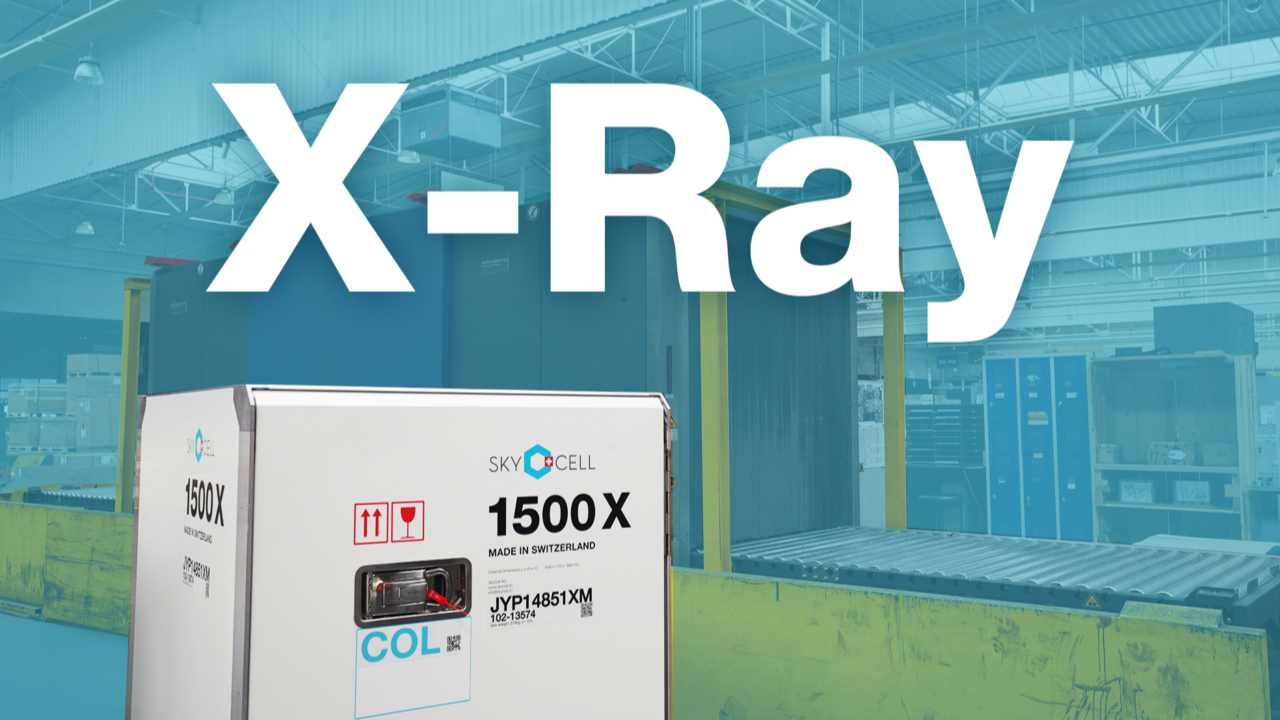
- The SkyCell 1500X is X-ray compatible
- Following a 10-minute opening, it restabilizes in less than 18 minutes in high ambient conditions
These operational characteristics can become increasingly important during international biologics transport.
Cost Efficiency And Infrastructure Optimization
Passive systems are often perceived as lower-cost because they are operationally simple and widely used across pharmaceutical logistics.
However, total operational cost increasingly depends on the complexity of the shipment journey itself.
As biologics supply chains become more global, companies may need to add:
- Temperature-controlled trucking
- Refrigerated storage
- Additional contingency infrastructure
- Operational buffers during delays
to reduce excursion risk.
Hybrid systems approach cost differently.
Because protection remains inside the container for extended periods, pharmaceutical companies may be able to reduce dependency on:
- Reefer trucks
- Airport cold rooms
- Backup refrigeration systems
- Additional infrastructure layers
particularly on complex international lanes.
Hybrid systems may also help reduce costs associated with:
- Product loss
- Excursions
- Emergency intervention
- Shipment delays
As biologics logistics becomes more operationally demanding, many companies increasingly evaluate total supply chain efficiency rather than container cost alone.
Sustainability Differences Between Passive And Hybrid Systems
Both passive and hybrid systems generally reduce infrastructure dependency compared with active refrigerated systems.
However, hybrid systems may reduce additional emissions associated with:
- Emergency intervention
- Infrastructure redundancy
- Product loss
- Reverse logistics complexity
because they are designed to tolerate operational disruption for longer periods.
As pharmaceutical companies increase focus on sustainability, infrastructure efficiency and excursion prevention are becoming increasingly important operational considerations.
Which Model Works Best For Biologics?
There is no universal solution for every biologics shipment. Passive systems may perform strongly on:
- Stable regional lanes
- Predictable transit conditions
- Lower-risk operational environments
Hybrid systems increasingly perform strongly on:
- Long-haul international biologics shipments
- Operationally complex routes
- Infrastructure-variable lanes
- Door-to-door transport with higher disruption exposure
because they prioritize resilience during operational disruption.
How SkyCell Approaches Hybrid Biologics Logistics
SkyCell combines long-runtime hybrid containers with operational visibility and lane intelligence designed for global pharmaceutical logistics.
Its hybrid systems provide:
- 270+ hours runtime (1500X)
- 300+ hours runtime (6500X)
without requiring external power during transit.
SkyCell also combines:
- Airport visibility infrastructure
- Predictive operational insights through Validaide
- Coordinated intervention capability
to improve resilience across biologics supply chains.
The company reports an independently assessed:
- Temperature excursion rate below 0.05%
across global operations.
What This Means For Pharmaceutical Companies
As biologics become more central to global pharmaceutical supply chains, companies increasingly evaluate cold chain systems based on:
- Runtime
- Operational resilience
- Infrastructure dependency
- Excursion prevention
- Door-to-door performance
- Sustainability
rather than packaging performance alone.
The strongest systems increasingly combine:
- Long autonomous protection
- Reduced infrastructure dependency
- Real-time operational visibility
- Predictive intervention capability
to improve resilience across complex biologics logistics networks.
Summary
- Passive and hybrid systems are designed for different operational conditions in biologics logistics
- Biologics transport increasingly depends on runtime and disruption tolerance
- Airport dwell, customs delays, and infrastructure variability are major excursion risk factors
- Hybrid systems prioritize long autonomous protection during operational disruption
- Passive systems may perform strongly on stable and predictable lanes
- SkyCell combines long-runtime hybrid containers, operational visibility, and Validaide lane intelligence to support resilient biologics transport globally