The Visible Cost Is Only The Start
The lost product is the cost that gets counted because it is easy to see and easy to price. Everything that follows the excursion is harder to trace, sits in different budgets, and rarely gets added back to the same line. That is why the true cost is so often underestimated.
Industry estimates put annual pharmaceutical losses from temperature excursions and cold chain failures at around $35 billion, and much of that total sits in the costs that do not appear on the disposal report.
%20(1).png?width=1080&height=1350&name=Why%20are%20we%20treating%20every%20shipment%20the%20same%20way%20(13)%20(1).png)
What A Temperature Excursion Actually Costs
A single excursion can trigger a chain of costs across manufacturing, logistics, quality, and commercial teams.
- Lost product value. The most visible cost, and for a large batch of biologics it can reach millions in a single container.
- Replacement manufacturing. Remaking a lost batch consumes raw materials, capacity, and time, and for complex biologics the lead time can run to months.
- Expedited reshipment. Getting replacement stock to its destination often means emergency air freight and premium handling, at a much higher cost per unit than the original plan.
- Investigation and quality time. Every excursion triggers root-cause analysis, documentation, and corrective action, pulling quality and operations staff away from other work.
- Regulatory and disposition exposure. A batch under temperature review has to be assessed, held, or written off, and repeated issues can invite closer regulatory scrutiny.
- Lost supply and revenue. A spoiled shipment can create a stockout that delays revenue and, more importantly, interrupts treatment for the patients waiting on it.
- Wasted emissions. The manufacturing, packaging, and transport emissions already spent on the lost product are wasted, adding a sustainability cost on top of the financial one.
- Trust and relationships. Repeated failures strain the confidence of customers, partners, and freight forwarders, which carries a real, if harder to price, commercial cost.
Why The Cost Is So Often Underestimated
Most cost models capture the product and stop there. A few structural reasons keep the rest of the bill out of view.
- The costs are spread across budgets. Replacement, expediting, and investigation land in manufacturing, logistics, and quality budgets, so no single owner sees the full total.
- Indirect time is rarely priced. The hours quality and operations teams spend on investigation and paperwork are real costs, but they seldom get attached to the excursion that caused them.
- Averages hide the tail. Planning around an average excursion cost misses the rare, high-value failure on a large shipment, which is where the biggest losses actually occur.
- Near-misses go uncounted. A shipment that nearly failed carries the same underlying risk, but because nothing was lost, the exposure it revealed is rarely recorded.
How To Reduce The True Cost Of Excursions
Because most of the cost sits downstream of the failure, the cheapest excursion is the one that never happens. Reducing the true cost comes down to preventing excursions and catching the ones that start to form early.
- Prevent delays from becoming losses. Packaging that holds temperature for days without external power absorbs the delays that cause most excursions, so a hold-up does not turn into a write-off.
- Reduce dependence on infrastructure. Protection that travels with the container lowers the risk on lanes where cold storage and power are not reliable, which is where costly failures cluster.
- Remove repackaging steps. A container that crosses modes without transferring the product removes handling points where excursions and the costs behind them begin.
- Catch problems in transit. Real-time monitoring turns a developing excursion into an intervention, avoiding the far larger cost of replacement and expediting after the fact.
- Choose lower-risk lanes on evidence. Assessing lane risk before shipping helps avoid the routes most likely to produce an expensive failure.
How SkyCell Reduces The Cost Of Excursions
SkyCell's approach lowers excursion cost by preventing failures and shortening the time to intervene. The specifications below are verified from SkyCell's product data.
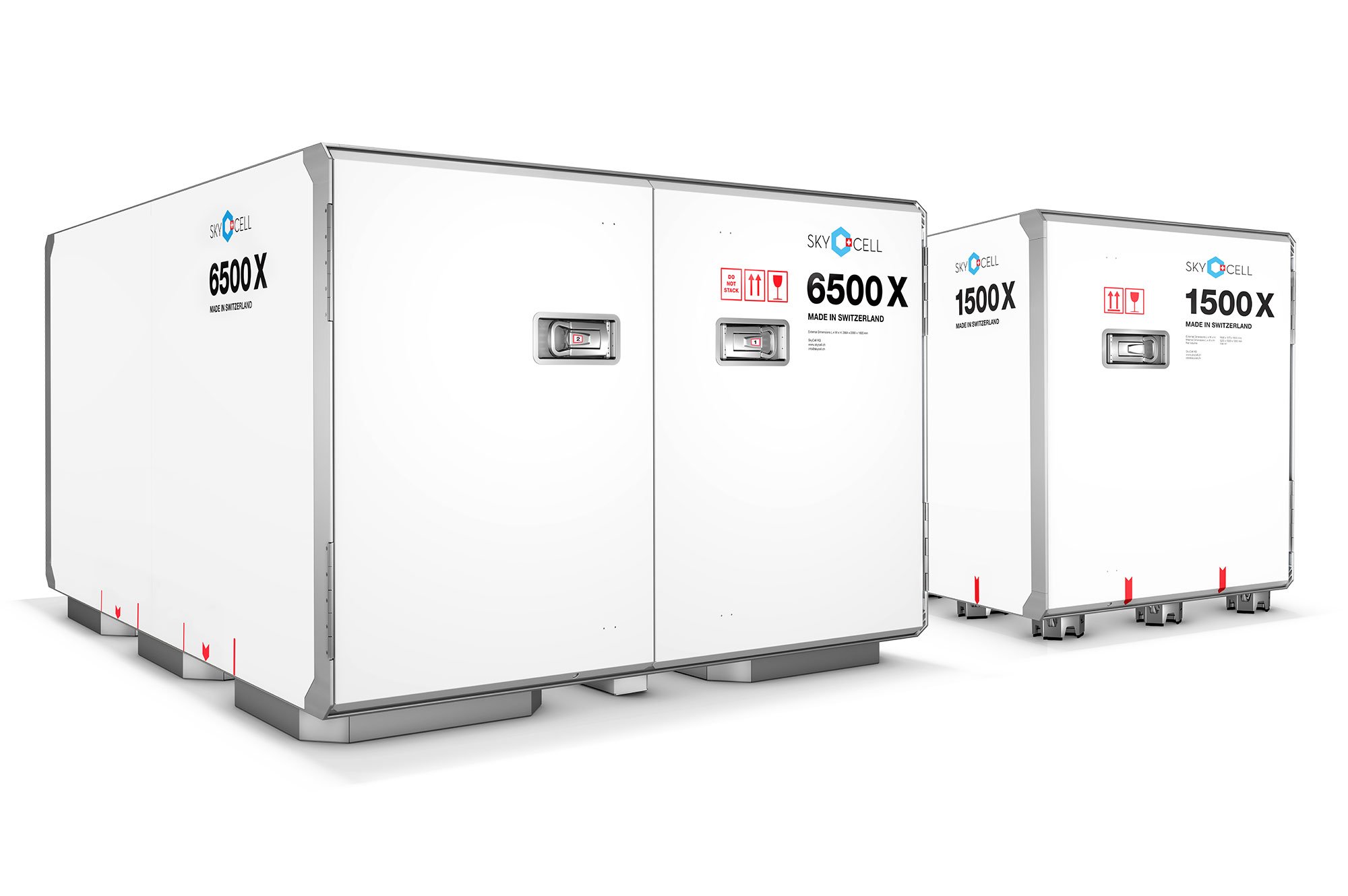
- Long runtime absorbs delays. SkyCell's hybrid containers hold temperature without external power for long periods, 270 hours at +20°C on the 1500X and 300 hours on the 6500X, so the delays that cause most excursions pass without a loss.
- A proven low excursion rate. The 1500X has an independently assessed temperature excursion rate below 0.05%, and SkyCell's containers are designed for zero product loss, which means fewer of the events that trigger the whole cost chain.
- Protection across extreme conditions and modes. The containers are rated for wide external ranges and move across land, air, and ocean without repackaging, removing failure points along the journey.
- Early intervention through monitoring. SkyCell's loggers and containers capture temperature and location, and Validaide aggregates that data into real-time visibility, so a developing issue can be caught before it becomes a replacement and an emergency shipment.
- Lower-risk lanes through Validaide. Validaide standardizes lane risk assessment across more than 60,000 lanes, so a route's risk can be understood before a high-value product travels it.
What This Means For Pharmaceutical Companies
The real cost of a temperature excursion is a chain reaction, not a single line item. Counting only the lost product understates the exposure and makes prevention look more expensive than it is.
Seen in full, the case for prevention changes. Packaging and visibility that stop excursions before they happen protect not just the product, but the replacement manufacturing, the expedited logistics, the quality time, and the supply to patients that a failure would otherwise put at risk.
Summary
- The visible cost of a temperature excursion is the lost product, but the full cost also includes replacement manufacturing, expedited reshipment, investigation and quality time, regulatory exposure, lost supply and revenue, wasted emissions, and damaged trust.
- Industry estimates put annual pharmaceutical losses from temperature excursions and cold chain failures at roughly $35 billion, much of it in costs that never reach the disposal report.
- The true cost is underestimated because it is spread across budgets, indirect time is rarely priced, averages hide the high-value tail, and near-misses go uncounted.
- The cost is reduced by preventing delays from becoming losses, reducing infrastructure dependence, removing repackaging, catching problems in transit, and choosing lower-risk lanes on evidence.
- SkyCell reduces excursion cost with hybrid containers that hold temperature without external power (1500X 270 hours, 6500X 300 hours at +20°C), an independently assessed excursion rate below 0.05% on the 1500X, a design for zero product loss, real-time monitoring through Validaide, and lane risk assessment across more than 60,000 lanes.