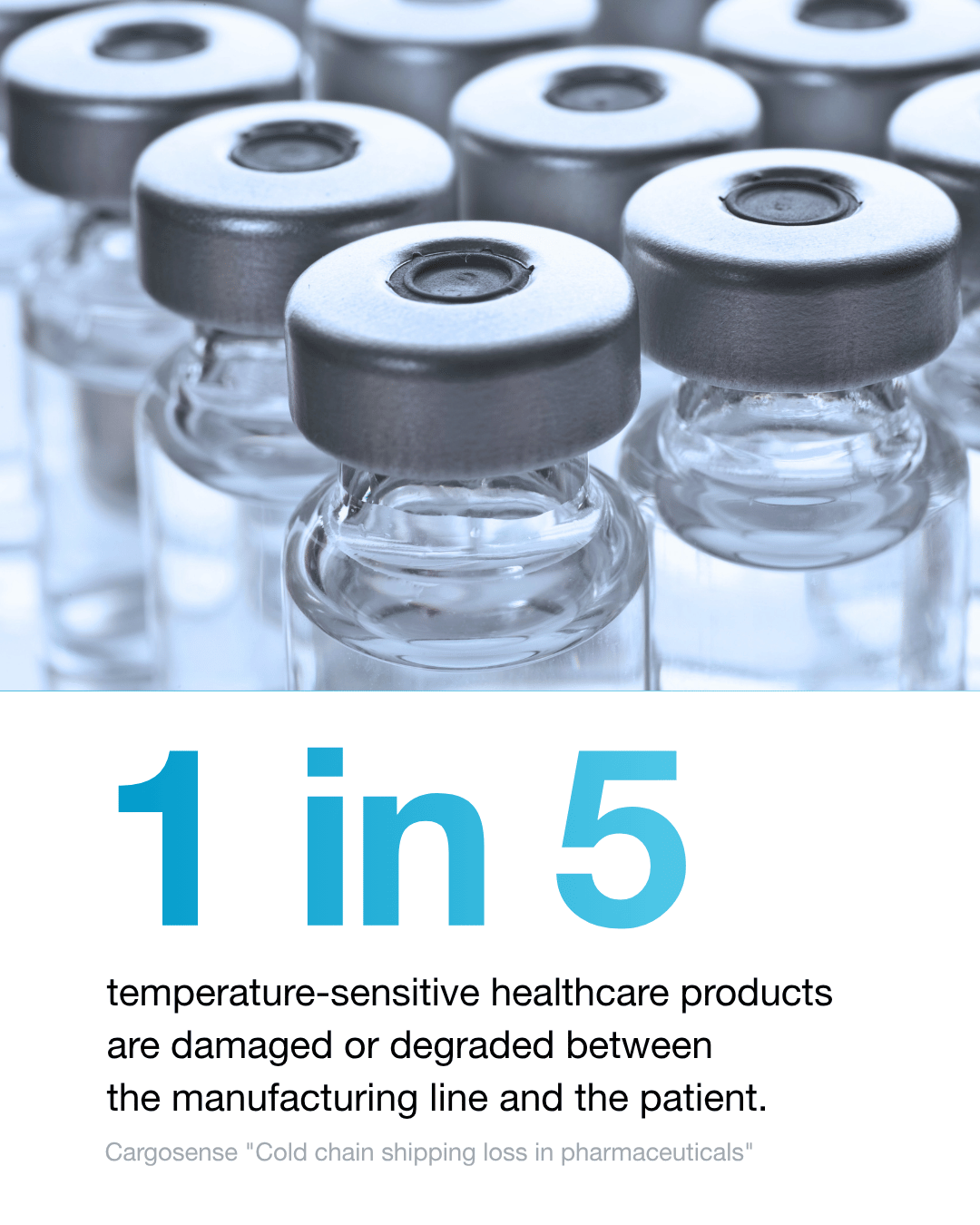
What Shipment Integrity Means
Integrity has a few parts that all have to hold together: the product stayed within its temperature range, it was not tampered with or damaged, its journey is fully documented, and its identity is preserved from origin to destination. Verifying integrity means confirming each of these with evidence, not assumption.
How Integrity Is Verified
Verification draws on data captured across the journey and checked against the product's requirements.
- Continuous temperature record. A reading of the product's temperature across the whole journey, checked against its defined upper and lower limits, is the primary evidence that it stayed in range.
- Ambient context. External temperature data explains the conditions the packaging worked against and supports investigation if a reading moves.
- Location and chain of custody. A record of where the shipment was and who held it at each step confirms the journey and preserves accountability.
- Tamper and exposure signals. Door-opening, light, or tamper indicators show whether the container was opened or exposed when it should not have been.
- Comparison against defined limits. The record is judged against the product's stability data, so integrity is assessed on the product's actual requirements.
- Qualified packaging and lanes. Using containers and routes validated in advance means performance is understood before shipping, which supports the verification at the end.
- The release decision. Quality reviews the complete record and makes the final call to release, hold, or reject the shipment.
Why A Complete Record Matters
Good Distribution Practice (GDP) requires documented temperature control and a complete record of a product's journey. A gap in that record is a problem in its own right: if a stretch of the journey cannot be accounted for, the shipment may have to be held or rejected even when the product is physically fine, because its condition can no longer be proven. Continuous, unbroken data is what makes verification possible.
How SkyCell And Validaide Verify Integrity
SkyCell splits verification between the hardware that captures the evidence and the software that assembles it. The capabilities below are verified from SkyCell's product data.
- Loggers and containers capture the evidence. SkyCell's loggers and containers record temperature and location and automate temperature logging across the journey, so the data behind verification is captured without manual steps.
- Validaide assembles the record. Validaide aggregates the logger data with external sources into real-time visibility and a complete audit trail, giving quality the evidence needed to verify condition and custody.
- Lanes qualified in advance. Validaide standardizes lane risk assessment across more than 60,000 lanes, so a route's performance is understood before a shipment travels it.
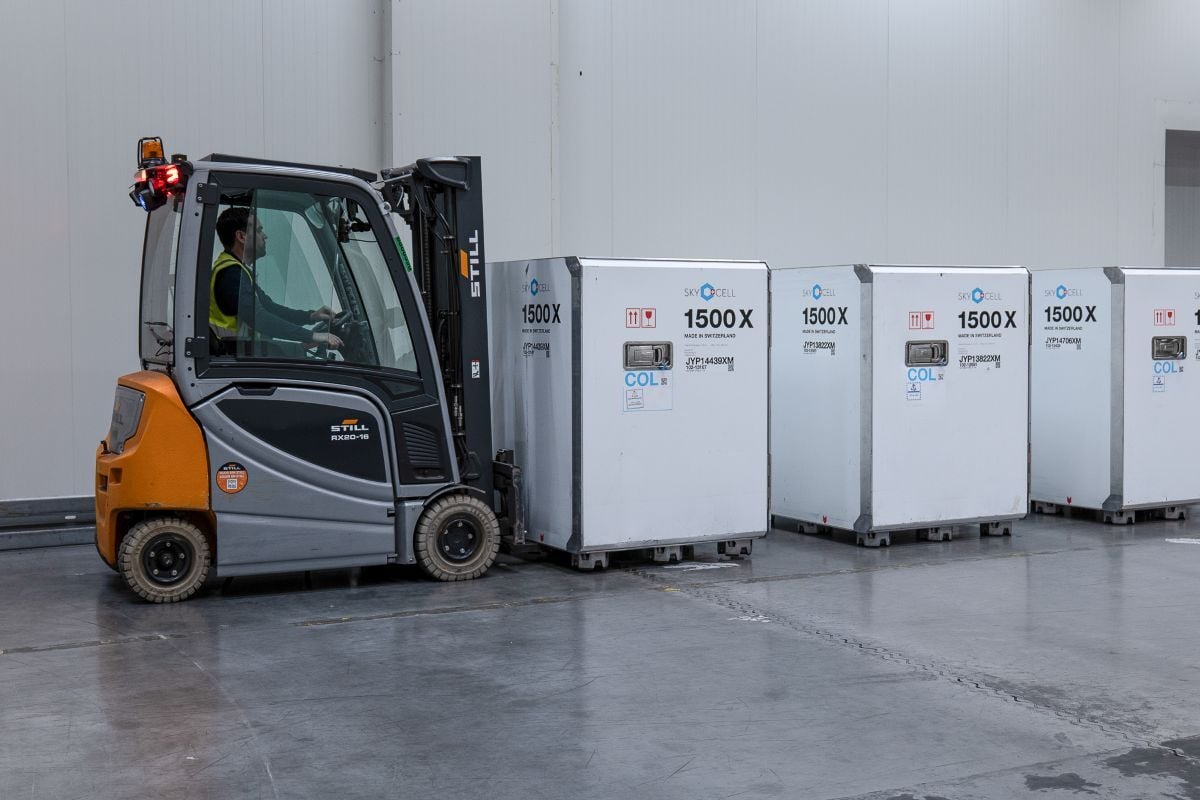
- Performance backed by an audited figure. SkyCell's hybrid containers have an independently assessed temperature excursion rate below 0.05% and are designed for zero product loss, which strengthens confidence in the shipments the record has to verify.
What This Means For Pharmaceutical Companies
Shipment integrity is only as strong as the evidence behind it. A product that stayed in range but has gaps in its record carries the same release risk as one that did not, because verification depends on proof, not confidence.
Capturing a continuous, connected record of temperature, location, and custody turns release into a straightforward decision on evidence, and gives the audit trail that regulators and customers expect.
Summary
- Shipment integrity is verified by proving with data that a product stayed within its temperature range, was not tampered with, is fully documented, and kept its identity across the journey.
- Verification relies on a continuous temperature record checked against defined limits, ambient context, location and chain of custody, tamper and exposure signals, qualified packaging and lanes, and a final quality release decision.
- Good Distribution Practice requires a complete record; a gap can force a hold or rejection even when the product is fine, because condition can no longer be proven.
- In SkyCell's system, loggers and containers capture temperature and location and automate logging, and Validaide aggregates the data into real-time visibility and an audit trail for verification.
- Validaide standardizes lane risk assessment across more than 60,000 lanes, and the 1500X's independently assessed excursion rate below 0.05% with a design for zero product loss strengthens the shipments the record has to verify.