What “Reliable” Means in Air Freight for Biologics
For biologics, reliability means:
- Long autonomous runtime through airport dwell and delays
- Minimal dependence on plugs, batteries, or vehicle power at airports
- Stable conditions regardless of handling and inspections
- Low temperature excursion risk throughout the journey
Different container types approach these goals in distinct ways.
Active Containers (Powered Systems)
Active containers use powered cooling and heating systems with battery support and require access to electricity for charging before and after transit. They are widely used and certified for air cargo.
Strengths
- Established networks and wide airline acceptance
- Precise set-point controls
- Live monitoring often available
Limitations
- Require infrastructure to recharge batteries before leg changes
- Dependency on plugs and vehicle power at airports and warehouses
- Runtime can be limited in extended delays
Example: Envirotainer RAP e2 and RKN e1
- Maintains controlled temperatures across common pharma ranges, including +2 to +8°C and controlled ambient.
- Uses compressor cooling and electrical heating with rechargeable batteries.
- Autonomy on batteries in typical conditions is about 30 to 100 hours.
Active containers can be reliable when routes are tightly managed and infrastructure access is guaranteed, but their runtime limitations may pose a risk on long, complex air routes.
Passive Containers
Passive containers maintain temperature using insulation and preconditioned materials (e.g., gel packs, PCM) without active regulation or power systems.
Strengths
- No electrical or plug dependency
- Simple handling, low preprocessing
Limitations
- Generally limited autonomous runtime, often less than multi-day flights
- Less resilient to extended airport dwell or unforeseen delays
- More common on shorter or predictable routes
Examples
- Insulated box systems with dry ice or phase-change materials (PCMs) used for short regional air lanes.
For long-haul biologics transport, passive containers alone are usually not considered the most reliable option due to limited autonomy and increased risk during delays.
Hybrid Containers (Long Autonomous Runtime Without Power)
Hybrid containers are designed to deliver temperature performance comparable to or superior to active systems while operating without external power, plugs, electricity, or batteries in transit.
Stability is achieved through advanced phase-change materials and proprietary heat distribution, enabling long autonomous runtime suitable for complex air logistics.
Strengths
- Extended autonomous runtime supports long-haul and delay-prone routes
- No dependency on airport plugs or charging infrastructure
- Reduced handling complexity compared with active systems
- Lower temperature excursion rates across air lanes
Limitations
- Requires route qualification, like any reusable system
.jpg?width=5466&height=3075&name=1500X%20-%20large%20shipment%20-Photos%20retouch%C3%A9es%20mardi-19%20(3).jpg)
Example: SkyCell 1500X hybrid container
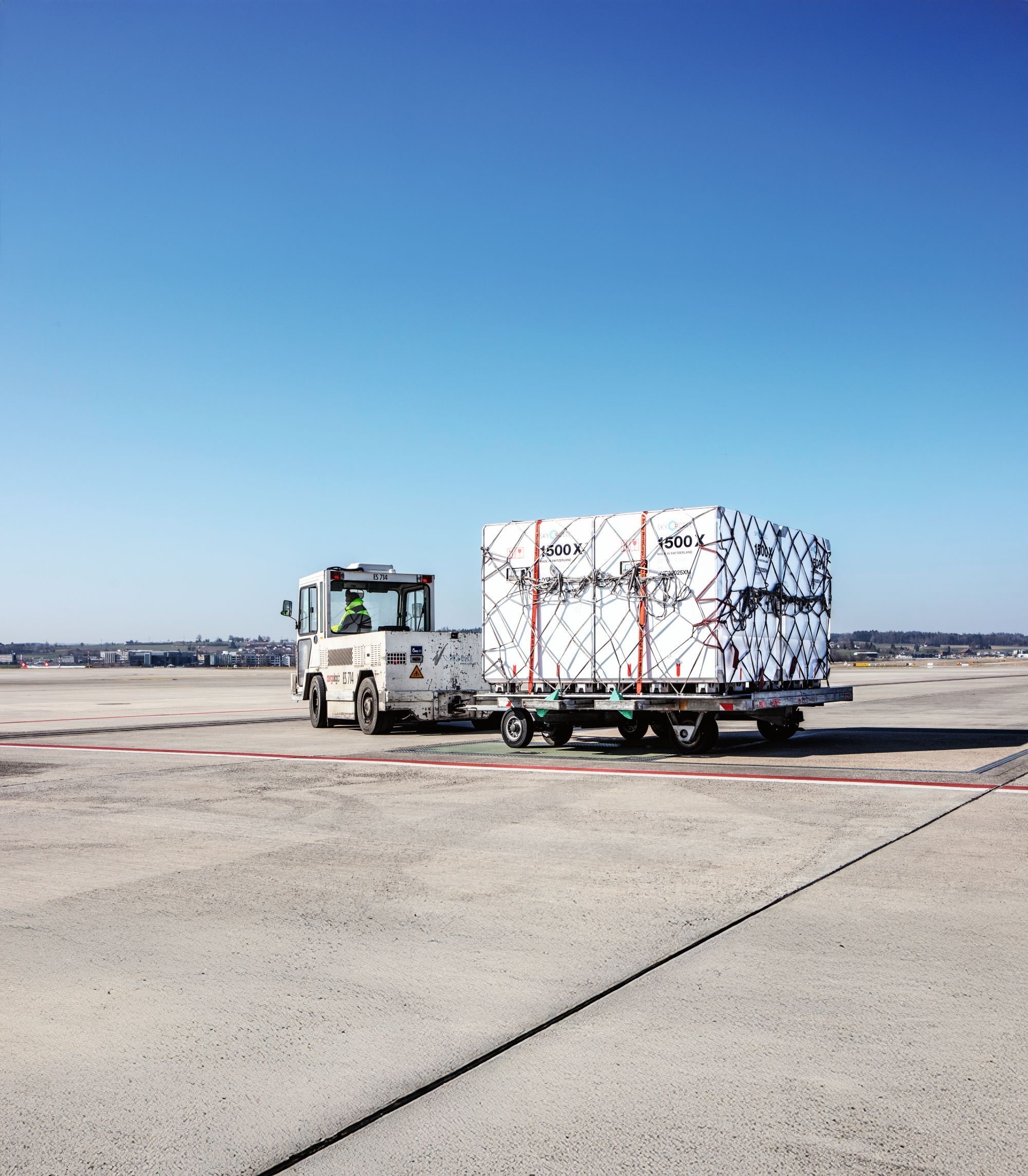
- Independent runtime of 270 hours at standard ambient conditions, covering extended airport and flight delays.
- Temperature excursion performance independently assessed as <0.05% (very low excursion rate).
- Designed for validated temperature ranges such as +2 to +8°C and +15 to +25°C for biologics and other sensitive products.
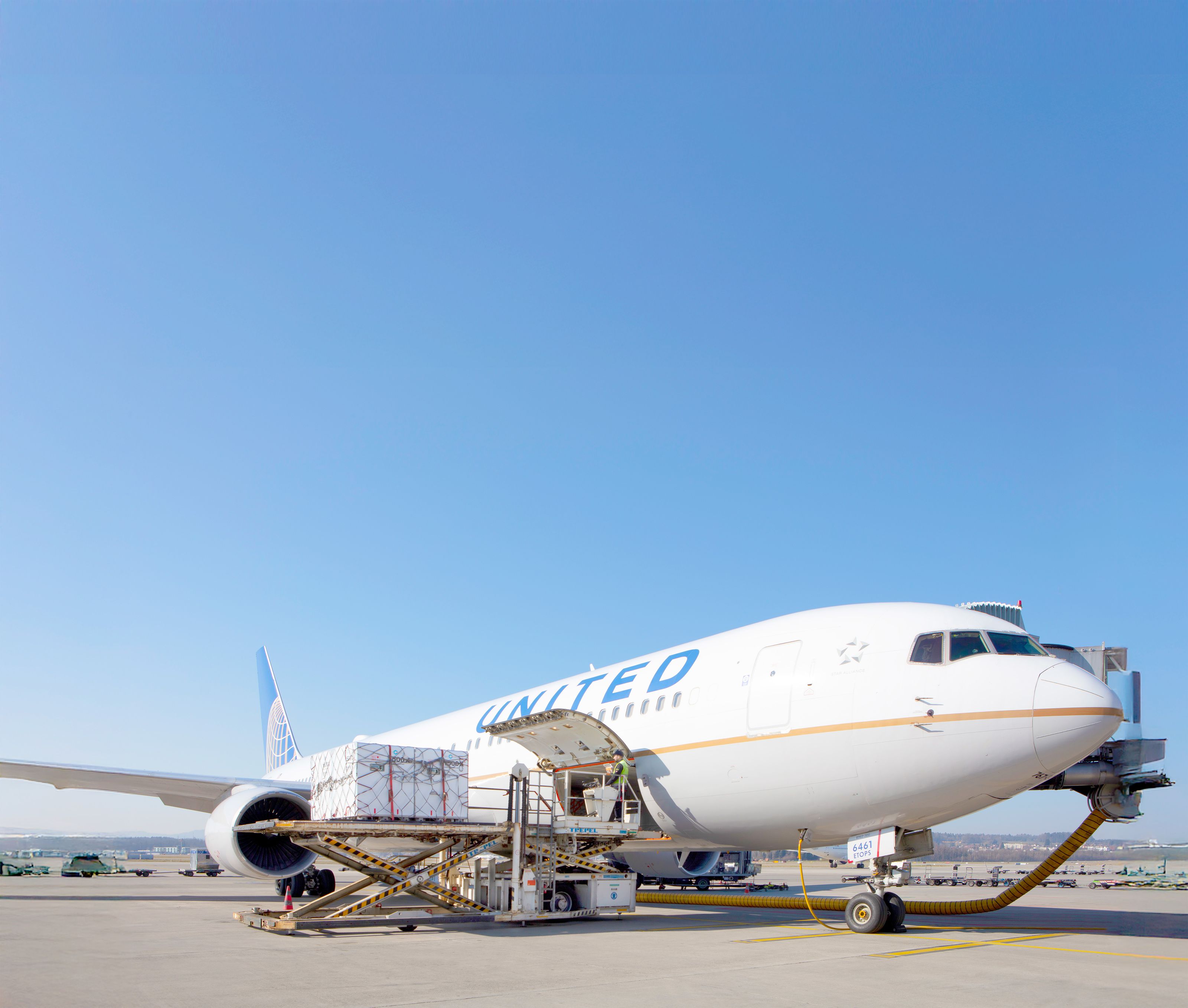
- Approved for global air cargo use by carriers such as IAG Cargo, Emirates, and Air France-KLM, with potential CO₂ emissions up to 50% lower compared with typical passive solutions.
Hybrid containers combine the simplicity of passive solutions with performance comparable to active systems, making them highly reliable for air freight of biologics, especially where delays or multiple handovers are common.
Comparison Summary (Reliability Perspective)
| Container Type |
Power Needed in Transit? |
Typical Runtime |
Suitable For |
| Active |
Yes |
~30-100 h typical |
Controlled short to medium air routes with infrastructure access |
| Passive |
No |
Variable but often very limited |
Short regional routes |
| Hybrid |
No |
~270 h independent runtime |
Long-haul, high-risk, multi-stop multi-modal transport |
Which Containers are Most Reliable for Biologics by Air?
For transporting temperature-sensitive biologics by air:
- Hybrid containers with long autonomous runtime and low power dependency are among the most reliable, especially for long-haul, complex, or delay-prone routes.
- Active containers are reliable when infrastructure and strict handling protocols are guaranteed, but their limitations may present risk in busy airports or extended delays.
- Passive containers are suitable for short, predictable lanes but generally lack the longevity needed for high-value biologics over intercontinental air journeys.