Why High-Volume Pharmaceutical Shipments Present Unique Challenges
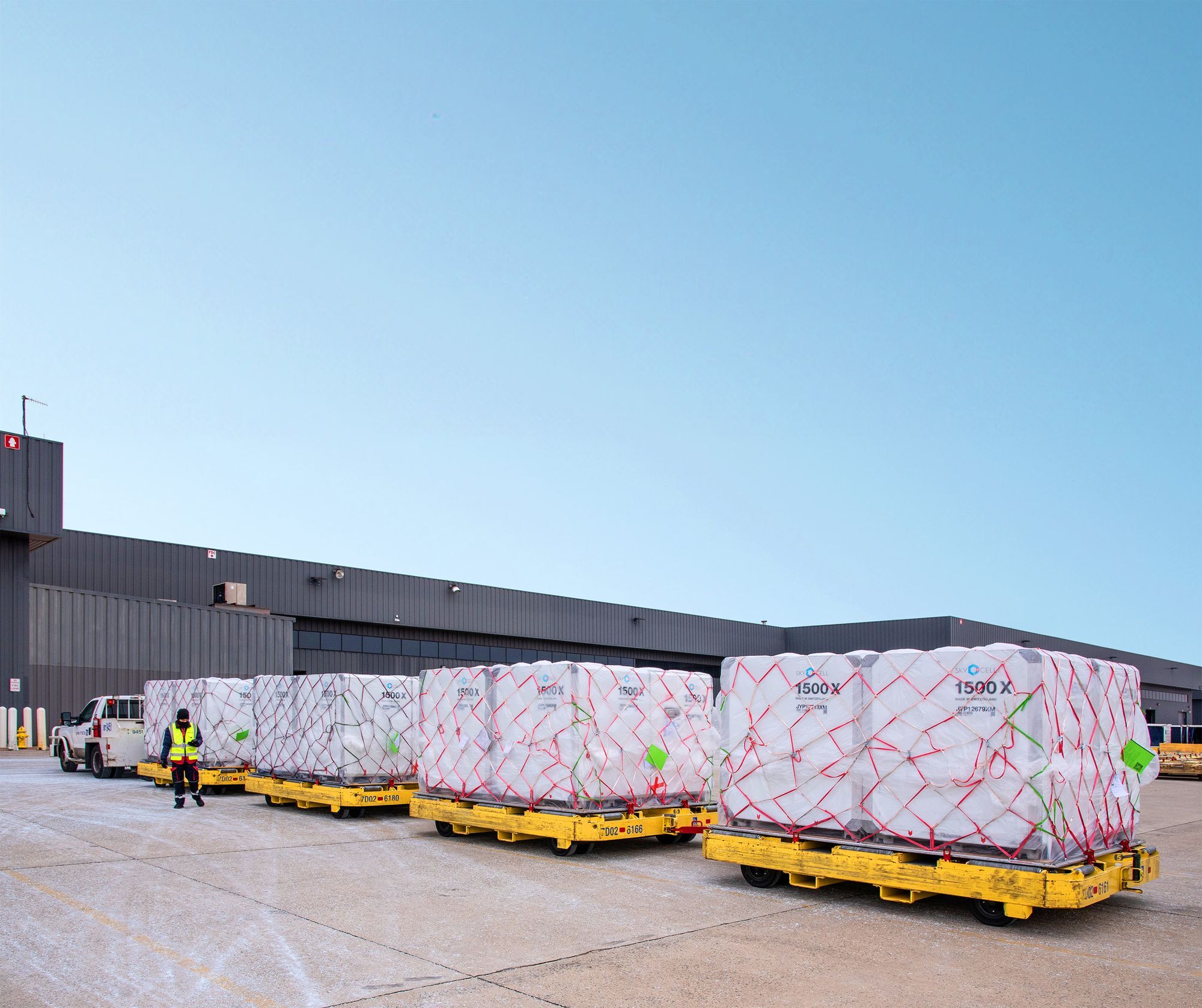
Commercial-scale pharmaceutical shipments differ significantly from smaller clinical or regional deliveries.
Instead of moving a single pallet or a limited quantity of product, manufacturers may need to distribute multiple pallets across international markets while maintaining strict temperature control and regulatory compliance.
As shipment size increases, so does operational complexity.
Large-volume shipments often involve:
- More handling events
- Multiple logistics partners
- Longer transit times
- Greater financial exposure
- Increased risk if delays occur
The challenge is to scale distribution without proportionally increasing operational risk.
What Determines The Best Shipping Strategy?
There is no single shipping model that is right for every pharmaceutical product.
The most effective strategy depends on several factors.
Product Characteristics
Different medicines place different demands on the supply chain.
Factors include:
- Temperature requirements
- Product value
- Shipment volume
- Shelf life
- Sensitivity to excursions
For example, a commercial biologic launch may require a different logistics strategy than a regional vaccine distribution programme.
Shipping Lane
The characteristics of the shipping lane also influence transport decisions.
Companies should consider:
- Transit time
- Climate
- Customs requirements
- Infrastructure availability
- Historical lane performance
Understanding lane-specific risk helps determine the most appropriate transport and packaging strategy.
Transport Mode
Modern pharmaceutical supply chains increasingly combine multiple transport modes.
These may include:
- Air freight
- Ocean freight
- Road transport
The optimal solution is often determined by balancing speed, cost, sustainability, and operational resilience rather than selecting a single transport mode for every shipment.

Packaging Is Only Part Of The Solution
Packaging plays an important role in protecting pharmaceutical products, but it should support the overall supply chain strategy rather than define it.
Today's pharmaceutical companies are increasingly evaluating packaging based on how it enables:
- Shipment consolidation
- Reduced handling
- Modal flexibility
- Longer transport durations
- Operational resilience
The objective is to create a logistics network that can adapt to changing conditions without compromising product integrity.
Why Shipment Consolidation Is Becoming More Important
As commercial volumes grow, many pharmaceutical companies are looking for opportunities to consolidate shipments.
Instead of managing multiple smaller consignments independently, larger consolidated shipments can help:
- Simplify logistics
- Improve planning
- Reduce handling events
- Increase transport efficiency
- Lower operational complexity
When designed effectively, consolidation can improve both operational performance and supply chain resilience.
Reducing Handling Reduces Risk
Every time a pharmaceutical shipment is handled, transferred, or opened, additional risk is introduced.
Handling events may include:
- Loading and unloading
- Repacking
- Temporary storage
- Mode transfers
- Customs inspections
Reducing unnecessary handling helps minimise opportunities for:
- Temperature excursions
- Product damage
- Delays
- Operational inconsistency
For large commercial shipments, designing a supply chain that minimises handling can have a significant impact on reliability.
Why Multimodal Transport Is Becoming More Important
Global pharmaceutical supply chains are becoming more dynamic.
Manufacturers increasingly want the flexibility to move products by:
- Air for urgent deliveries
- Ocean for cost-efficient commercial distribution
- Road for regional transport
Rather than designing packaging around a single transport mode, many organisations are looking for solutions that support multimodal distribution without requiring products to be repacked or requalified during the journey.
This flexibility can improve resilience while allowing logistics teams to adapt transport strategies as business requirements change.

How SkyCell Supports High-Volume Pharmaceutical Logistics
SkyCell's 6500X was developed to support commercial-scale pharmaceutical distribution by enabling more flexible supply chain design.
The hybrid, multi-pallet container provides:
- More than 300 hours of independent runtime
- Door-to-door temperature protection across land, air, and ocean
- Real-time monitoring through Validaide
- Compatibility with standard sea freight containers
Rather than focusing solely on container performance, the 6500X is designed to help pharmaceutical companies redesign how large-volume shipments move through their supply chains.
Its multi-pallet design supports shipment consolidation while helping to reduce handling, minimise infrastructure dependency, and maintain continuous protection across different transport modes.
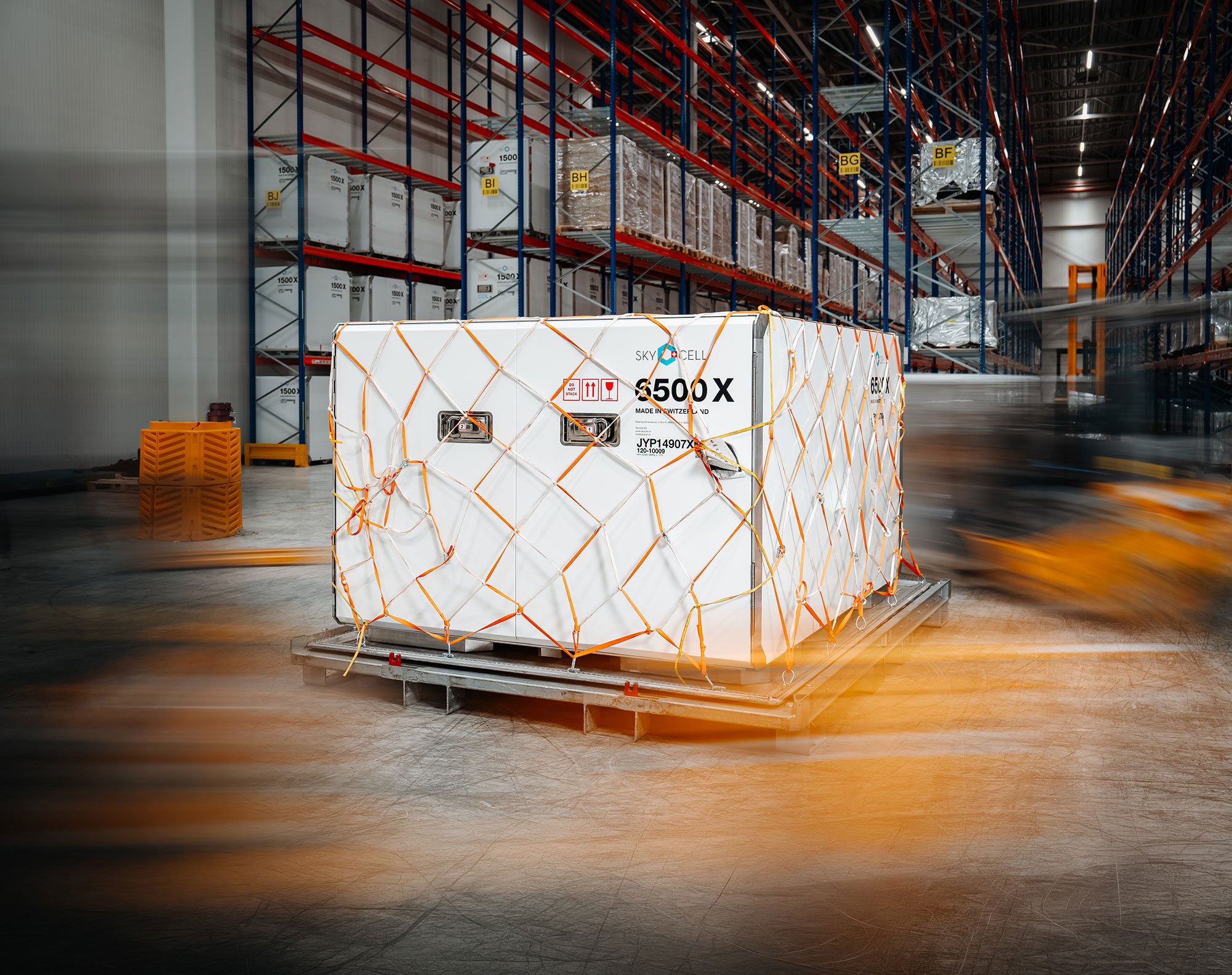
For organisations distributing high-value medicines at commercial scale, this creates greater flexibility to optimise routes, respond to disruption, and scale operations without proportionally increasing risk.
Why Commercial Supply Chains Are Changing
Several long-term trends are reshaping pharmaceutical distribution:
- Growth in biologics and specialty medicines
- Increasing global demand
- Greater sustainability expectations
- More complex international logistics
- Pressure to improve operational efficiency
As these trends continue, the focus is shifting from simply protecting shipments to designing supply chains that are more resilient, flexible, and scalable.
What This Means For Pharmaceutical Companies
The best way to ship high-volume pharmaceutical products is not defined by a single packaging technology or transport mode.
Instead, it depends on creating a supply chain that balances:
- Product protection
- Operational efficiency
- Modal flexibility
- Cost
- Sustainability
- Resilience
As commercial distribution networks continue to evolve, organisations that can move larger volumes while reducing complexity and maintaining product integrity will be better positioned to support reliable global patient access.
Summary
- High-volume pharmaceutical shipments require a different logistics strategy than smaller shipments.
- Shipment size increases operational complexity, handling exposure, and financial risk.
- The best shipping strategy depends on the product, shipping lane, transport mode, and business objectives.
- Shipment consolidation and reduced handling can improve operational efficiency and resilience.
- Multimodal transport is giving pharmaceutical companies greater flexibility across global supply chains.
- SkyCell's 6500X hybrid container supports commercial-scale pharmaceutical distribution through long-runtime hybrid protection, multimodal compatibility, and shipment consolidation.