What Makes A Route “Unreliable” In Pharmaceutical Logistics
Unreliable routes are not defined by distance alone. They are defined by variability.
Common characteristics include:
- Unpredictable airport dwell time
- Limited plug or cold storage availability
- Customs delays and inspections
- Multiple handovers across logistics partners
- Exposure to extreme climates
- Inconsistent ground handling quality
These conditions increase the likelihood of temperature excursions, especially for biologics and other sensitive medicines.
What Makes Drugs “Demanding” In This Context
Demanding drugs typically include:
- Biologics with narrow stability ranges
- Cell and gene therapies with no recovery margin
- High-value specialty medicines
- Temperature-sensitive vaccines
These products amplify logistics risk because:
- Short excursions can cause irreversible damage
- Delays reduce remaining thermal margin quickly
- Product loss has clinical and financial consequences
This combination of route variability + product sensitivity is where most failures occur.
Main Types Of Logistics Systems Used
Different logistics systems approach this problem in fundamentally different ways.
Active Container Systems (Powered)
Active systems use powered cooling and heating, typically requiring batteries and access to electrical infrastructure.
Strengths
- Precise temperature control
- Established airline acceptance
- Suitable for controlled environments
Limitations
- Dependence on plugs and charging infrastructure
- Vulnerability during airport dwell or power gaps
- Operational complexity
On unreliable routes, dependence on infrastructure becomes a key risk factor.
Passive Systems
Passive systems rely on insulation and phase-change materials without active regulation.
Strengths
- Simple handling
- No power requirements
- Lower upfront cost
Limitations
- Limited runtime
- Lower resilience to long delays
- Less suitable for complex international routes
Passive systems are generally not designed for prolonged disruption.
Cold Corridor And Segmented Systems
Cold corridor approaches rely on temperature-controlled infrastructure at predefined points.
Strengths
- Effective in stable, well-developed routes
- Strong control within corridor segments
Limitations
- Break down during delays or outside controlled zones
- High dependency on infrastructure and coordination
- Increased handling and transfer risk
On unreliable routes, corridor gaps become failure points.
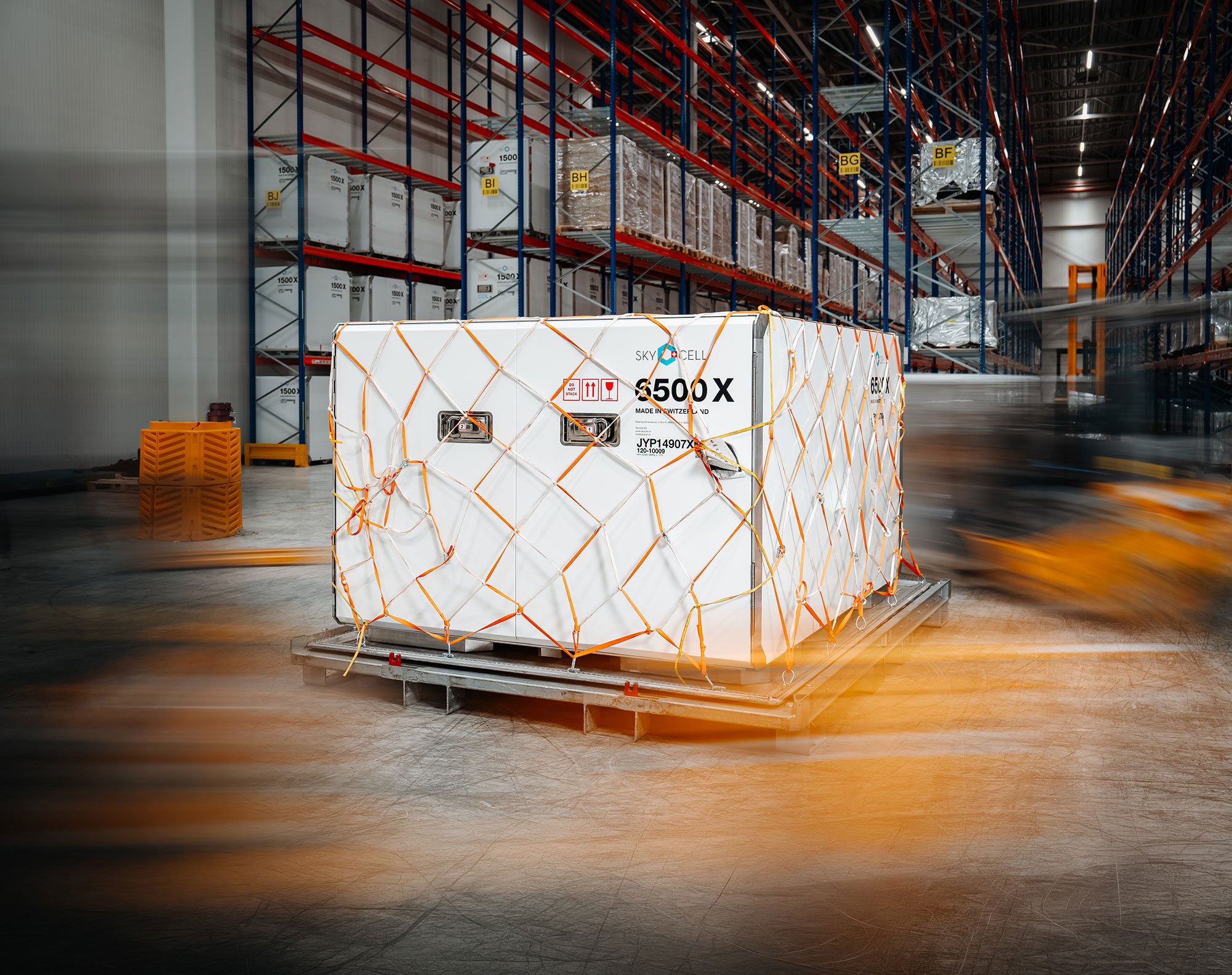
Hybrid Container Systems (Long Autonomous Runtime)
Hybrid systems are designed to combine the autonomy of passive solutions with performance comparable to active systems, without requiring external power during transit.
Strengths
- Long independent runtime
- Low dependency on plugs or infrastructure
- Reduced handling requirements
- Better tolerance of delays and disruptions
Limitations
- Requires proper planning and integration
- Less familiar than traditional systems in some organizations
Hybrid systems are increasingly used for demanding drugs on unreliable routes because they tolerate real-world disruption.
What Actually Works On Unreliable Routes
Across all system types, performance on unreliable routes comes down to a few key capabilities.
Long Autonomous Runtime
The ability to maintain temperature without intervention is critical.
For example:
- SkyCell containers provide 270 to 300 hours of autonomous runtime
- This allows shipments to tolerate extended airport dwell, missed connections, and customs delays
Without sufficient runtime, even short disruptions can lead to excursions.
Minimal Dependency On Infrastructure
Systems that rely on plugs, charging, or temperature-controlled vehicles are exposed when those resources are unavailable.
Reducing dependency on:
- Airport plug infrastructure
- Cold storage availability
- Temperature-controlled trucks
improves reliability on infrastructure-variable routes.
Resilience During Handling And Inspections
Unreliable routes often involve:
- Customs inspections
- Container opening
- Repositioning in high ambient conditions
Systems must maintain stability under these conditions.
For example:
- The SkyCell 1500X is X-ray compatible, reducing the need for manual inspection
- If opened, it restabilizes in less than 18 minutes after a 10-minute opening, limiting excursion risk.
Performance Under Real-World Conditions
Theoretical performance is less important than real-world outcomes.
Key indicators include:
- Temperature excursion rate
- Performance across diverse lanes
- Tolerance of delays and variability
SkyCell's audited excursion rate of less than 0.05% reflects performance across complex global routes.

Continuous Visibility And Operational Control
On unreliable routes, visibility becomes critical.
Effective systems provide:
- Real-time temperature and location tracking
- Insight into delays and dwell time
- Ability to locate shipments in congested hubs
SkyCell’s network spans 250+ IoT-monitored airports, enabling container tracking indoors and outdoors, even in congested environments.
Ability To Scale Across Shipment Types
Different shipment sizes require different solutions.
For example:
- SkyCell 1500X is suited for standard palletized shipments and high-risk air freight lanes
- SkyCell 6500X supports larger volumes and bulk shipments, maintaining the same principles of long runtime, autonomy, and reduced infrastructure dependency
This allows consistent performance across different shipment profiles.
Where Most Systems Fail On Unreliable Routes
Many logistics systems fail not because they are poorly designed, but because they are designed for predictable environments.
Common failure points include:
- Loss of plug access at airports
- Runtime exhaustion during delays
- Exposure during customs inspections
- Gaps between cold corridor segments
- Excessive handling and transfers
On unreliable routes, these issues occur frequently rather than occasionally.
What “Good” Looks Like In Practice
The most reliable logistics systems for demanding drugs on unreliable routes combine:
- Long autonomous temperature protection
- Low reliance on external infrastructure
- Resilience to handling and inspections
- Real-time visibility across logistics hubs
- Coordinated operational response when disruptions occur
This aligns with a layered approach, where physical protection, visibility, planning, and intervention work together rather than independently.
Summary
- Unreliable routes are defined by variability, not distance
- Demanding drugs amplify logistics risk due to low tolerance for disruption
- Systems that rely on infrastructure are more vulnerable
- Long runtime and autonomy are critical for resilience
- Visibility and intervention capability reduce escalation risk
- Hybrid systems with extended runtime are designed for complex routes