Summary
- Infrastructure-heavy cold chains reduce risk through additional refrigerated assets and contingency planning
- Agile cold chains improve flexibility and speed through better visibility, planning, and coordinated decision-making
- Greater agility can reduce operational complexity, improve cost efficiency, and support sustainability
- Cold corridors remain valuable on many established routes, while hybrid approaches can offer greater flexibility on complex global lanes
- SkyCell combines hybrid containers, visibility, lane intelligence through Validaide, and coordinated intervention to help pharmaceutical companies build more agile supply chains.
Why Infrastructure Became The Traditional Approach
Pharmaceutical cold chains have always operated under one fundamental constraint.
Failure is expensive.
A single temperature excursion can result in:
- Product loss
- Regulatory investigations
- Delayed patient access
- Batch replacement
- Additional transportation costs
- Reputational damage
To reduce this risk, companies have traditionally invested in more infrastructure, including:
- Temperature-controlled warehouses
- Reefer trucks
- Airport cold rooms
- Backup refrigeration systems
- Redundant contingency planning
For many years, this approach was the safest way to protect increasingly valuable medicines.
The Limitations Of Infrastructure-Heavy Cold Chains
While additional infrastructure can reduce certain risks, it can also introduce new operational challenges.
These include:
Higher Operating Costs
Every refrigerated asset adds capital and operational expense.
Maintaining warehouses, refrigerated vehicles, backup systems, and contingency capacity requires significant ongoing investment.
Increased Operational Complexity
More infrastructure often means:
- More logistics partners
- More handovers
- More scheduling requirements
- More coordination between facilities
Each additional touchpoint increases the complexity of the supply chain.
.jpg?width=1600&height=1068&name=SkyCell%20Forwarder%20Certificate%20-%20iStock-689826542%20(1).jpg)
Reduced Flexibility
Infrastructure-heavy networks are often designed around predefined routes and facilities.
When disruption occurs, adapting quickly may become more difficult because shipments depend on specific refrigerated assets remaining available.
Greater Environmental Impact
Refrigerated infrastructure consumes energy throughout the supply chain.
Additional cold storage, refrigerated transport, and contingency operations can all contribute to higher emissions.
What Makes An Agile Cold Chain Different?
An agile cold chain competes on flexibility, optionality, and speed rather than on how much refrigerated infrastructure it can add. It focuses on improving decision-making, not just adding more equipment.
Rather than assuming every shipment requires the same level of protection, agile supply chains seek to understand risk more accurately and respond dynamically as conditions change.
Key characteristics include:
- Real-time visibility
- Lane-specific risk assessment
- Operational flexibility
- Faster intervention
- Packaging that can tolerate disruption
Together, these capabilities help organizations maintain product integrity while reducing unnecessary complexity.
Infrastructure-Heavy Vs Agile Cold Chains
| Infrastructure-Heavy Cold Chain |
Agile Cold Chain |
| Adds more refrigerated infrastructure |
Optimizes existing infrastructure using better information |
| Relies on fixed contingency plans |
Adapts dynamically as conditions change |
| Higher operational complexity |
Simpler, more responsive operations |
| Reactive problem-solving |
Predictive decision-making |
| Greater dependence on physical infrastructure |
Greater dependence on visibility, planning, and coordination |
| Costs often increase as networks expand |
Designed to scale more efficiently |
The objective is not to eliminate infrastructure. Rather, it is to ensure infrastructure is deployed where it delivers the greatest value.
Where Cold Corridors Fit
Cold corridor models remain an important part of pharmaceutical logistics and continue to perform well in many stable, infrastructure-rich environments.
By maintaining temperature control through refrigerated warehouses, airport cold rooms, and temperature-controlled transport, cold corridors provide continuous protection across the shipment journey.
However, as international supply chains become more complex, some pharmaceutical companies are exploring ways to reduce dependency on continuous refrigerated infrastructure, particularly on long-haul and disruption-prone lanes.
Hybrid approaches, which maintain temperature protection within the container itself for extended periods, can provide greater operational flexibility while reducing reliance on refrigerated infrastructure at every stage of the journey.
Learn more: Hybrid vs Cold Corridor Models In Pharmaceutical Logistics.
Why Agility Supports Cost Efficiency
Cost efficiency is not simply about spending less. It's about using resources more effectively.
Organizations with greater operational visibility and better understanding of lane-specific risk may be able to:
- Reduce unnecessary contingency measures
- Optimize refrigerated infrastructure
- Simplify logistics networks
- Improve resource utilization
- Lower the cost of responding to disruption
Rather than reducing protection, they improve how protection is deployed.
Why Agility Improves Sustainability
Agile supply chains can also support sustainability objectives.
Reducing unnecessary infrastructure may help decrease:
- Energy consumption
- Refrigerated transport requirements
- Product waste
- Emergency shipments
- Carbon emissions
As pharmaceutical companies pursue ambitious sustainability targets, improving operational efficiency has become an increasingly important part of reducing environmental impact.
How SkyCell Supports Agile Pharmaceutical Logistics
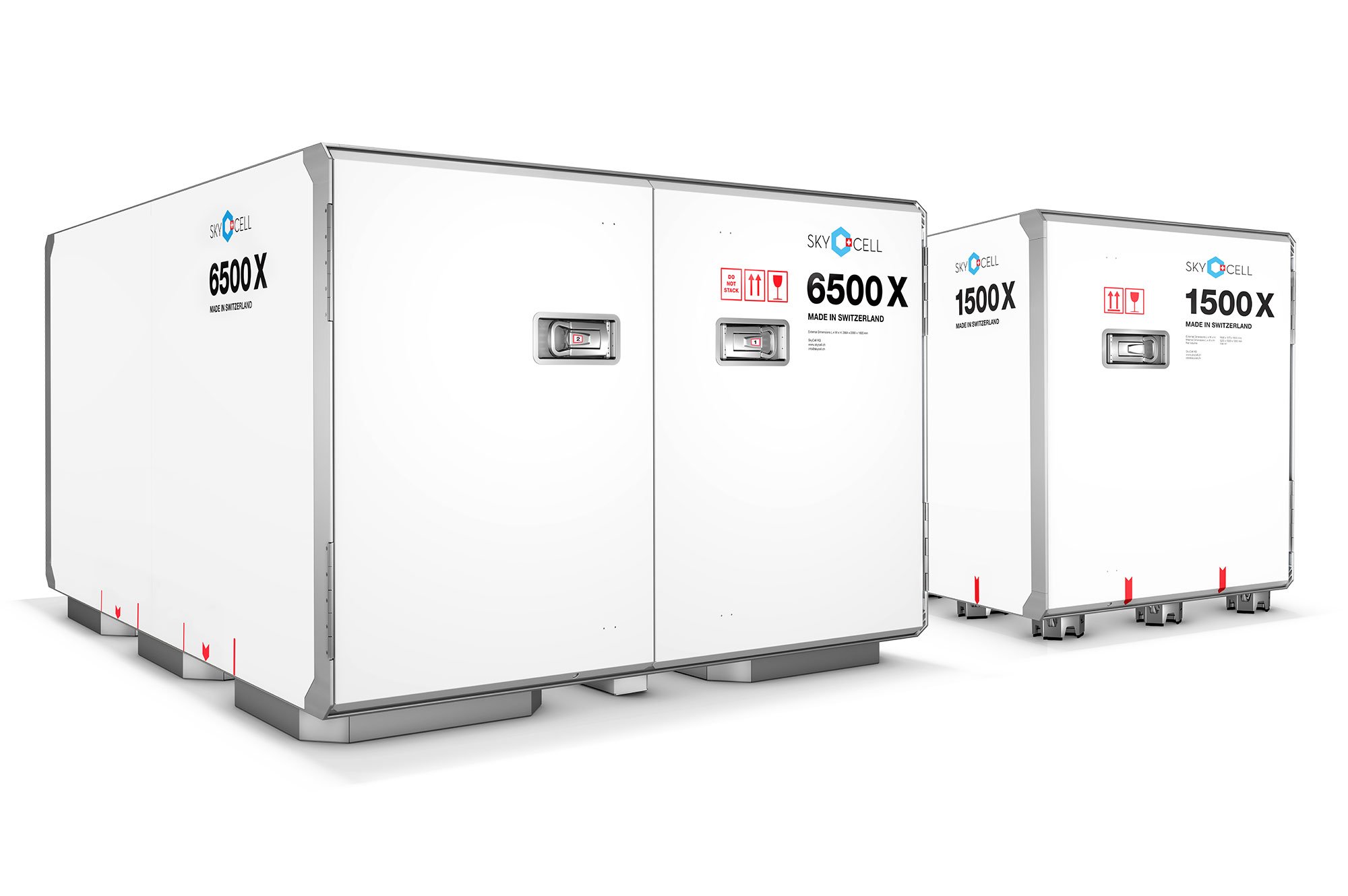
SkyCell supports agile cold chains by combining long-runtime hybrid containers with operational intelligence.
Its approach includes:
- Long autonomous runtime to reduce dependence on refrigerated infrastructure during disruption
- Real-time shipment visibility across a global logistics network
- Lane intelligence through Validaide to support planning and risk assessment
- Coordinated intervention capabilities that help logistics teams respond quickly when conditions change
Together, these capabilities give pharmaceutical companies more flexibility and speed while making more informed operational decisions.
Will Agile Cold Chains Become The New Standard?
Several long-term trends are reshaping pharmaceutical logistics:
- Growth in biologics and specialty medicines
- Increasingly complex international supply chains
- Rising logistics costs
- Greater geopolitical uncertainty
- Stronger sustainability expectations
These trends are making agility a strategic capability rather than simply an operational improvement.
Organizations that can anticipate disruption, keep their options open, and respond quickly will be better positioned to deliver medicines reliably while controlling costs.