What Door-to-Door Cold Chain Actually Means
Door-to-door cold chain refers to a logistics approach where temperature protection is maintained continuously from origin to final destination, without unloading, repacking, or transferring products into different temperature-control systems along the way.
This contrasts with segmented cold chains, where protection may stop at airports, freight forwarder hubs, or warehouse interfaces, and is resumed later using different equipment or vehicles.
Why Temperature-Sensitive Products Are Vulnerable Across the Journey
Temperature-sensitive pharmaceuticals, biologics, vaccines, and specialty medicines face risk at every stage of transit. The majority of excursions occur not because temperature-control technology fails, but because protection is interrupted.
Following the product journey highlights where these risks emerge.
Stage 1: Preconditioning, loading, and origin storage
Risk factors
- Delays during preconditioning or staging
- Dependency on specific storage infrastructure
- Manual handling and checks before departure
At origin, temperature protection often depends on correct preparation and availability of equipment. Any delay or deviation at this stage can reduce the remaining thermal margin for the rest of the journey.
Why Door-to-Door Matters Here
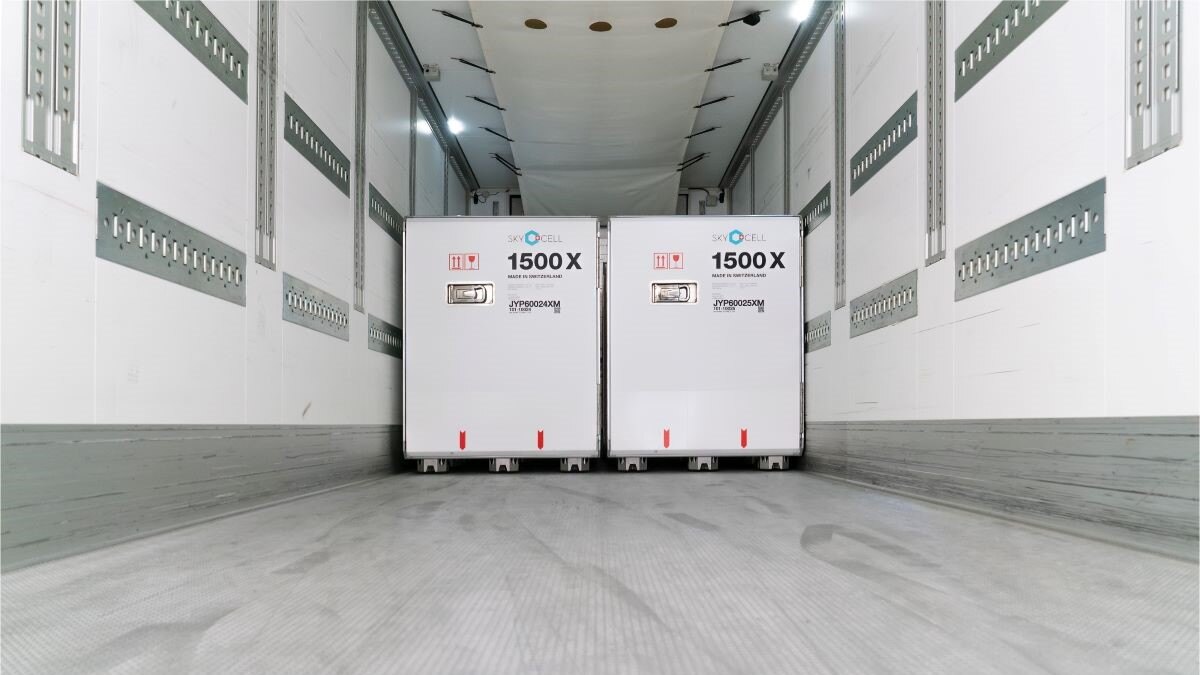
Solutions designed for door-to-door use (like SkyCell's hybrid container) reduce the need for preconditioning steps, charging cycles, or specialized storage zones, lowering early-stage risk.
Stage 2: Ground Transport to Freight Forwarders and Airports
Risk factors
- Transfers between vehicles
- Reliance on temperature-controlled vehicles
- Increased handling and inspection
When products are transferred between trucks, containers, or vehicles, exposure risk increases. Each transfer introduces potential delays, human error, or infrastructure gaps.
Why Door-to-Door Matters Here
Maintaining the same protective system through ground transport avoids unnecessary transfers and preserves temperature stability.

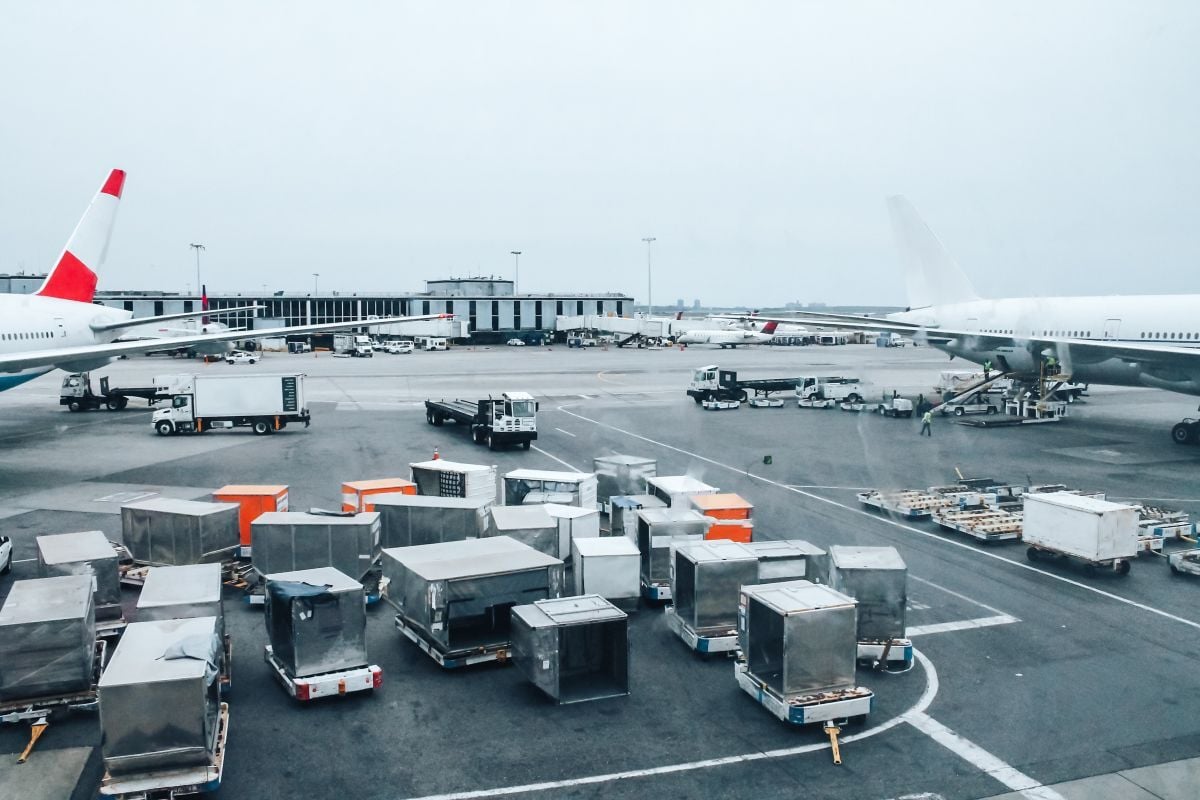
Stage 3: Airports and Air Freight, the Weakest Link
Airports are consistently one of the highest-risk environments for temperature-sensitive products.
Risk factors
- Limited plug or charging availability
- Extended dwell time on tarmac
- Manual inspections and customs delays
- High congestion and misrouting risk
According to IATA, over half of all temperature excursions occur at airports.
Why Door-to-Door Matters Here
Door-to-door cold chain solutions that do not rely on airport infrastructure and tolerate long dwell times significantly reduce exposure during this critical phase.
Stage 4: Arrival, Customs, and Intermediate Storage
Risk factors
- Customs holds
- Unloading and repacking
- Temporary storage without full temperature control
After arrival, products are often unloaded and transferred into different systems before final delivery. This handover is frequently under-controlled and poorly visible.
Why Door-to-Door Matters Here
Maintaining continuous protection through customs and onward transport reduces the likelihood of temperature deviations and undocumented exposure.
Stage 5: Delivery to the Consignee
This leg is often underestimated but highly risky.
Risk factors
- Transfer to local vehicles
- Short-distance exposure assumed to be “low risk”
- Removal from ULD-type containers
- Reduced monitoring and oversight
Many cold chains lose protection just before delivery, when products are closest to patient use. Often, products are removed from ULD containers, exposing them to ambient temperatures.
Why Door-to-Door Matters Here
Door-to-door solutions ensure that temperature protection and tracking extend all the way to the receiving facility, preserving product integrity until handover. Non-ULD containers, like hybrid containers, can protect products at this vital stage.
How Door-to-Door Cold Chain Reduces Overall Risk
Maintaining continuous temperature protection across all stages delivers several benefits:
- Fewer handovers and handling events
- Lower dependency on infrastructure and power availability
- Reduced human intervention
- Improved traceability and documentation
- Lower temperature excursion rates
Reliability increases as complexity and segmentation decrease.
Implications for High-Value and Temperature-Sensitive Products
For biologics, cell and gene therapies, vaccines, and specialty medicines, door-to-door cold chain is not just operationally convenient. It is critical for:
- Patient safety
- Regulatory compliance
- Product release timelines
- Loss prevention and security
As therapies become more sensitive and valuable, end-to-end protection becomes a baseline requirement rather than a premium option.
Summary
- Most cold chain risk occurs at handovers, not during transport
- Segmented cold chains introduce unnecessary exposure
- Door-to-door cold chain maintains continuous protection
- Reduced handling and infrastructure dependency improves reliability
- End-to-end visibility supports quality and compliance
Door-to-Door Cold Chain vs Cold Corridor Logistics
Door-to-door cold chain and cold corridor logistics are often treated as interchangeable, but they address temperature risk in fundamentally different ways.
What is Cold Corridor Logistics?
Cold corridor logistics focuses on maintaining temperature control only within predefined segments of the supply chain. These corridors typically include:
Within the corridor, temperature conditions are managed and validated. Outside the corridor, products are often transferred, staged, or temporarily stored under different levels of control.
Cold corridors rely heavily on infrastructure availability, coordination between partners, and precise timing to remain effective.
How Risk Differs Between the Two Approaches
Cold corridor models work well when infrastructure is consistent and delays are minimal. Risk increases when:
-
Shipments are delayed between corridor segments
-
Infrastructure such as plugs or temperature-controlled zones is unavailable
-
Products are transferred or repacked between systems
Door-to-door cold chain reduces these risks by eliminating dependency on corridor boundaries and minimizing handling events.
Comparison: Door-to-Door Cold Chain vs Cold Corridor Logistics
| Aspect |
Cold corridor logistics |
Door-to-door cold chain |
| Temperature protection |
Maintained within defined segments |
Maintained continuously end to end |
| Infrastructure dependency |
High |
Low |
| Exposure during delays |
Higher |
Lower |
| Visibility and traceability |
Fragmented |
Continuous |
| Suitability for high-value products |
Route-dependent |
High |
When each approach is typically used
Cold corridors are often used for:
-
Predictable routes with mature infrastructure
-
High-volume shipments with stable schedules
-
Environments where partners operate within the same network
Door-to-door cold chain is preferred for:
-
High-value or irreplaceable products
-
Long-haul international shipments
-
Routes with variable infrastructure or frequent delays
-
Products with low tolerance for excursions
As pharmaceutical products become more sensitive and valuable, the limits of corridor-based protection become more visible. Door-to-door cold chain shifts the responsibility for temperature protection from locations to the shipment itself, reducing complexity and improving reliability.