Summary
- Repackaging introduces additional handling, operational complexity, and opportunities for temperature excursions.
- Every transfer increases the potential for delays, human error, and inconsistent handling.
- Continuous protection throughout the shipment journey helps reduce operational risk and improve efficiency.
- Supply chains designed to minimize repackaging are often more resilient and easier to manage.
- SkyCell's 6500X enables products to remain protected across air, road, and ocean transport without unnecessary container changes, supporting more flexible commercial-scale logistics.
Why Repackaging Happens
Pharmaceutical products rarely travel directly from the manufacturing facility to the patient.
Instead, they often move through multiple stages of the supply chain, including:
- Manufacturing sites
- Distribution centers
- Airport cargo facilities
- Ocean freight terminals
- Regional warehouses
- Local distribution hubs
At some of these points, products may be removed from one shipping solution and transferred into another.
This process—known as repackaging or rehandling—is often driven by changes in transportation mode, shipment size, or distribution strategy.
While sometimes necessary, every repackaging event introduces additional operational complexity.

Every Time A Shipment Is Opened, Risk Increases
Each time a pharmaceutical shipment is opened, several new risks are introduced.
These include:
- Temperature exposure
- Human error
- Product damage
- Delays during transfer
- Documentation errors
- Inconsistent handling procedures
Although each individual event may appear minor, repeated handling throughout the supply chain increases the cumulative risk of disruption.
For temperature-sensitive medicines, even short periods outside controlled conditions can have significant consequences.
Repackaging Adds Operational Complexity
Beyond product protection, repackaging also increases the complexity of logistics operations.
Teams may need to:
- Schedule additional handling
- Coordinate multiple service providers
- Verify shipment integrity
- Update documentation
- Manage additional equipment
Each additional process consumes time and resources while creating more points where delays can occur.
As shipment volumes grow, this complexity becomes increasingly difficult to manage efficiently.
Mode Changes Often Drive Repackaging
One of the most common reasons for repackaging is a change in transportation mode.
For example, a shipment may:
- Travel by truck to an airport
- Fly internationally
- Continue by road
- Transfer to ocean freight for regional distribution
Traditional shipping solutions are often designed around a single transportation mode.
As a result, organizations may need to transfer products into different containers as the journey progresses.
These transitions increase both handling and operational effort.
Repackaging Can Slow Decision-Making
Modern pharmaceutical supply chains increasingly require flexibility.
Unexpected events such as:
- Flight delays
- Port congestion
- Customs inspections
- Severe weather
- Capacity constraints
may require logistics teams to adjust transportation plans quickly.
If changing transport modes requires products to be repacked into a different qualified shipping solution, responding to disruption becomes slower and more complex.
Reducing repackaging requirements allows organizations to make operational decisions more quickly while maintaining product protection.
Why Continuous Protection Matters
Rather than viewing packaging as something that changes throughout the journey, many pharmaceutical companies are adopting solutions that provide continuous protection from origin to destination.
This approach helps reduce:
- Handling events
- Operational complexity
- Temperature exposure
- Qualification challenges
- Opportunities for human error
The objective is not simply to eliminate repackaging—it is to simplify the entire supply chain.
How SkyCell Reduces Repackaging
SkyCell's 6500X was designed to support continuous protection across multiple transportation modes, helping pharmaceutical companies reduce unnecessary repackaging throughout the shipment journey.
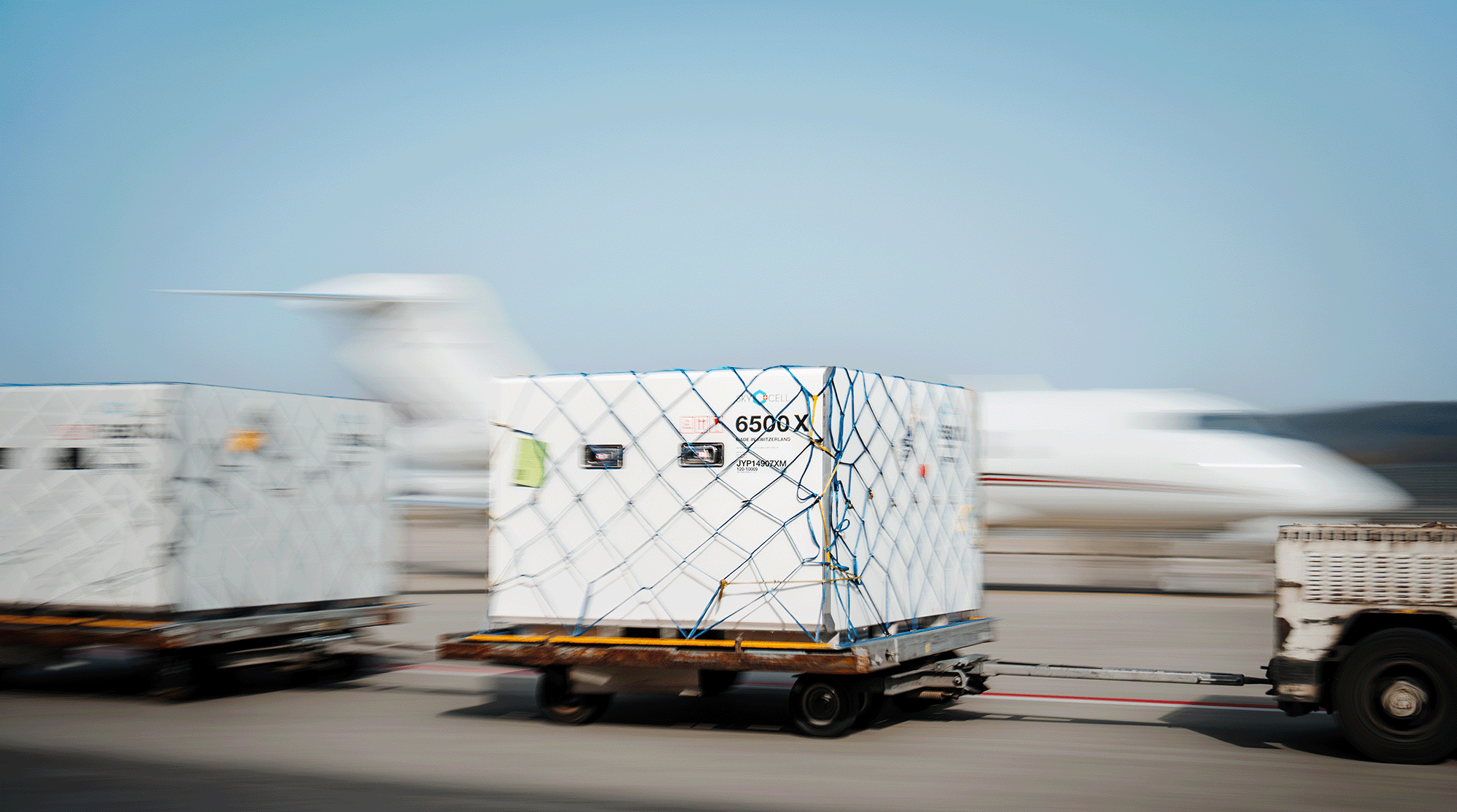
Key capabilities include:
- More than 300 hours of independent runtime
- Door-to-door temperature protection
- Compatibility with air, road, and ocean transportation
- Multi-pallet capacity for commercial-scale shipments
- Real-time visibility through Validaide
Because products can remain protected within the same container as they move between transportation modes, organizations can reduce handling events while maintaining consistent temperature control.
Instead of redesigning packaging around every stage of the journey, logistics teams have greater flexibility to redesign the network itself.
Supporting More Flexible Supply Chains
Reducing repackaging also supports broader supply chain objectives.
Organizations can more easily:
- Consolidate shipments
- Adapt transportation modes
- Respond to disruption
- Simplify regional distribution
- Improve operational consistency
As pharmaceutical supply chains become increasingly global, these capabilities help improve both resilience and efficiency.
What This Means For Pharmaceutical Companies
Every handling event introduces an opportunity for something to go wrong.
While repackaging is sometimes unavoidable, reducing unnecessary transfers can improve product protection, simplify operations, and make supply chains more adaptable.
As organizations continue to scale commercial distribution, maintaining continuous protection throughout the shipment journey is becoming an increasingly important design principle.