What Independent Runtime Means
Independent runtime is the length of time a container keeps its internal temperature inside the required range on its own, without external power or manual intervention. A container with long runtime protects the product whether it is plugged in, sitting on a tarmac, or waiting in a customs queue.
Runtime is always quoted at a stated external temperature. A figure such as 300 hours only means something when it is tied to the conditions it was measured in, because a container works harder to hold temperature at +40°C than at +20°C. Comparing runtime figures fairly means comparing them at the same external temperature.
Why Runtime Becomes the Deciding Factor at Scale
Small clinical shipments can often absorb a short delay with a few hours of margin. A full commercial batch crossing several borders is a different situation. Several factors make runtime the variable that matters most as shipments grow.
More product is exposed for every hour of delay. When a single container holds thousands of kilograms of high-value product, every hour outside the required range puts more value at risk. Longer runtime keeps a delay from turning into an emergency.
Large shipments travel longer routes. Reaching global markets economically often means multimodal journeys, including air-to-ocean transitions. An ocean leg can run for weeks rather than days, well beyond the runtime of many containers built for short air lanes.
Dwell time adds up at every stop. Consolidation, customs inspections, and transfers between modes all add hours when nothing is moving. These pauses are where temperature protection is tested, and where a container without power has to hold on its own.
Power and infrastructure are not always available. Large containers cannot count on a free power connection at every airport, warehouse, or port. Runtime that holds without a plug removes that uncertainty from the plan.
One delay affects the entire batch. A large shipment concentrates a market’s supply into a single unit. If runtime runs out before the delay clears, the whole load is at risk, along with the supply that patients are waiting on.

What Determines a Container’s Real-World Runtime
Runtime comes down to how a container is built. A few factors shape how long it actually holds temperature in the field.
Cooling approach. Hybrid containers combine active and passive cooling, which lets them hold temperature for long periods without drawing external power. This is what gives a hybrid container its runtime advantage over a purely passive box or an active unit that depends on a charge.
Thermal performance under real conditions. A container rated for a wide external range holds up across the tarmac heat and cold-room extremes a global route can present. Runtime measured only at mild conditions can fall short when the route gets hot.
Payload and loading. How a container is packed affects how it performs. Right-sizing the load to the container keeps protection consistent, which is one reason matching capacity to shipment volume matters for large programs.
How to Build Runtime Margin Into Large Shipments
Protecting a large shipment starts with planning runtime against the whole door-to-door journey, including the delays that are not on the schedule.
Plan for the worst-case transit time. Add up the longest realistic transit and dwell time across the route, then choose a container whose runtime clears it with margin to spare.
Choose runtime that outlasts the delays you can expect. Customs holds, missed connections, and port congestion are routine. A container that can hold temperature for days absorbs them without a scramble.
Keep the product in one container across modes. Moving cargo between containers at each mode change adds handling and exposure. A container that travels by air, road, and ocean without repackaging keeps the runtime clock running on a single protected unit.
Monitor in real time. Continuous visibility into temperature and location shows how much runtime margin a shipment has left while it is still moving, so teams can act before a delay becomes a loss.
How SkyCell’s 6500X Delivers Runtime at Scale
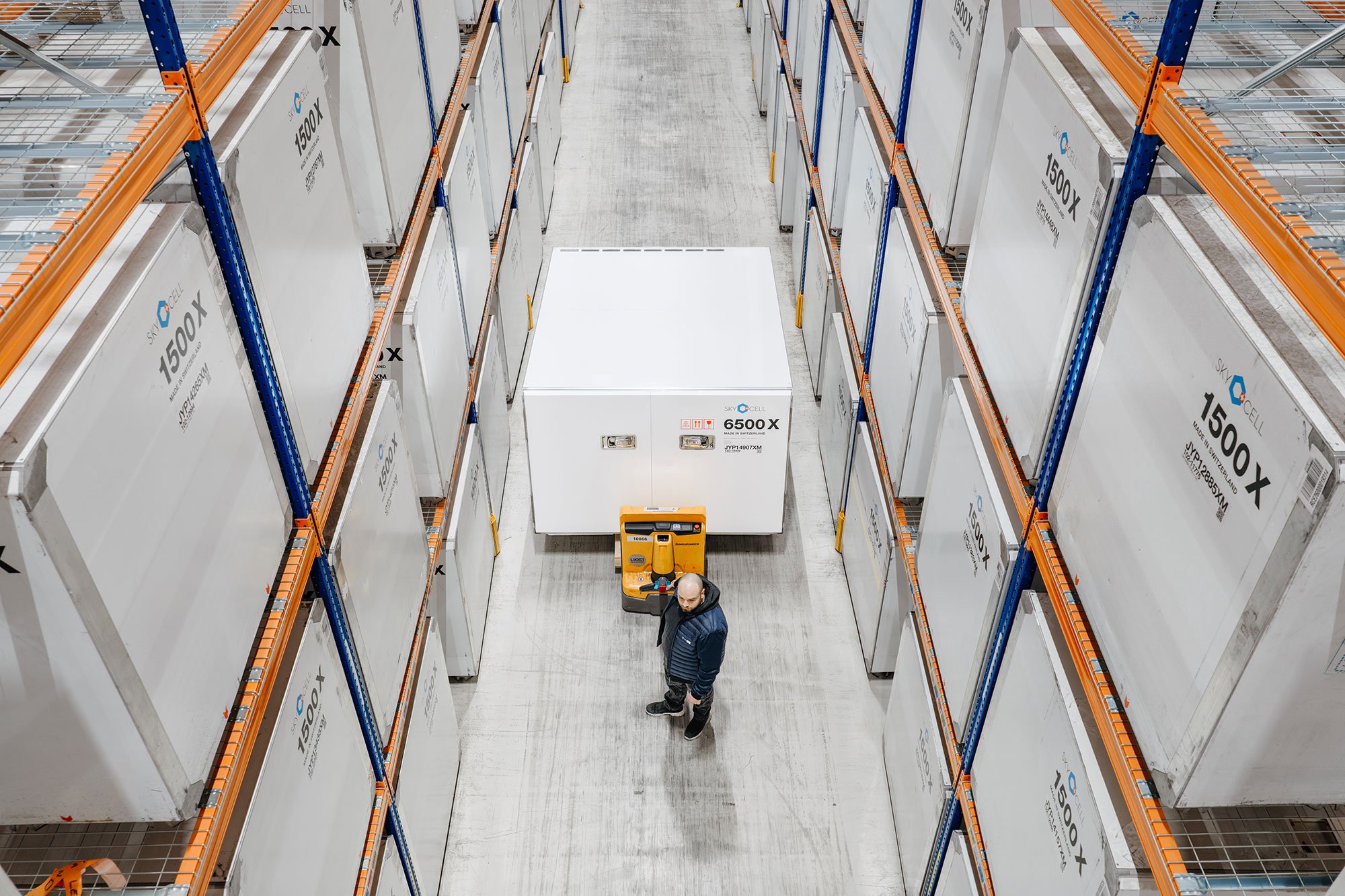
SkyCell’s hybrid containers combine active and passive cooling to hold temperature for long periods without external power. The 6500X, SkyCell’s multi-pallet hybrid container, is built for large shipments that need runtime to spare. Its specifications are verified from SkyCell’s product data.
- 300 hours of independent runtime. The 6500X maintains its internal temperature for 300 hours at an external temperature of +20°C, with no external power required. It holds cold set points of +2°C to +8°C or controlled room temperature of +15°C to +25°C.
- Protection across extreme conditions. The container is rated for external conditions from -30°C to +60°C, covering the temperature swings a long global route can present.
- Capacity for commercial volumes. The 6500X carries up to 5 European or 4 US pallets, with a maximum payload of 2,500 kg and 6.6 m³ of usable volume, so a large batch travels as one protected unit.
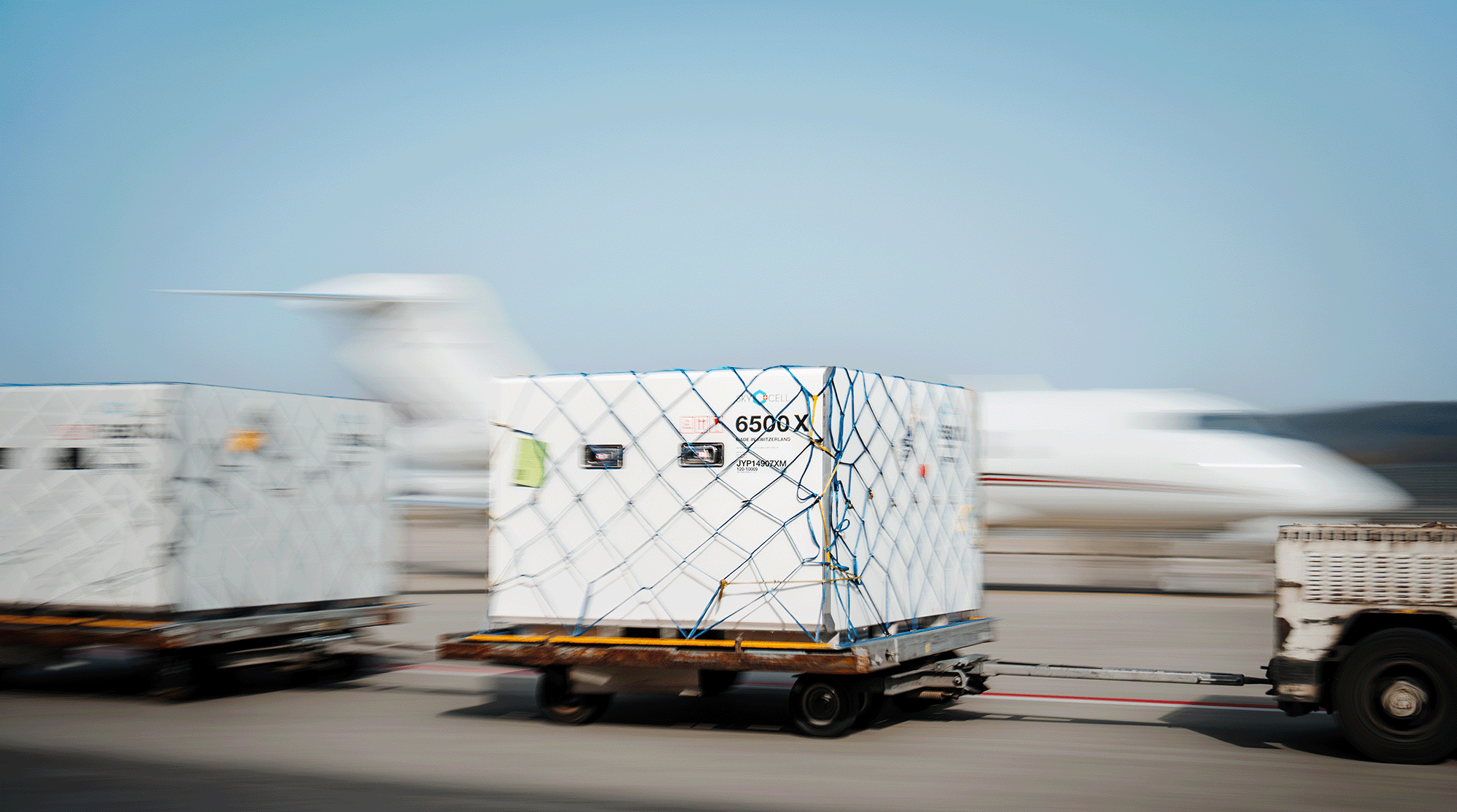
- True multimodal transport. The container is designed to move across land, air, and ocean, including air-to-ocean transitions, without repackaging the product between modes, which keeps the runtime clock on a single container for the whole journey.
- Low tare weight. The 6500X has a tare weight of 877 kg, which SkyCell reports as the lowest in its class, reducing the weight penalty of large-format protection.
- Real-time monitoring through Validaide. Integrated Validaide technology automates temperature logging and provides real-time visibility into temperature and location, so teams can see how much runtime margin remains while a shipment is still moving.
- Right-sizing with the Perfect Duo. The 6500X pairs with the smaller 1500X container so shippers can match capacity to shipment volume, keeping protection consistent without shipping empty space.
- Reusable and non-dangerous-goods by design. The container is reusable and classified as non-dangerous goods, which simplifies handling on large, repeated programs.
SkyCell operates on a mission to eliminate medicine loss and drive net-zero CO₂ emissions in pharma logistics, and its containers are supported by certifications including DO-160, ISO 27001, ISO 9001, GxP, GAMP5, and FDA 21 CFR compliance.
What This Means for Pharmaceutical Companies
For large shipments, runtime is the margin that keeps a routine delay from becoming a write-off. The longer a container can hold temperature on its own, the less a shipment depends on everything going to plan across a long, multimodal route.
Building that margin into the container gives pharmaceutical companies room to design supply chains around business goals, such as reaching new markets by sea or consolidating volume into fewer, larger shipments, with confidence that the product will hold through the hours that are hardest to predict.
Summary
- Independent runtime is how long a container holds its internal temperature within range on its own, without external power or manual intervention. It is always quoted at a stated external temperature, so figures should be compared at the same conditions.
- Runtime matters more as shipments grow because more product is exposed per hour of delay, routes get longer and multimodal, dwell time accumulates at every stop, power is not always available, and one delay can affect an entire batch.
- Real-world runtime depends on the cooling approach (hybrid active plus passive), thermal performance across a wide external range, and how the container is loaded.
- Runtime margin is built by planning for worst-case transit and dwell time, choosing runtime that outlasts expected delays, avoiding repackaging across modes, and monitoring in real time.
- SkyCell’s 6500X holds temperature for 300 hours at +20°C with no external power, is rated from -30°C to +60°C, carries up to 5 EU or 4 US pallets and 2,500 kg, moves across land, air, and ocean without repackaging, weighs 877 kg tare, and provides real-time monitoring through Validaide.
- The 6500X pairs with the 1500X in the Perfect Duo to right-size capacity, and is reusable and classified as non-dangerous goods.