Why Biologics And Cell Therapies Are So Sensitive
Biologics and cell therapies are far more fragile than traditional small-molecule drugs, because their structure is their function.
- Complex molecules. Biologics are large proteins whose three-dimensional shape determines how they work, and heat or freezing can unfold or clump them together.
- Living material. Cell and gene therapies contain living cells that lose viability outside a narrow temperature window.
- Irreplaceable batches. Many advanced therapies are made for a single patient, so a spoiled shipment cannot simply be reordered.
- Long, sensitive journeys. These products often travel internationally, extending the time they are exposed to risk.
What Happens When Temperature Control Fails
An excursion often shows no visible damage, which is part of what makes it dangerous.
- Loss of potency. The active molecule degrades, so the dose no longer delivers its intended effect.
- Safety risk. Degraded or clumped proteins can trigger unwanted immune responses in patients.
- Silent failure. A product can look normal after an excursion while its efficacy has already dropped.
- Total loss. For cell and gene therapies, a single excursion can render the whole therapy unusable.

The Temperature Ranges These Products Require
Different modalities need different conditions, and the required range is often tighter and colder than for many conventional drugs.
- Refrigerated biologics. Many are shipped at +2°C to +8°C.
- Frozen products. Some are held around -20°C.
- Ultra-cold. Certain vaccines and therapies need -70°C or lower.
- Cryogenic. Some cell and gene therapies ship in vapor-phase liquid nitrogen, below -150°C.
Why Control Is Harder For These Products
The stakes are higher for advanced therapies, and so is the difficulty of protecting them.
- Narrow tolerances. A small deviation can be enough to cause damage.
- Ultra-cold logistics. Maintaining very low temperatures over long distances requires specialized packaging and handling.
- High value and urgency. A patient may be waiting for a specific dose on a fixed clinical timeline.
- Multi-leg journeys. Each handoff between manufacturing, transport, and clinic adds a point where control can slip.
How To Protect Temperature-Sensitive Therapies
Protecting these products depends on packaging that holds the range and data that proves it held.
- Matched packaging. Containers rated for the product's range and the journey's length keep the temperature stable.
- Runtime margin. Packaging that holds temperature longer than the planned journey absorbs delays before they become excursions.
- Real-time monitoring. Continuous temperature and location data lets teams intervene while a shipment is still recoverable.
- Validated processes. Good Distribution Practice (GDP) and product-specific qualification make sure the cold chain is proven, not assumed.
How SkyCell Protects Sensitive Products
SkyCell focuses on the refrigerated and controlled-room-temperature legs where most biologics move, with specialized shippers handling cryogenic legs. The claims below are drawn from SkyCell's published data.
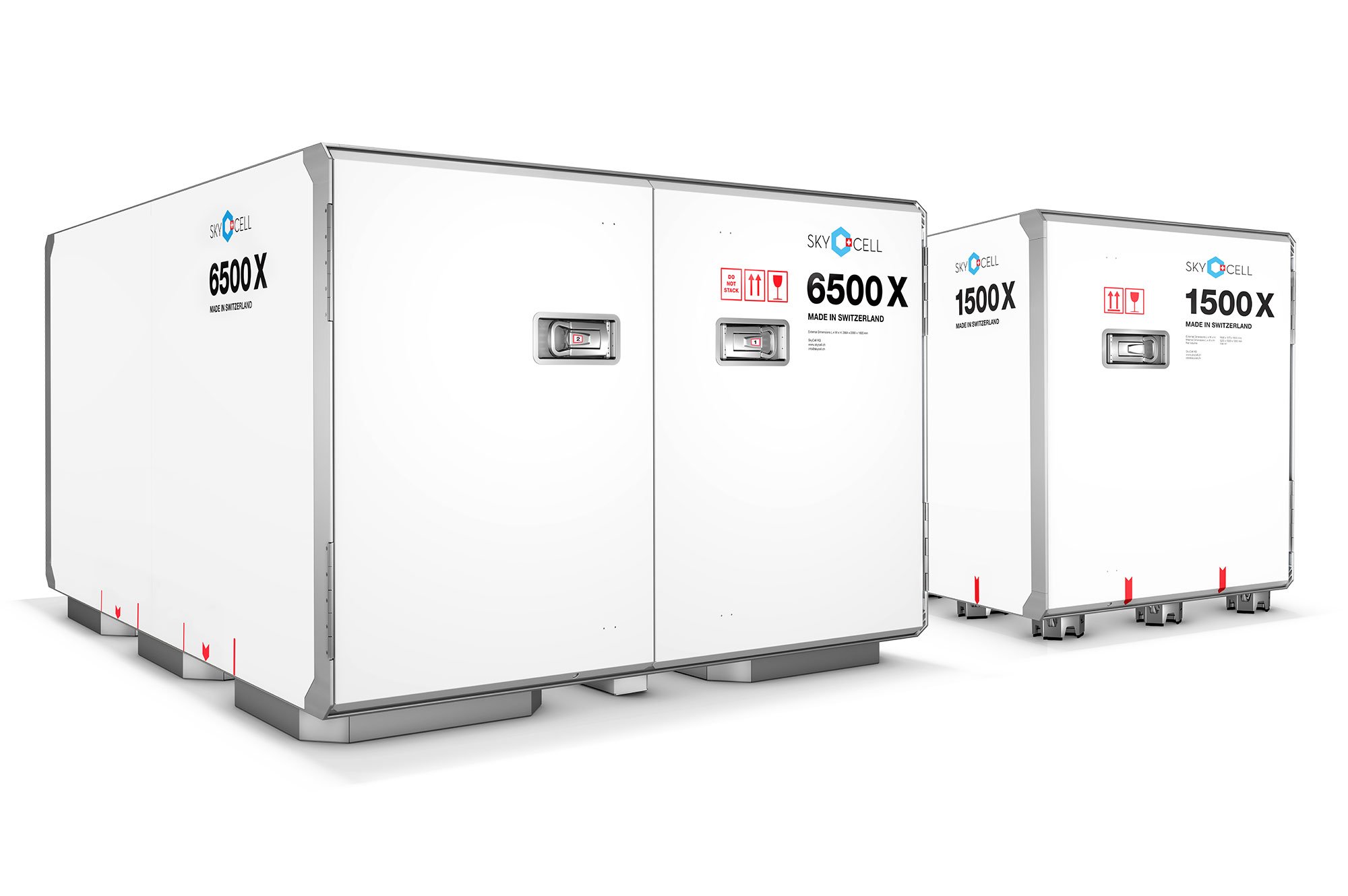
- Stable temperature for long journeys. SkyCell's hybrid containers hold temperature without external power, with the 1500X rated for 270 hours at +20°C, giving margin for delays on long international lanes.
- Set points for biologics. The containers support the refrigerated (+2°C to +8°C) and controlled-room-temperature (+15°C to +25°C) set points common for biologics.
- A proven excursion record. The 1500X has an independently assessed temperature excursion rate below 0.05%, and SkyCell's containers are designed for zero product loss.
- Real-time visibility. SkyCell's loggers and containers capture temperature and location, and Validaide turns that into monitoring and lane risk assessment, so a developing problem can be caught in transit.
What This Means For Pharmaceutical Companies
For biologics and cell therapies, temperature control is part of the product's quality, and protecting it protects both the patient and the investment in the therapy.
The most reliable approach pairs packaging that has enough runtime margin to absorb real-world delays with monitoring that makes a developing issue visible early, so the product is protected across the entire journey, including the delays and handoffs where excursions usually happen.
Summary
- Temperature control is critical for biologics and cell therapies because they are made from complex or living material that degrades when it warms up or freezes.
- A temperature excursion can reduce potency, create safety risks, or destroy a patient-specific therapy, and the damage is often invisible.
- These products need tighter, colder ranges than many conventional drugs, from +2°C to +8°C down to cryogenic temperatures below -150°C for some cell and gene therapies.
- Control is harder because tolerances are narrow, journeys are long and multi-leg, and doses are high-value and time-critical.
- SkyCell protects the refrigerated and controlled-room-temperature legs with hybrid containers (270 hours at +20°C on the 1500X, an independently assessed excursion rate below 0.05%) and real-time visibility through Validaide, with specialized shippers handling cryogenic legs.